

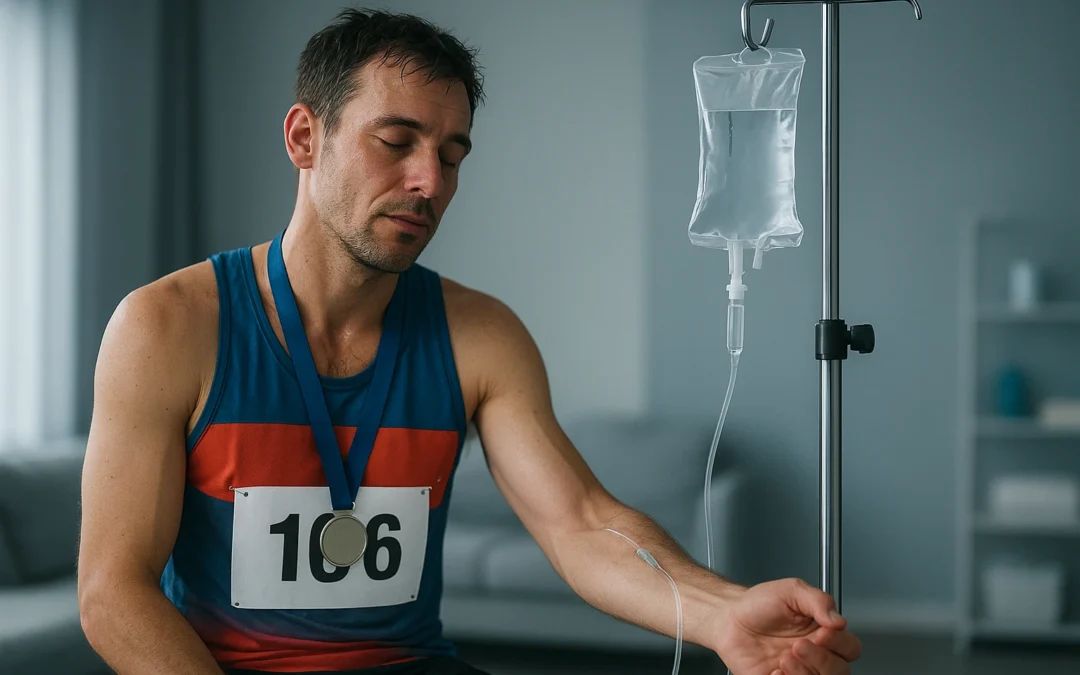
Picture this: You’ve just crossed the finish line of a grueling 26.2-mile marathon, a grueling Ironman, or a multi-day ultramarathon. The euphoria washes over you, but physically, your body is in full-blown crisis mode. Your muscles are twitching, a deep wave of nausea is bubbling up, and when you try to chug that complimentary sports drink, it just sits there, sloshing uncomfortably in your stomach.
You know you need fluids, but drinking feels impossible.
For decades, endurance athletes have been told that oral rehydration—drinking sports drinks and water—is the only way to recover. Today, you’ve likely noticed a growing trend of runners turning to an athletic recovery iv to bounce back.
But with the internet divided between highly clinical medical papers and hyper-commercialized “IV spa” blogs making wild claims, it’s hard to know what’s actually true. Does an IV really flush out lactic acid instantly? Is it genuinely better than drinking water?
Let’s strip away the marketing fluff and dive into the actual sports physiology of post-race recovery, exploring exactly what happens to your body during extreme endurance events, and how targeted hydration protocols actually work.
The Biology of Endurance Depletion: Why Standard Sports Drinks Sometimes Fail
During a marathon, you can lose anywhere from 3% to 8% of your body weight in sweat. This isn’t just water; it’s a massive depletion of your plasma volume and extracellular fluid.
Most athletes assume that if you just drink water with some electrolytes, you’ll instantly rehydrate. But this ignores a fascinating and deeply frustrating biological reality known as Exercise-Induced Gastrointestinal Syndrome (EIGS).
The Physiology of the “Closed Gut”
When you are running, cycling, or fighting at maximum exertion, your sympathetic nervous system (your “fight or flight” response) takes over. To keep your skeletal muscles and lungs working, your body literally steals blood away from your digestive organs—a process called splanchnic hypoperfusion. Up to 80% of the blood flow that usually surrounds your stomach and intestines is shunted to your limbs.
Because your gastrointestinal tract is starved of blood, a few things happen:
- Intestinal Micro-damage: The lining of your gut undergoes temporary stress.
- Delayed Gastric Emptying: Your stomach basically hits “pause” on processing anything.
- The Slosh Effect: Any fluid you drink pools in your stomach instead of absorbing into your bloodstream, leading to severe nausea and vomiting.
This is why, in the critical 0 to 4-hour window post-race, standard oral hydration often fails. You can drink all the fluids you want, but if your gut is functionally “closed,” those fluids aren’t reaching your muscles.
Oral Rehydration vs. IV Rehydration: The Comparative Science
Understanding how fluids enter your body is the key to mastering your recovery.
Oral Rehydration Solutions (ORS): When you drink fluids, they rely on a mechanism called Sodium-Glucose Cotransport (SGLT1). This active intestinal transport requires your gut to be functioning properly. Even under optimal conditions, it takes about 45 to 90+ minutes for oral fluids to significantly impact your hydration levels.
Intravenous (IV) Rehydration: IV fluids completely bypass the compromised gastrointestinal tract. By introducing an isotonic solution (like Normal Saline or Lactated Ringer’s) directly into the vascular system, plasma volume is restored within 15 to 30 minutes.
IV therapy isn’t a total replacement for drinking water—it is a targeted accelerator used when gastrointestinal absorption is compromised.
Debunking the Biggest Endurance Recovery Myths
If you’ve spent any time looking up an athletic recovery iv therapy, you’ve probably encountered some medically unproven claims. Let’s set the record straight.
Myth 1: “IV Drips Flush Out Lactic Acid Instantly”
You’ll see this claim plastered across commercial IV bar menus. It’s biologically false. Lactate doesn’t linger in your muscles for days; it is actually converted back into glucose by your liver (via the Cori cycle) within 60 to 90 minutes after you stop running. IV drips do not “flush” lactate.
The Reality: What an IV actually does is restore microvascular perfusion. By re-expanding your blood volume, it helps your kidneys efficiently clear out the actual metabolic waste products of extreme exertion, like myoglobin and creatine kinase (markers of muscle breakdown).
Myth 2: “Cramps Are Caused Solely by Dehydration”
Exercise-Associated Muscle Cramps (EAMC) are incredibly painful, but they aren’t just about lacking water or a bit of potassium. They are driven by local electrolyte imbalances and altered neuromuscular control.
Anatomy of a Clinical Endurance Recovery Protocol
A proper endurance recovery protocol treats electrolytes not just as “salts,” but as cellular voltage gate openers. Here is what a science-backed post-race IV protocol actually looks like:
- Isotonic Base: Rapidly restores intravascular volume and stabilizes heart rate.
- Magnesium Sulfate: The secret weapon against cramping. Magnesium acts as a natural calcium channel blocker in muscle cells, prompting the sarcoplasmic reticulum to relax. This is what stops acute, locked-up muscle spasms.
- Sodium ($Na^+$) & Potassium ($K^+$): Sodium controls your extracellular fluid volume, while Potassium regulates your intracellular resting potential and cardiac rhythm.
- Vitamin C & Glutathione: High-intensity endurance racing creates massive amounts of reactive oxygen species (ROS). These powerful antioxidants scavenge ROS and combat post-race immunosuppression, helping you avoid the dreaded “marathon flu.”
- B-Complex & B12: Essential for mitochondrial ATP resynthesis (cellular energy turnover), providing deep relief from extreme iv therapy for fatigue.
- Targeted Symptom Relief: For extreme cases, critical care nurses can administer Toradol (a powerful NSAID for joint inflammation) and Zofran (to instantly halt post-race nausea).
The Critical Care Standard: Safety and EAH Screening
One of the most dangerous mistakes an athlete can make post-race is chugging liters of plain water.
When you sweat heavily, you lose massive amounts of sodium. If you replace that lost sweat with pure, sodium-free water, you risk diluting your blood’s sodium levels to a dangerous point. This condition is called Exercise-Associated Hyponatremia (EAH), and it can cause fatal cerebral edema (brain swelling).
This is why getting IV therapy from a generic spa or non-medical technician can be dangerous. A thorough, pre-drip medical screening by a critical care Registered Nurse (RN)—the standard maintained by Intravene—is non-negotiable. Critical care nurses are trained in ICU and ER environments to assess your serum sodium balance, evaluate your sweat rate, and determine if your body needs targeted electrolyte replacement rather than just blind fluid volume.
If you are ever searching for where can i get an iv for dehydration, always ensure the provider requires a stringent RN medical intake to rule out EAH and hypovolemia.
Competitive Compliance: The WADA Legal Threshold
Are mobile IV drips legal for competitive athletes? It depends on your competition level and the rules of your governing body.
Under the World Anti-Doping Agency (WADA) and USADA, competitive athletes are generally prohibited from receiving IV infusions of more than 100 mL per 12-hour period unless they have an approved Therapeutic Use Exemption (TUE) or the IV is administered during a hospital admission/clinical emergency.
For amateur athletes completing a weekend marathon, post-race IV recovery is a widely utilized and completely acceptable way to safely bounce back. However, elite and pro athletes must navigate these regulations carefully. Always prioritize a service that transparently understands these ethical compliance rules.
Event-Specific Recovery Timelines
How you hydrate depends heavily on what you just put your body through:
- The Marathon Protocol (26.2 Miles): The optimal window is 0–24 hours post-race. Focus is on rapid rehydration, stopping GI nausea, and preventing delayed onset muscle soreness (DOMS).
- The Triathlon / Ironman Protocol: Because of the prolonged exposure to the elements, this requires severe heat/sweat loss adjustments. An iv for heat exhaustion protocol is often utilized to rapidly cool the core temperature and replace massive sodium deficits.
- The Ultramarathon Protocol: Extreme GI preservation. Because gut ischemia can last for days after a 100-miler, direct-to-bloodstream cellular repair and amino acid (BCAA) introduction are crucial to halt muscle breakdown.
- MMA / Combat Sports: Fighters require rapid rehydration post-weigh-in. IV therapy restores intracellular fluid without causing the gut bloating that would ruin performance in the octagon.
Frequently Asked Questions (FAQ)
Is an IV drip actually worth it after running a marathon?
Yes, particularly if you are experiencing severe nausea, inability to keep fluids down, or intense muscle spasms. It bypasses the temporary gut shutdown (EIGS) caused by the race, delivering hydration directly to your vascular system.
Can’t I just take Ibuprofen for my sore legs?
Taking oral NSAIDs (like Ibuprofen) on an empty, highly dehydrated stomach is incredibly dangerous and can lead to acute kidney injury and gastric ulcers. An IV protocol can bypass the stomach entirely, offering safer, more systemic relief.
How fast does IV rehydration work compared to oral fluids?
Oral fluids take 45 to 90 minutes to process through a healthy gut—and much longer in a compromised post-race gut. IV fluids begin expanding your vascular volume and reaching your tissues in just 15 to 30 minutes.
Will an IV drip prevent me from getting sick after my race?
Endurance events temporarily crash your immune system (the “open window” theory). High-dose Vitamin C, Zinc, and Glutathione delivered intravenously can help scavenge the oxidative stress from the race, significantly reducing your chances of catching post-race illnesses.
Redefining Your Post-Race Comeback
Crossing the finish line is only the first half of the endurance equation; how you command your recovery dictates how soon you can safely return to training. By understanding the real sports physiology behind gut ischemia, cellular electrolyte demands, and microvascular perfusion, you can make informed decisions about your body.
Hydration is not a one-size-fits-all game. While oral rehydration remains the baseline, bridging the gap with clinical-grade, RN-administered IV therapy offers a precise, highly effective tool for athletes looking to optimize their recovery window safely.