

Picture this: You’ve just finished a grueling trail run up Deer Creek Canyon or crushed a high-intensity session at your local Littleton CrossFit box. Your muscles are screaming, your energy is tapped, and tomorrow’s schedule isn’t going to be forgiving.
If you’re like most active people in our community, you probably reach for a chalky protein shake, chug an electrolyte drink, and hope the soreness doesn’t completely derail your week. But what if the exhaustion and deep muscle ache you’re feeling isn’t just about how hard you worked out? What if it’s a biological response to the unique environment we live in?
Welcome to the science of athletic recovery at altitude. Whether you’re training for an ultramarathon or just trying to keep up with your kids after a weekend hike at Chatfield State Park, understanding how your body actually repairs itself is the ultimate game-changer.
The Altitude Factor: Why Training in Littleton Hits Different
There’s a reason out-of-state athletes struggle when they come to Colorado. The littleton elevation sits right around 5,300 feet. At this altitude, the air is thinner, meaning oxygen saturation levels in your blood are naturally lower.
But oxygen is only half the story. The hidden thief of your athletic performance is “insensible water loss.” Because the air here is incredibly dry, your respiratory rate increases to capture more oxygen, and you silently exhale massive amounts of water vapor while you train.
By the time you feel thirsty, your muscles are already operating at a deficit. This altitude-induced dehydration thickens the blood, forces your heart to work harder, and slows the delivery of essential nutrients to micro-torn muscles. This is the root cause of what many locals call “Altitude Fatigue.”
The “Muscle Relaxer” Misconception: Pain Relief vs. True Recovery
When Delayed Onset Muscle Soreness (DOMS) hits hard, many athletes turn to search engines looking for a quick fix, often typing in things like “IV muscle relaxants” or considering pharmaceutical interventions.
Here is the “aha moment” every athlete needs to realize: Pain suppression is not muscle repair.
Prescription muscle relaxers act on your central nervous system. They might numb the discomfort, but they also cause intense drowsiness, impair coordination, and essentially force your body to power down. That’s a nightmare for anyone in an active training block.
The physiological alternative is nutrient-based muscle recovery. Instead of drugging the nervous system, athletic recovery iv therapy utilizes high doses of natural minerals—specifically Magnesium and Calcium. Magnesium acts as a physiological relaxant; it safely blocks calcium from binding to muscle proteins, which physically stops the muscle fibers from cramping and spasming without any of the mental fog.
The “First-Pass” Myth: Why Expensive Supplements Might Be Failing You
If you’ve ever spent a small fortune on premium BCAA (Branched-Chain Amino Acid) powders or antioxidant pills, you might be frustrated by a lack of results. The culprit is something scientists call the “First-Pass Effect.”
When you swallow a supplement, it has to survive a brutal journey through your stomach acid, digestive enzymes, and liver before it ever reaches your bloodstream. Studies show that for many oral supplements, you lose anywhere from 50% to 80% of the nutrient’s potency during this digestive process. You are essentially pouring premium fuel into a leaky gas tank.
This is why clinical data, such as a landmark 2017 study in the Journal of the International Society of Sports Nutrition (JISSN), has heavily focused on the bioavailability of amino acids. When nutrients bypass the gut and go directly into the bloodstream via an IV, absorption is 100%. The cells receive an immediate flood of the exact tools they need to rebuild torn muscle tissue.
The Science Behind the Peak Perform IV
So, what exactly does a targeted recovery drip look like? The most effective formulations, like the Peak Perform IV, rely on a specific stack of cellular building blocks:
- Glutamine & Arginine: These powerful amino acids are the primary drivers of protein synthesis, actively repairing muscle micro-tears.
- Magnesium: The ultimate natural cramp-stopper and physiological muscle relaxer.
- B-Complex & B12: Essential for converting food into ATP (cellular energy), combating altitude fatigue directly.
- Glutathione: The body’s master antioxidant, which flushes out the oxidative stress and lactic acid built up during an intense workout.
The Littleton Recovery Protocols
Because no two athletes train exactly the same way, recovery shouldn’t be a one-size-fits-all approach. Here is how local athletes are matching their recovery strategies to their specific environments:
The Trail Runner’s Protocol (South Platte Park & Beyond)
The Challenge: Massive fluid loss, electrolyte depletion, and joint pounding.The Fix: A heavy focus on a normal saline base infused with high-dose Vitamin C and Magnesium. This protocol replaces the deep cellular water lost to our dry climate and calms the repetitive-stress inflammation in the calves and quads.
The CrossFit Athlete’s Protocol
The Challenge: Central nervous system taxing and severe muscle breakdown (DOMS).The Fix: A heavy amino acid and Glutathione blend. To bounce back for the next WOD (Workout of the Day) without crippling soreness, the body needs raw materials to rebuild fast.
The Weekend Warrior Protocol (14er Prep)
The Challenge: Sudden, extreme altitude spikes combined with prolonged endurance.The Fix: Pre-hydration and B12 loading. Whether you’re a seasoned boulder athlete bagging peaks up north, or someone looking for athlete recovery arvada after a long cycling event, front-loading fluids and B-vitamins protects against altitude sickness and sustained fatigue.
Real-World Application: The ICU Standard of Care in Your Living Room
One of the biggest barriers to elite-level recovery used to be accessibility. In the past, only professional athletes had access to immediate, clinical-grade hydration therapies. Today, the landscape has completely shifted.
Leading mobile providers like intravene have revolutionized this space by bringing the clinic directly to your home or gym. But more importantly, the gold standard in this space is safety. The most reputable providers exclusively use critical care nurses—professionals with extensive ICU or ER experience—to administer treatments. This means you aren’t just getting a wellness trend; you’re getting hospital-level expertise tailored to your personal athletic goals.
Frequently Asked Questions (FAQ)
Is IV hydration really better than just drinking a sports drink?
Yes. Sports drinks are better than nothing, but they are often loaded with processed sugars and must be processed through the gut. IV hydration restores your systemic fluid volume instantly with 100% absorption, bringing rapid relief to dehydrated tissues that oral fluids take hours to reach.
How often should I get a recovery drip during a training cycle?
It depends on your volume. Elite athletes might integrate a drip weekly during peak marathon or competition prep. For the everyday active resident, once or twice a month, or immediately following a major physically demanding event, is a highly effective way to keep inflammation at bay.
Will the Magnesium in an IV make me drowsy like a pill might?
No. While Magnesium is deeply relaxing to the muscles (preventing cramps and spasms), it does not sedate the central nervous system like a pharmaceutical muscle relaxant. You will feel physically relieved but mentally sharp.
Does it hurt?
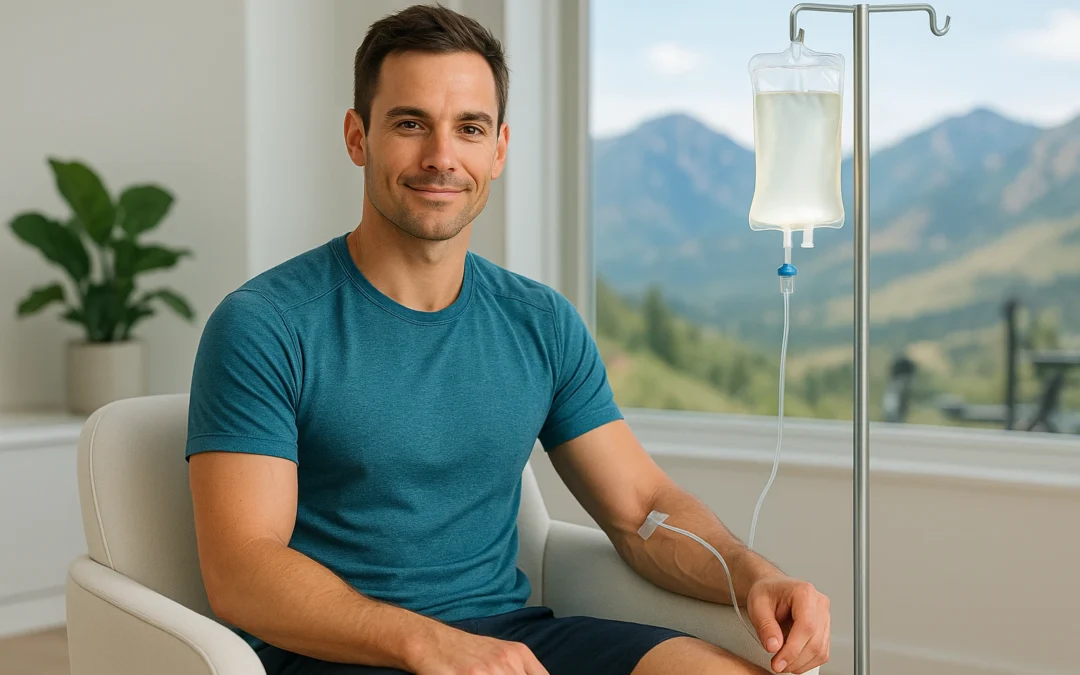
When administered by highly trained critical care nurses, the process is incredibly smooth. You’ll feel a tiny, brief pinch during insertion, followed by 45 minutes to an hour of complete relaxation while the fluids replenish your system.
Bridging the Gap to Your Next Workout
Living in an active community like Littleton means pushing our bodies to the limit is just part of the local culture. But training hard is only half the equation. If you want to see consistent gains, avoid injury, and actually enjoy the beautiful trails and gyms our city has to offer, you have to treat your recovery with the same respect you treat your workouts.
By understanding how altitude impacts your hydration and recognizing the massive difference between cellular nutrition and oral supplements, you hold the keys to unlocking your peak performance. Next time you hit a wall in your training, consider skipping the pharmacy aisle and exploring what true, physiological recovery can do for your body.