

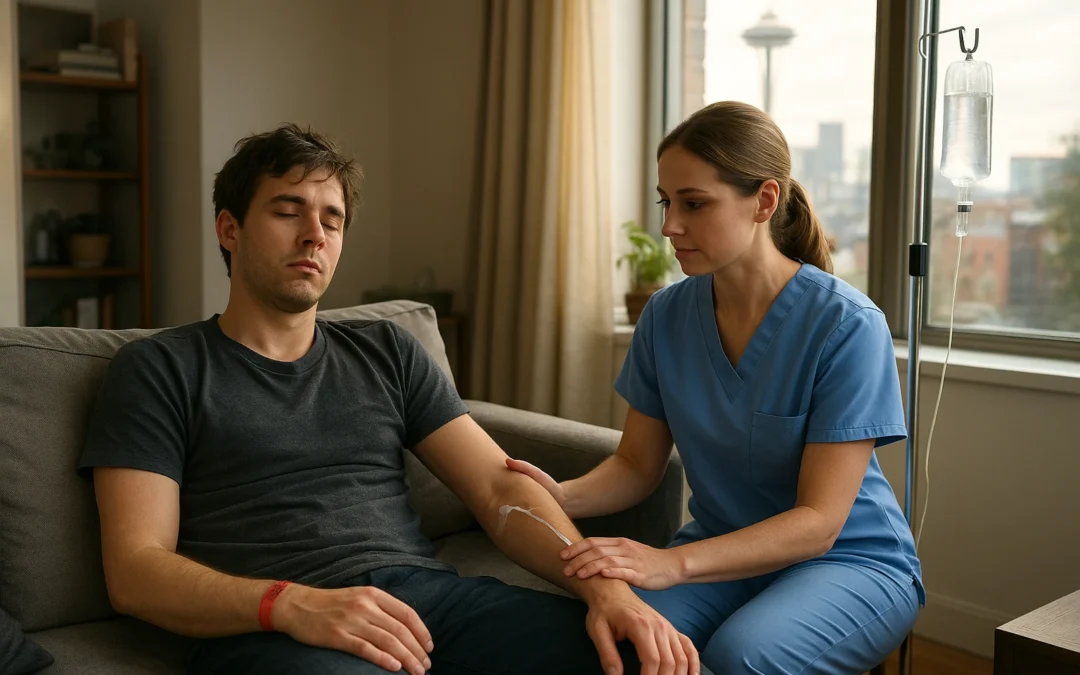
You know the feeling. It’s the morning after an epic, four-hour set at WAMU Theater or a sold-out indie show at Neumos. The ringing in your ears has faded into a dull roar, your legs feel like lead from the Pike/Pine climb, and the infamous “Grey City” fatigue has firmly set in.
Most people write this feeling off as just another hangover. But if you’re waking up in a Capitol Hill micro-apartment or a Pioneer Square loft feeling completely depleted, what you’re actually experiencing is a complex mix of cellular dehydration, sensory overload, and physical exhaustion.
For years, the standard Seattle recovery protocol involved chugging sports drinks and hoping for the best. Today, there’s a more strategic approach. The rise of mobile iv therapy is shifting post-concert recovery from a slow, painful waiting game into a proactive wellness strategy.
Let’s look at the science behind why your body feels “broken” after a night out in Seattle’s entertainment districts, and how localized, in-home IV recovery actually works.
The Aftermath: Why It’s Not Just the Drinks
If you’re searching for a hangover cure near me, you might be surprised to learn that alcohol is only half the battle. Your post-concert fatigue is heavily driven by the environment itself.
When you spend hours in a high-decibel environment, your body releases cortisol to manage the sensory stress. Combine that with the physical exertion of standing, dancing, and navigating crowded venues, and your body is practically crying out for athletic recovery iv therapy.
Loud environments actually accelerate dehydration. As your body works overtime to process both the sensory input and the drinks, oxidative stress builds up in your cells. This is why you wake up with that deep, heavy brain fog that standard water just can’t seem to clear.
The Science of Survival: The GI-Bypass Explanation
Why can’t you just drink a gallon of water or a specialized hydration powder? To understand this, we need to look at how your body processes fluids.
Think of your gastrointestinal (GI) tract after a night out like Interstate 5 during rush hour. It’s sluggish, irritated, and completely gridlocked. When you drink fluids, they have to navigate this “gut barrier,” which can take hours—and if you’re dealing with nausea, those fluids might not get processed at all.
Receiving a hangover iv is like taking the Link Light Rail straight to your destination. Because the fluids bypass your digestive system entirely, they enter your bloodstream with 100% bioavailability.
Furthermore, there is a concept called the “Electrolyte Delta.” When you’re severely dehydrated, the osmotic pressure in your cells is off-balance. Chugging plain water doesn’t fix this; in fact, it can sometimes dilute your remaining electrolytes further. Intravenous saline, on the other hand, actively “pulls” water directly into your dehydrated cells, reversing the shrinkage that causes those pounding morning-after headaches.
Urban Logistics: Navigating Seattle’s Toughest Neighborhoods
One of the biggest hurdles people face when considering how to get an iv at home is the sheer logistics of urban living. The thought of navigating a medical appointment when you can barely get off the couch is daunting.
The “Apartment Logistics” Gap
If you live in Capitol Hill, Pioneer Square, or Ballard, you likely deal with secure building entries, buzzer systems, and nonexistent street parking. A premium mobile iv provider understands this “tribal knowledge” of Seattle.
Discretion and convenience are built into the model. Professional nurses know how to seamlessly access secure lofts and high-density apartment buildings without forcing you to field a dozen phone calls from the lobby.
Safety Checkpoint: Washington State Standards
When booking iv therapy seattle, it is crucial to verify who is actually coming to your door. The safest and most effective providers exclusively utilize highly trained critical care nurses—specifically those with Emergency Department or ICU experience. This isn’t just about finding a vein; it’s about having a medical professional who understands the exact physiological mechanisms of your fatigue and can safely administer your treatment.
What’s Actually in the Bag? The Revive Protocol
So, what exactly is entering your system to lift the fog? A targeted post-concert treatment, often referred to as the Revive Hangover IV, isn’t just a bag of saline. It’s a precisely calibrated mix of vitamins, minerals, and medications designed to target different pain points:
- Magnesium: Essential for nerve and muscle recovery. This is what helps calm the nervous system after hours of sensory overload from loud music.
- B-Complex Vitamins: The ultimate energy restorers. B-vitamins help clear the “Grey City” fatigue and replenish the cellular energy depleted by a late night.
- Glutathione: The body’s master antioxidant. It flushes out the oxidative stress and toxins processed by your liver.
- Targeted Medications: Depending on your symptoms, critical care nurses can add non-narcotic pain relievers (like Toradol for that pounding headache) or anti-nausea medication (like Zofran) for immediate relief.
It takes about 45 minutes for the IV to drip. Most people experience the “aha” moment—when the headache physically lifts and the brain fog dissipates—before the treatment is even finished.
The Seattle Post-Concert Recovery Blueprint
Recovery needs change depending on where the night took you. Here is how group and individual recovery typically plays out across the city’s favorite nightlife hubs:
Capitol Hill (High Energy & Group Recovery):After a long night traversing Pike/Pine, you’re likely waking up with friends. “Recovery Parties” are becoming increasingly popular here. Booking a nurse for group recovery allows everyone to rehydrate and reset together in the living room before heading out for a late brunch.
Pioneer Square (The Historic Hustle):Known for its massive underground clubs and historic lofts. The dense brick buildings and lack of easy parking can make leaving the house the next day feel impossible. In-home therapy shines here, turning your couch into a private recovery oasis while the nurse handles the logistical headache of downtown parking.
Ballard (The Long Walk Home):Ballard nights often end with a long, exhausting walk through residential streets. The fatigue here is highly physical. Treatments focused on heavy electrolyte replenishment and muscle recovery are ideal for the quiet, residential morning-after.
Frequently Asked Questions (FAQ)
How fast does an IV work compared to drinking water?
While oral fluids can take hours to absorb (and even longer if your digestive system is compromised), IV fluids enter your bloodstream instantly. Most people feel noticeable relief from headache and fatigue within 30 to 45 minutes.
Is it safe to get an IV at home?
Yes, provided you use a reputable service. Always ensure your provider uses critical care nurses (ER or ICU trained) and operates under a licensed medical director. They are trained to evaluate your vitals and ensure the treatment is perfectly safe for your specific health profile.
Will this help with the “ringing ears” and exhaustion, or just the alcohol hangover?
A well-formulated IV addresses holistic recovery. Ingredients like Magnesium and B-Vitamins specifically target nervous system fatigue and cellular energy, which helps combat the physical exhaustion and sensory overload caused by loud, crowded venues.
Can I book a nurse for my entire group after a show?
Absolutely. Group bookings are incredibly common, especially on weekend mornings in neighborhoods like Capitol Hill. You can often coordinate a single nurse to treat multiple people in the same apartment, making it a shared recovery experience.
Rethinking Your Recovery Strategy
Waking up feeling depleted doesn’t have to be the inevitable price you pay for enjoying Seattle’s incredible live music scene. By understanding the science of cellular hydration and leveraging the convenience of at-home care administered by critical care nurses, you can reclaim your weekend.
The next time you’re planning a big night out at WAMU or a local club, consider making proactive recovery part of your logistical planning—right alongside securing your concert tickets and booking your ride home.