

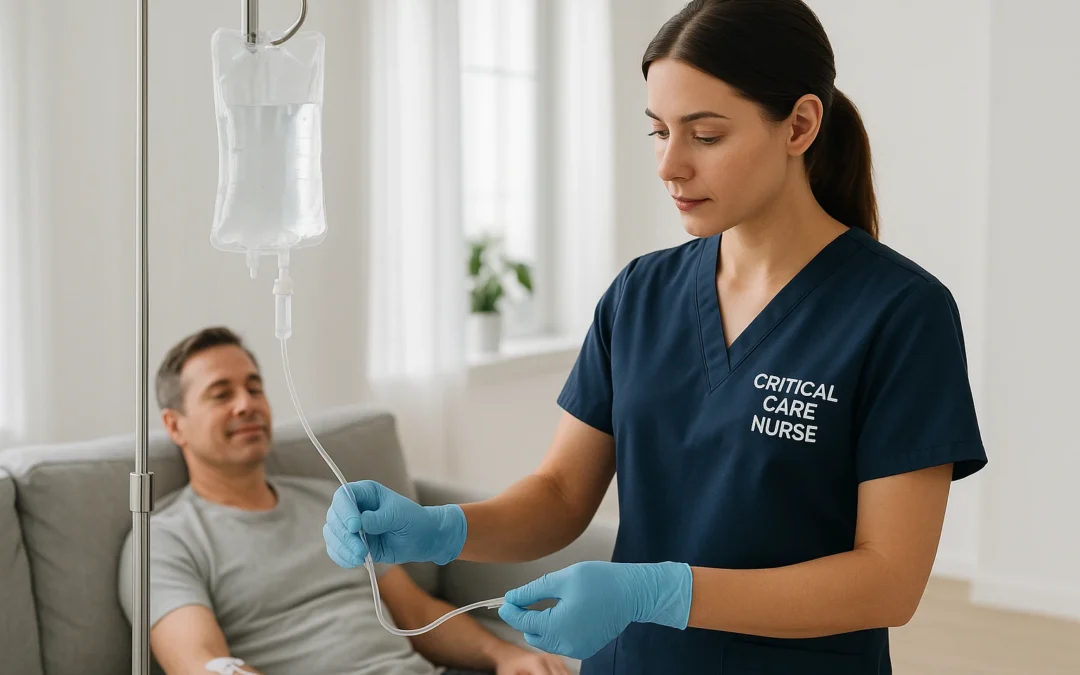
Imagine you’ve just wrapped up a grueling legislative session at the Capitol, or perhaps you’re recovering from a harsh flu in your Cooper Point home. You’re exhausted, dehydrated, and looking for relief. A quick search reveals a booming local market for wellness infusions delivered right to your living room or office.
The convenience is undeniably appealing. But before you book an appointment, it raises a vital question: When a knock comes at your door, who exactly is on the other end of the needle?
If you’ve been exploring olympia iv therapy, you might have noticed a recurring theme in the search results: plenty of aesthetic menus and price lists, but surprisingly little information about clinical safety. With national media highlighting a “wild west” mentality in some corners of the IV wellness industry, South Sound residents have valid reasons to be cautious.
Let’s pull back the curtain on mobile IV safety. By understanding the biological realities, Washington State nursing laws, and the crucial difference a critical care nurse makes, you can confidently take charge of your health without the guesswork.
The Biological Reality: Why “Direct-to-Bloodstream” Leaves Zero Room for Error
When you drink a glass of water or take an oral vitamin, your digestive system acts as a sophisticated filter. It breaks down what you consume, absorbs what it needs, and safely passes the rest.
Intravenous (IV) therapy bypasses this filter entirely. It delivers hydration and nutrients directly into your bloodstream, offering 100% bioavailability. While this creates rapid, highly effective relief, it also means there is absolutely zero room for clinical error.
Without advanced iv safety protocols, three primary risks emerge in a home setting:
- Infiltration & Extravasation: This occurs when a needle dislodges or misses the vein, causing IV fluids to leak into surrounding tissues. It can lead to severe swelling, pain, and bruising.
- Hemodynamic Volume Overload: Pumping 1,000mL of saline into the bloodstream sounds refreshing, but if you have underlying (or undiscovered) cardiovascular or renal limitations, this rapid fluid intake can severely stress your heart and lungs.
- Microbial Contamination: Introducing vitamins into an IV bag requires breaking seals. If this isn’t done under strict, sterile conditions, the risk of bacterial infection skyrockets.
Demystifying the Provider Hierarchy in Washington State
Many people assume that anyone wearing scrubs and carrying medical gear is legally and medically qualified to administer an IV in their home. However, Washington State law is incredibly strict regarding who can perform these procedures.
When you start asking, “how do mobile iv drip services compare for safety?“, the answer almost always comes down to the person holding the needle.
Level 1: Paramedics and EMTs (The Legal Boundary)
It is a common misconception that paramedics can perform home wellness IVs. Under Washington State law (RCW 18.71 and WAC 246-976), paramedics operate strictly under an Emergency Medical Services (EMS) license. This means their legal scope is restricted to pre-hospital emergency care and transport. They cannot legally administer elective wellness infusions in a residential or office setting in Washington.
Level 2: General Registered Nurses (RNs)
Licensed RNs and LPNs are legally permitted to administer IVs, provided they are operating under the formal, medically-screened standing orders of a Medical Director (RCW 18.79 and WAC 246-840). However, the title of RN is broad. A school nurse or administrative RN may be fully licensed, but they likely aren’t placing difficult IVs or managing acute physical reactions daily.
Level 3: Critical Care Registered Nurses (ICU/ER)
This is the gold standard of mobile wellness. Critical Care RNs spend their careers in Intensive Care Units or Emergency Departments. They place complex IV lines daily, manage life-support systems, titrate sensitive medications, and possess an acute “clinical eye” for medical emergencies. Intravene exclusively utilizes critical care nurses, ensuring that the person in your home is equipped for far more than just a simple wellness drip.
Inside the “Clinical Eye”: How ICU Nurses Protect You in Your Home
What does critical care expertise actually look like when a mobile nurse arrives at your Olympia home? It comes down to hospital-grade protocols adapted for your living room.
The Pre-Infusion Baseline Assessment
Before a drop of fluid is administered, a critical care nurse performs a vascular and hemodynamic assessment. Rather than just taking your blood pressure and hoping for the best, an ICU nurse will auscultate—listen to your heart and lungs—to ensure your cardiovascular system can comfortably handle the fluid volume, completely mitigating the risk of fluid overload.
USP <797> Bedside Compounding
Adding vitamins to a sterile IV bag is classified as a sterile compounding act. According to United States Pharmacopeia (USP) <797> standards, when this is done outside of a controlled pharmacy hood, it is considered “Immediate-Use.” This strictly dictates that the mixture must be administered within 4 hours of preparation.
If a provider shows up with a pre-mixed bag they prepared hours ago in their car or office, they are violating sterile compounding standards. Critical care nurses prepare your IV immediately at your bedside, ensuring absolute sterility and zero bacterial exposure.
Advanced Vascular Access (No More “Fishing”)
For individuals who are dehydrated, older, or simply have “rolling” veins, getting an IV can be an anxiety-inducing experience. Because ICU and ER nurses deal with severely compromised patients daily, they possess advanced vascular access techniques. They know how to choose the right gauge and angle to make the process virtually painless on the first try, minimizing the risk of bruising or tissue infiltration.
The “Titrate-and-Rescue” Mindset
In the rare event of a vasovagal response (fainting from needles) or an unexpected mild allergic reaction, a general provider might panic. A critical care nurse shifts instantly into a “titrate-and-rescue” mindset. They are trained in Advanced Cardiovascular Life Support (ACLS) and know exactly how to adjust flow rates, reposition the patient, and deploy emergency interventions calmly and effectively.
The 5-Step Mobile IV Safety Checklist
Whether you are looking for iv hydration in lacey wa, researching iv therapy tacoma, or simply searching for an iv therapy near me, use this checklist to audit any provider before you let them into your home:
- Verify the Credentials: Ask specifically, “Are you an RN, and what is your daily clinical background?” Look for ICU, ER, or critical care experience.
- Check for a Medical Director: Ask, “Is there an active physician Medical Director overseeing my standing orders?” (This is required by Washington law).
- Audit the Mix: Ensure the provider mixes your vitamins into the saline bag in front of you at the bedside, not beforehand.
- Demand a Pre-Assessment: A reputable nurse will listen to your heart and lungs and check your vital signs before starting the infusion.
- Ask About Emergency Protocols: Ask what tools and medications they carry to manage allergic or vasovagal reactions.
By maintaining rigorous adherence to clinical protocols—much like the strict safety criticals kent standards or protocols expected during a mobile iv treatment thornton—Intravene brings the safety of the hospital directly to your couch.
Frequently Asked Questions (FAQ)
Is mobile IV therapy actually safe?
Yes, but safety is entirely dependent on the provider’s credentials and compounding protocols. When administered by a Critical Care RN following USP <797> sterile compounding rules and Washington State Board of Nursing guidelines, it is highly safe and effective.
Does getting a mobile IV hurt, and will it bruise my skin?
While you will feel a tiny pinch from the needle, it should not be painful. Bruising usually occurs when a provider “fishes” for a vein or when the fluid leaks into the tissue (infiltration). ICU nurses have advanced vascular training, meaning they are experts at securing the line comfortably on the first try.
Who is legally allowed to come to my home to administer an IV in Washington?
Only licensed nurses (RNs and LPNs) operating under a Medical Director’s formal standing orders can administer elective wellness IVs in a home or office. Paramedics and EMTs are legally restricted to pre-hospital emergency care and cannot perform these elective services in Washington State.
How do I know the vitamins aren’t contaminated?
You should watch the nurse inject the vitamins into the sterile saline bag directly at your bedside. If a provider brings a pre-mixed bag into your home, you cannot guarantee its sterility or know how long it has been sitting, which is a major infection risk.
Is there an actual doctor overseeing this mobile service?
Legitimate mobile IV services must operate under the license of a Medical Director. Your health history must be reviewed against approved standing orders before any nurse is legally allowed to administer treatment.
Elevating Your Wellness Journey
Understanding the science and legalities behind mobile IV therapy transforms you from a casual consumer into an empowered patient. You deserve the unparalleled convenience of home wellness without compromising a single ounce of clinical safety.
If you’re ready to experience the difference that critical care expertise brings to mobile hydration and recovery, continue your research into providers who put clinical excellence first, ensuring your journey to better health is as safe as it is revitalizing.