

Picture this: You’ve just disembarked from a five-day cruise or finished a grueling transcontinental flight. Your body is feeling the undeniable physiological toll of travel—the dry cabin air, the lingering effects of cruise-induced motion sickness, and the heat of a bustling port city have left you completely depleted.
You know you need clinical-grade hydration, and fast. But as you look around your high-security hotel lobby or try to figure out your Airbnb’s gate code, a wave of logistical anxiety sets in. Can a medical professional actually get up to my room? Does the hotel allow this? Can I just get an IV on the ship?
When you’re dealing with severe travel fatigue, the last thing you want to do is navigate confusing booking mechanics or trek across town to a clinic. Understanding exactly how premium mobile IV providers operate in highly regulated port corridors can completely transform your recovery experience.
Let’s demystify the logistical and clinical realities of getting medical-grade hydration delivered directly to your transient space, turning travel-induced exhaustion into a seamless bounce-back.
The Port Challenge: Why Direct Cruise Ship Access is a Myth
One of the most common questions travelers ask is whether a nurse can deliver an IV directly to their cruise ship cabin or meet them right at a mobile iv boat dock. The short answer? They can’t. But understanding why is fascinating.
Cruise terminals are highly secure maritime zones. Once a ship is docked, access is strictly governed by Coast Guard regulations and Customs and Border Protection (CBP). Unless you are a manifested passenger or port staff, stepping past security checkpoints is a federal offense. Many travelers fall into the “cruise ship infirmary trap”—waiting hours in a crowded medical bay, paying exorbitant fees, and risking mandatory quarantine—simply because they didn’t know there was a better way.
The “Port-Adjacency” Pivot Strategy
Instead of fighting maritime law, the gold standard for travel hydration is the port-adjacency strategy. This involves booking your treatment at a hotel, Airbnb, or private residence within a 5-mile corridor of major terminals.
By scheduling an infusion 24 hours before embarkation or immediately upon disembarkation at a nearby hotel, you completely bypass restricted Port Authority zones while maintaining maximum clinical safety and comfort.
The Logistical Blueprint: Seamless Entry into Hotels and Airbnbs
You might be wondering how a nurse gracefully navigates high-end hotel security or strict Airbnb rules without causing a scene. Premium mobile IV services don’t just show up unannounced; they utilize highly refined entry protocols.
Coordinating with Hotels
Top-tier providers treat the hotel concierge as a partner. When a nurse arrives, they present themselves as a visiting wellness professional. Because they operate under strict medical oversight, a simple check-in at the front desk is all it takes to gain secure elevator access. There are no loud medical carts or disruptive setups—just a discreet professional carrying a specialized, self-contained medical kit.
Navigating Airbnbs and Vacation Rentals
For short-term rentals, the process relies on clear communication. Providers utilize GPS tracking so you know exactly when your nurse is arriving, allowing you to provide necessary lockbox or gate codes securely. If your Airbnb host is hesitant, reputable providers can supply liability and medical safety documentation, assuring hosts that the treatment is entirely safe, insured, and non-disruptive to the property.
Building the Clinical Standard in a Non-Clinical Space
There is a massive difference between basic “at-home” wellness and maintaining rigorous clinical sterility in a hotel room. Transient spaces like hotels harbor unique environmental variables, so how does a nurse ensure a hospital-grade experience?
The Anatomy of a Room Setup
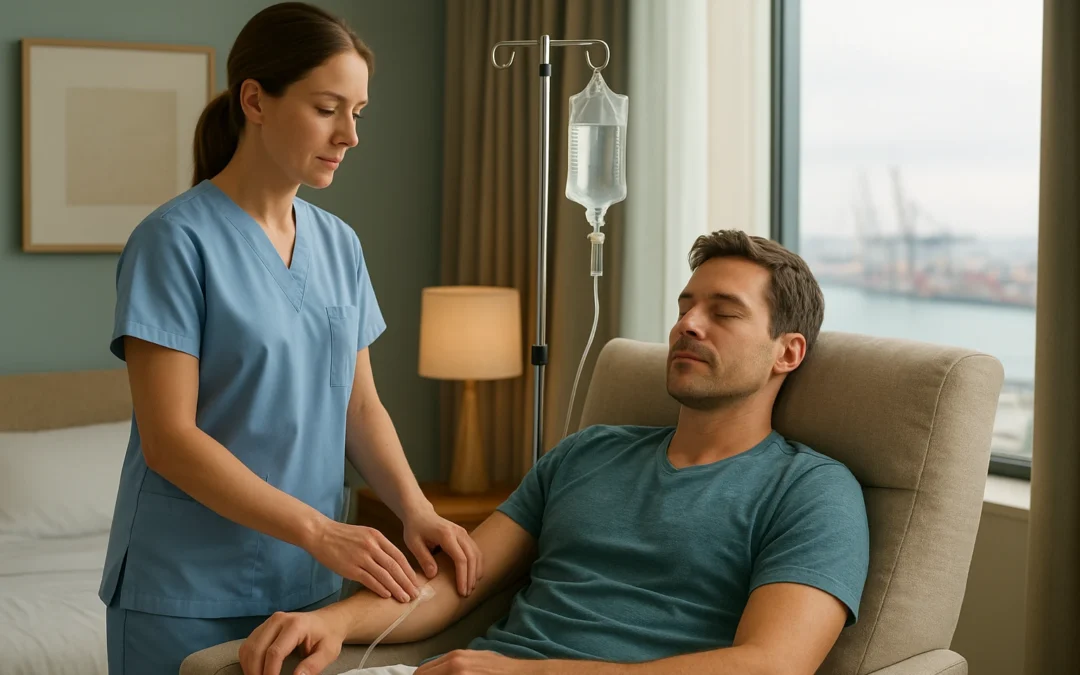
When your nurse arrives, they establish a “clean zone” in your room. This involves using disposable sterile drapes and single-use, sealed medical kits. All hydration iv therapy equipment is self-contained. The nurse will bring portable, heavy-duty mobile IV poles or compression bags that easily dispense fluids without requiring hooks on the walls or damaging any room furnishings.
Why Stay In-Suite?
You might be tempted to search for a retail hydration station mobile iv drip lounge nearby. However, walking to a clinic in the heat while severely dehydrated can be physically taxing and exposes your compromised immune system to public viral loads. An in-suite infusion preserves your energy, guarantees total privacy, and allows you to rest precisely where you are. When considering the mobile iv therapy cost, the sheer value of avoiding the commute and receiving one-on-one undivided clinical attention makes in-room delivery the superior choice.
The Mastery of “Hard Sticks” and Regional Compliance
Here is an essential physiological reality: severe dehydration causes your veins to constrict and flatten. This is known in the medical field as the dehydration paradox.
The ICU Expert Standard
Because dehydrated travelers have compromised veins, inexperienced practitioners often struggle, leading to painful, multiple needle sticks. This is exactly why the gold standard in mobile IV therapy is the exclusive deployment of ICU and Emergency Room veteran nurses. These highly trained professionals specialize in rapid, single-stick vascular access under challenging conditions. They know exactly how to manage hemodynamics and ensure your comfort on the very first try.
Navigating State-by-State Medical Laws
Mobile IV delivery isn’t just about showing up with saline; it’s a heavily regulated medical practice. Depending on where you travel, your provider is navigating complex legal frameworks behind the scenes:
- Texas & Florida: Humid Gulf Coast climates require specific heat-recovery protocols and strict Medical Board compliance.
- California: Providers must navigate stringent Corporate Practice of Medicine laws, ensuring a licensed physician is heavily involved in oversight.
- Massachusetts (Boston): Delivering to historic hotels requires navigating extreme traffic and municipal parking restrictions without compromising appointment times.
A legitimate provider always operates under a licensed Medical Director (MD/DO) with strict standing orders. They will take your full medical history and check your vitals before any treatment begins.
Actionable Insights: Booking Your Travel Hydration Window
Timing is everything when it comes to travel recovery. Whether you are searching for iv hydration near me in a sweltering port city like Galveston, or looking for mobile iv therapy near me after a long flight into the Pacific Northwest, here is how to optimize your experience:
- Time Your Infusion: The best recovery windows are typically 3 hours post-flight, the morning before cruise embarkation, or the afternoon you disembark.
- Prep Your Space: Before your nurse arrives, find a comfortable seating area near an electrical outlet.
- Prep Your Body: Even if you feel nauseous, try to eat a light snack and drink a few sips of water. This slightly elevates your blood sugar and helps plump your veins for easier access.
Frequently Asked Questions (FAQ)
Can hotel staff stop a mobile IV nurse from coming to my room?Generally, no. As long as you are a registered guest and permit the visitor, hotels view licensed mobile nurses similarly to visiting massage therapists or private wellness professionals. Premium providers coordinate seamlessly with the concierge to ensure smooth entry.
Is getting an IV in an Airbnb safe and sterile?Yes. Expert mobile IV nurses bring sterile drapes, single-use sealed equipment, and medical-grade sanitizers to establish a “clean field” in any environment, ensuring hospital-level safety protocols are met regardless of the room’s baseline cleanliness.
What if I need specialized treatments, like help adjusting to a new elevation?Many travelers fly into high-altitude ports or inland cities before their trips. Providers can often customize your drip to your environment, such as providing an iv for altitude sickness to help your body acclimatize rapidly and prevent nausea.
How long does the entire process take?From the moment the nurse knocks on your door to the time they pack up, the entire process usually takes between 45 to 60 minutes. This includes a brief medical history check, vital signs monitoring, and the infusion itself.
Next Steps for Your Recovery Journey
Travel should be about making memories, not fighting through fatigue, dehydration, or a lingering headache. By understanding how mobile IV logistics work in busy port cities, you can take control of your wellness and bypass the friction of traditional medical clinics.
The next time you find yourself staring at the ceiling of a hotel room wishing for immediate relief, remember that hospital-grade care is just a booking away. Seek out providers who champion clinical excellence, rely on ICU-trained nurses, and understand the nuanced logistics of meeting you exactly where you are. Rest up, rehydrate, and get back to enjoying your journey.