

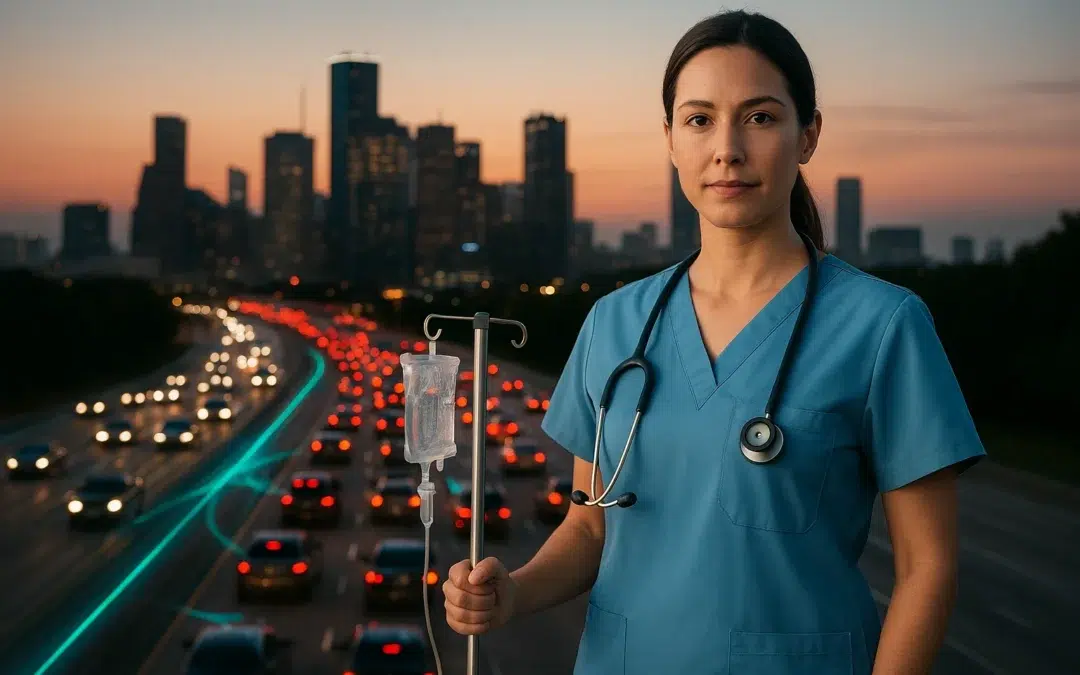
If you live in Houston, you know the specific kind of dread that sets in when you look at a GPS during rush hour. Whether you are in The Woodlands, Sugar Land, or right inside the Loop, the sprawling nature of our city means that “nearby” can still mean 45 minutes away.
Now, imagine feeling your worst—struggling with a migraine, battling a severe hangover, or fighting off the flu—and knowing you need relief immediately. In these moments, the logistics of healthcare matter just as much as the medicine itself.
For many Houstonians, the concept of intravene mobile iv therapy sounds like a luxury, but when you are dehydrated or ill, it becomes a necessity for rapid recovery. However, a common skepticism remains: “In a city famous for gridlock, how can a mobile nurse possibly get to me quickly?”
The answer lies not in driving faster, but in smarter logistics. It requires a sophisticated approach to urban navigation that transforms how medical care is delivered.

The “Hub and Spoke” Myth vs. Decentralized Reality
To understand how rapid delivery works, we first have to unlearn the traditional delivery model. Most people imagine mobile services operating like a pizza shop: there is one central headquarters where all the nurses hang out, waiting for a phone to ring. When you call from Katy, a nurse grabs a bag and starts the long drive from Downtown.
If this were the actual model, response times would indeed be terrible.
The Decentralized Network Strategy
Modern mobile healthcare operates closer to a ride-share model than a pizza delivery service. To ensure we can serve the mobile iv therapy houston market effectively, we utilize a decentralized network of Critical Care nurses.
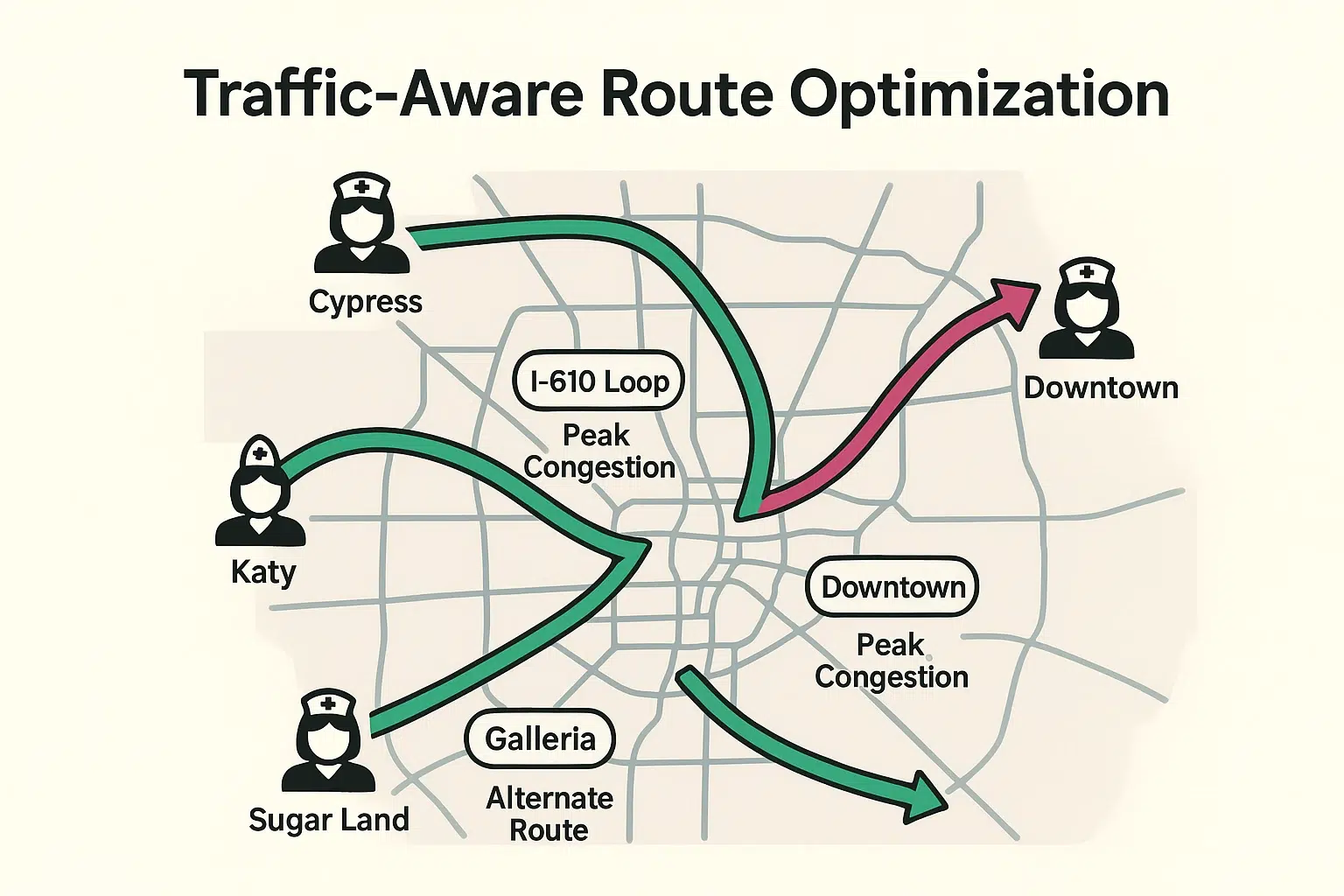
Instead of dispatching from a single central office, nurses are stationed strategically throughout the Greater Houston area—from Cypress and Spring down to Pearland and League City. These are local professionals who live and work in your specific zones.
When you request a treatment, the system isn’t looking for a nurse at “Headquarters.” It is scanning the network for the highly qualified nurse already located in your zip code. This fundamentally changes the math of arrival times, turning a cross-town trek into a short neighborhood drive.
The Technology Behind the Dispatch
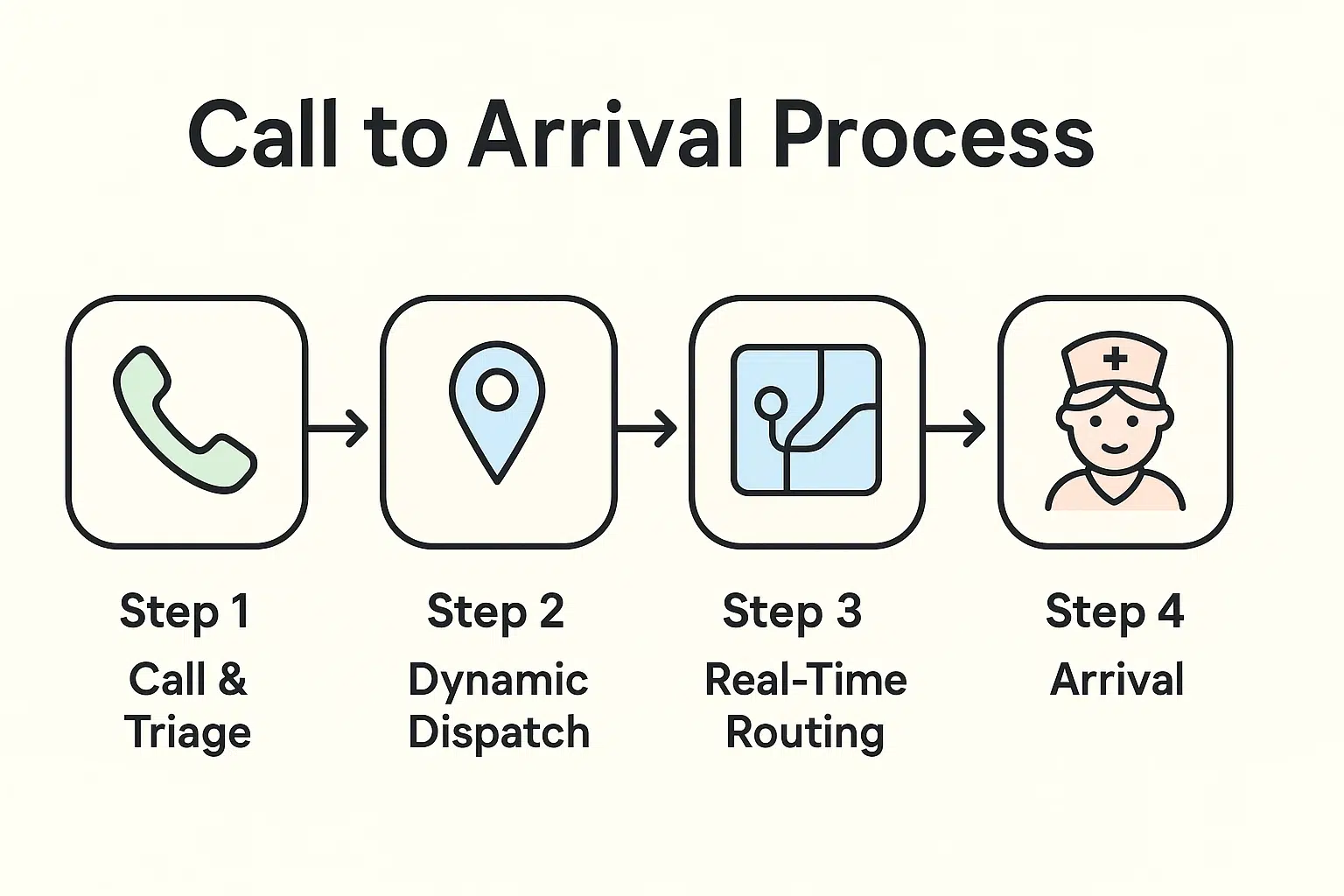
Speed isn’t just about location; it’s about decision-making. In a medical context, every minute you spend feeling nauseous or fatigued feels like an hour. Therefore, the operational side of intravene utilizes dynamic dispatching technology to bridge the gap between your distress signal and a nurse’s arrival.
Here is what happens behind the scenes when a request comes in:
- Triage & Assessment: The priority is safety. We ensure the request is appropriate for mobile therapy.
- Geolocation Analysis: The system identifies the nearest available Critical Care nurse.
- Traffic Integration: It’s not just about physical distance; it’s about temporal distance. A nurse five miles away in heavy traffic might take longer than a nurse seven miles away with a clear shot down a toll road.
Why “Dynamic” Matters
Static routing helps no one in Houston. Our dispatching process accounts for real-time variables. If the 610 Loop is parking lot at 5:00 PM, or there is construction on I-45, the logistics model adapts.
By analyzing these patterns, we can give you a realistic ETA rather than a hopeful guess. This transparency is vital for intravene wellness services, where patient trust is paramount. You aren’t just buying a vitamin bag; you are buying the certainty that help is actually coming.
Overcoming the “Last Mile” Challenges
In the logistics industry, the “Last Mile” is notoriously the most difficult part of delivery. In healthcare, this involves navigating gated communities, finding hotel rooms, or reaching high-rise apartments in the Galleria area.
This is where the human element of our logistics advantage comes into play. Because we employ intravene wellness therapies providers who are experienced Critical Care nurses (ER and ICU backgrounds), they are accustomed to high-pressure environments where time is critical.
They are efficient at:
- Rapid Setup: Turning a living room into a sterile treatment area in minutes.
- Clinical Precision: Securing IV access quickly, even on dehydrated patients with difficult veins.
- Local Knowledge: Knowing the back roads and shortcuts that only locals know, bypassing main artery congestion.
Frequently Asked Questions
When you are feeling unwell, you don’t have the energy to hunt for answers. Here are the most common questions we receive regarding logistics and timing.
How long does it typically take for a nurse to arrive?
While traffic and demand vary, our decentralized model allows us to aim for arrival within an hour of booking confirmation in most cases. By pulling from a local pool of nurses, we minimize travel time significantly compared to centralized services.
Do you serve suburbs like Katy, The Woodlands, or Sugar Land?
Absolutely. We don’t just “drive out” to these areas; we have nurses stationed in these areas. This ensures that residents in the outer suburbs receive the same rapid response times as those in Downtown or Midtown.
What happens if I book during rush hour?
Rush hour is a reality of Houston life. However, our system utilizes real-time traffic data (similar to Waze or Google Maps) to route nurses efficiently. If severe traffic is unavoidable, we provide transparent, real-time updates so you are never left wondering where your care is.
Is there a travel fee for long distances?
Our goal is to keep pricing transparent. Because our nurses are distributed across the Greater Houston area, we can often avoid excessive travel fees that other companies might charge for “out of area” service.
Trusting the Process
The next time you are stuck in traffic on the Beltway, looking at the sea of red brake lights, remember that modern healthcare has found a way around it. By combining Critical Care expertise with advanced logistics and a decentralized network, high-quality care can come to you—safely, reliably, and surprisingly fast.
When you choose a mobile service, you aren’t just choosing a medical treatment; you are choosing a logistics partner dedicated to your recovery.
Ready to learn more about how we bring hospital-level care to your doorstep? Explore our approach to intravene wellness and see the difference professional logistics make.