

If you have ever stepped out of your car at the Honeymoon Island Causeway and felt like you were walking into a wet wool blanket, you know that Dunedin heat is different. It’s not just the temperature reading on your dashboard; it’s a physiological heavy weight that sits on your chest.
For residents and visitors enjoying the Pinellas Trail or the beaches, there is often a confusing moment that happens around 2:00 PM. You have been drinking water all day, yet you feel sluggish, slightly nauseous, and incredibly tired. You did everything “right,” so why does your body feel like it’s failing?
The answer lies in the unique biochemistry of how the human body handles high humidity—and why traditional water intake sometimes hits a biological roadblock that only advanced hydration methods can bypass.
![An active couple pausing for a drink of water on a sunny trail in Dunedin, looking flushed and tired.]
The “Wet Bulb” Effect: Why Dunedin is Different
To understand why dehydration hits harder here than in dry climates, we have to look at the science of evaporative cooling. In a dry heat (like Arizona), your sweat evaporates instantly, carrying heat away from your skin and cooling your blood.
In Dunedin, where humidity often hovers near 90%, the air is already fully saturated with moisture. Sweat sits on your skin without evaporating. This creates a dangerous condition known as a high Wet Bulb Globe Temperature. When sweat cannot evaporate, your body’s primary cooling system fails. Your internal core temperature rises rapidly, even if you are resting in the shade.
This leads to a cascade of physiological responses that water alone often cannot fix quickly enough.
The Physiological Trap: Why Your Stomach “Shuts Down”
Here is the “aha moment” that most people miss: When you are overheating, your digestive system essentially goes offline.
To try and cool you down, your body diverts blood flow away from your internal organs (like the stomach and intestines) and sends it to your skin’s surface. This is a survival mechanism known as thermoregulation. However, it creates a problematic cycle for rehydration:
- Gastric Emptying Slows: Because there is less blood flow to the stomach, the water you drink sits there, sloshing around rather than being absorbed.
- The “slosh” feeling: This is why athletes and beachgoers often feel bloated or nauseous despite being dehydrated.
- Delayed Absorption: In severe heat stress, it can take 30 to 60 minutes for oral fluids to be processed and enter the bloodstream.
This is where the science of mobile iv therapy changes the conversation from “drinking water” to “systemic recovery.”
IV Therapy: The Biological Fast Lane
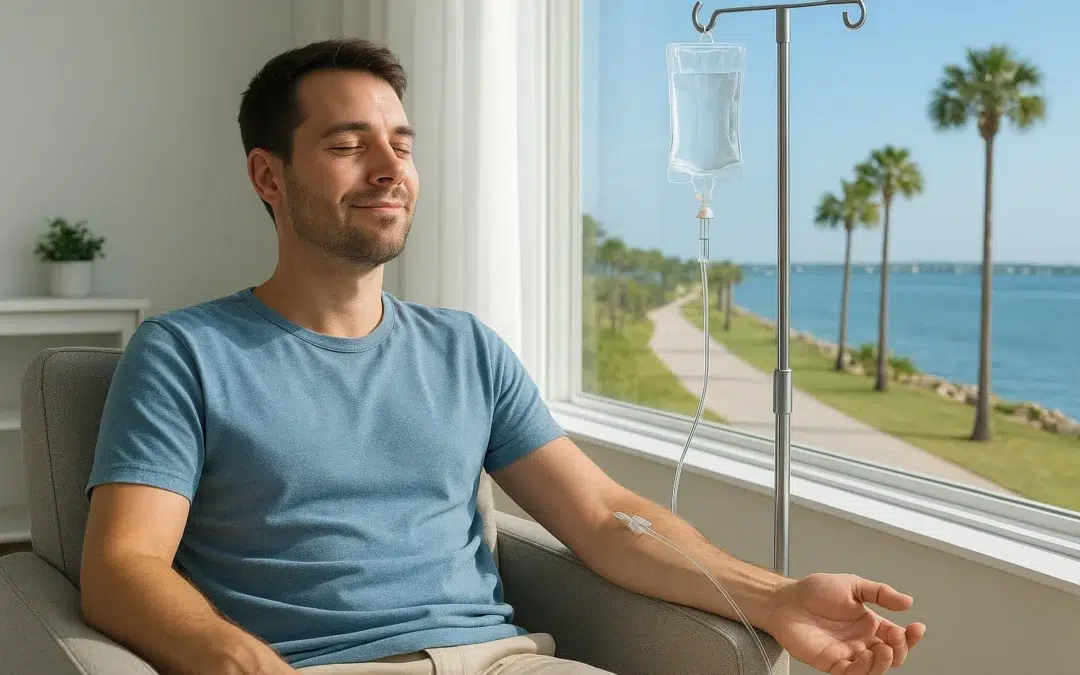
Intravenous (IV) hydration works by bypassing the digestive system entirely. By delivering fluids directly into the bloodstream, you achieve 100% bioavailability. This offers three distinct physiological advantages during a Florida heatwave:
1. Rapid Core Cooling
Fluids administered intravenously are typically room temperature, which is cooler than your internal body temperature during heat exertion. This helps lower your core temperature from the inside out, providing relief much faster than external cooling methods like ice packs.
2. Electrolyte Precision
Sweating doesn’t just lose water; it dumps sodium, potassium, and magnesium. Drinking plain water in large quantities without replacing these minerals can lead to hyponatremia (diluted blood sodium), which can actually make you feel worse. An IV drip, often referred to as a banana bag iv, is a medically formulated cocktail of saline and essential vitamins designed to restore cellular balance immediately.
3. Critical Care Expertise
Unlike visiting a standard hydration spa, services led by critical care nurses ensure safety. These professionals can identify if your fatigue is simple dehydration or if you are tipping into heat exhaustion—a distinction that requires medical expertise.
![A close-up of a critical care nurse preparing an IV drip bag with vitamins and minerals.]
The Dunedin Danger Zones: A Local’s Guide
Not all heat is created equal. Based on local geography and shade coverage, certain areas in Dunedin present higher risks for rapid dehydration.
The “Shade Deserts”
- Honeymoon Island Causeway: This stretch is beautiful but offers zero shade. The radiant heat from the asphalt combined with the sun reflection off the water creates a localized heat pocket significantly hotter than the surrounding air.
- The Pinellas Trail (downtown stretch): While parts of the trail are canopy-covered, the stretches near Skinner Blvd and the downtown corridor can become heat traps during midday.
The “Silent” Dehydration of the Elderly
Dunedin has a vibrant retiree community, and age plays a major factor in heat tolerance. As we age, our thirst mechanism becomes less sensitive. Seniors can be dangerously dehydrated before they ever feel thirsty.
Watch for “Hidden” Symptoms:
- Confusion or Irritability: Often mistaken for tiredness or age-related moments, sudden confusion is a hallmark of electrolyte imbalance in seniors.
- Sunken Eyes: A physical sign that fluid volume is critically low.
- Skin Elasticity: If you pinch the skin on the back of the hand and it doesn’t snap back immediately, dehydration is present.
If you notice these symptoms, rapid intervention is necessary. This is often where mobile services shine, as they can treat the individual in the comfort of their air-conditioned home rather than forcing a trip to a waiting room.
Performance Recovery for the Active Local
For the cyclists pushing for a PR on the trail or the runners training for the next 5K, recovery is about more than just feeling better—it’s about cellular repair.
High-intensity effort in high humidity creates massive oxidative stress. This is why athletic recovery iv therapy often includes antioxidants like Glutathione or Vitamin C alongside hydration. These components help scrub the free radicals produced during heat stress, reducing soreness and fatigue the next day.
![A group of friends relaxing indoors, one receiving IV therapy while chatting, illustrating convenience.]
Making an Informed Choice
Living in Florida means respecting the environment. Understanding the difference between simple thirst and physiological heat stress allows you to make smarter decisions for your health.
Whether you are recovering from a long day on the boat or preparing for a weekend of outdoor activity, knowing that you have options beyond the water bottle empowers you to enjoy the sunshine safely. When the heat becomes too much, and the gut slows down, medical-grade hydration offers a safe, efficient bridge back to wellness.
Frequently Asked Questions
Is IV hydration safe for everyone?
Generally, IV hydration is very safe for most healthy adults. However, reputable services use critical care nurses who review your medical history to ensure there are no contraindications, such as heart failure or kidney issues, where fluid intake needs to be strictly monitored.
How long does an IV treatment take?
A typical session takes between 45 to 60 minutes. Because the fluids are entering your bloodstream directly, many people report feeling a “lifting” of brain fog and fatigue within the first 15 minutes of the treatment.
Can’t I just drink sports drinks?
Sports drinks are helpful, but they come with high sugar content and still rely on your digestive system. If you are already nauseous or suffering from heat exhaustion, the high sugar load can sometimes upset the stomach further. IVs bypass the stomach entirely.
Do I need a prescription?
Medical directors oversee mobile IV services. You do not need to bring your own prescription; the medical team assesses your needs and authorizes the treatment as part of the service.
Will this help with a “heat hangover”?
Absolutely. A “heat hangover” is essentially severe dehydration and electrolyte depletion. IV therapy st pete and Dunedin residents rely on rapidly restores fluid volume and flushes out metabolic waste, resolving that groggy, headache-heavy feeling.
***
Disclaimer: This content is for educational purposes only and does not constitute medical advice. If you suspect heat stroke (hot/dry skin, high fever, unconsciousness), call 911 immediately.