

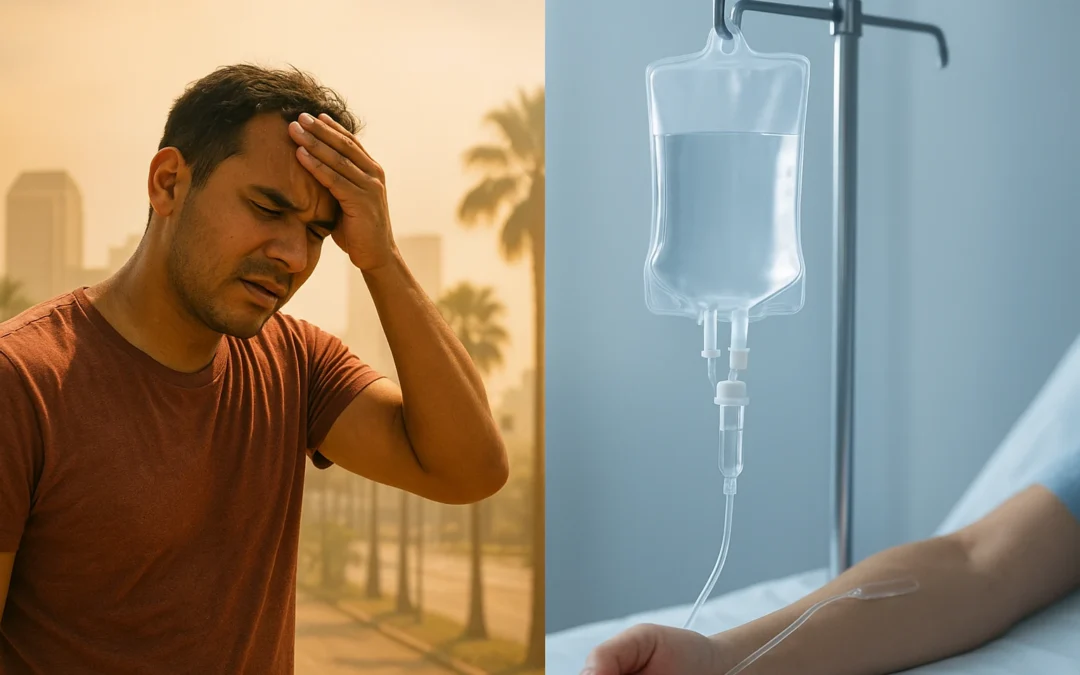
Imagine stepping out of Tampa International Airport for the first time. The air feels heavy, almost like a warm, wet blanket settling over your shoulders. You’re prepared—you brought your reusable water bottle and you’ve been sipping all morning. But a few hours later, while strolling through an outdoor plaza or grabbing lunch at an open-air patio, you feel a deep, heavy fatigue. Your head throbs, and that water you drank just feels like it’s sloshing around in your stomach.
If this sounds familiar, you aren’t alone.
Every year, thousands of residents and visitors experience the physiological wall that is Florida’s climate. The truth is, hydrating in Tampa requires a completely different biological strategy than hydrating in a dry climate. Let’s explore the fascinating science of humid-climate dehydration, why drinking water sometimes isn’t enough, and how modern wellness strategies are evolving to meet these local climate challenges.
The Tampa Paradox: When Sweat Stops Working
To understand why a 90°F day in Tampa feels so much more exhausting than a 110°F day in Arizona, we have to look at a meteorological concept called Wet Bulb Globe Temperature (WBGT).
WBGT isn’t just the temperature on your weather app; it’s a measure of heat stress in direct sunlight, taking into account temperature, humidity, wind speed, sun angle, and cloud cover.
Here is the “Tampa Paradox”: Humans cool down through the evaporation of sweat. When you sweat, the liquid turns into a gas, pulling heat away from your skin. But in Tampa’s 70%+ humidity, the air is already so saturated with moisture that your sweat cannot effectively evaporate.
Instead of cooling you down, you just drip. This leads to the “Sweat Paradox”—your body thinks it’s not cooling down, so it sweats even more, rapidly draining your internal water and electrolyte reserves without actually lowering your core temperature.
Biology vs. Humidity: The “Gut Shut-Down”
When you realize you’re sweating profusely, your first instinct is to chug water. But in extreme heat, you might encounter a biological roadblock known in medical circles as delayed gastric emptying, or more simply, the “Gut Shut-Down.”
When your core temperature rises, your body goes into survival mode. It desperately needs to cool your vital organs, so it redirects blood flow away from your digestive tract and pushes it outward to your skin.
Without proper blood flow to the stomach and intestines, digestion grinds to a halt. The water and sports drinks you are swallowing pool in your stomach rather than being absorbed into your bloodstream. You can actually experience “internal drowning” (over-hydration in the stomach) while simultaneously suffering from cellular dehydration.
The 3 Stages of Tampa Heat Strain
According to clinical research, including insights from institutions like USF Emergency Medicine, heat stress progresses through distinct stages. Recognizing these can be the difference between a minor disruption and a ruined week.
Stage 1: The Fade
This is the most common stage for tourists and casual weekenders. Whether you’re browsing the shops near Chinatown Tampa or waiting for a table outside at PF Chang’s, you might notice a sudden onset of brain fog, lethargy, and mild nausea. You aren’t necessarily thirsty, but your energy suddenly plummets.
Stage 2: The Cramp
Florida sweat is unique. High-intensity heat combined with high humidity leads to a rapid loss of not just sodium, but crucial minerals like Magnesium and Potassium. This stage heavily impacts high-exertion groups. For example, dancers training at America’s Ballet School or construction workers putting in long hours often experience severe muscle cramps and spasms. This is where specialized athletic recovery iv therapy becomes a vital tool, efficiently restoring the precise ratio of electrolytes lost to heavy physical exertion.
Stage 3: The Crisis
If the body’s cooling system fails completely, it triggers a cascade similar to Systemic Inflammatory Response Syndrome (SIRS). This is heat exhaustion bordering on heat stroke. At this point, oral hydration is entirely ineffective, and clinical intervention becomes necessary to lower core temperature and restore fluids.
The Acclimatization Window: Your First 14 Days
If you’ve recently moved to the Tampa Bay area or are visiting for an extended stay, you should know about the acclimatization window. According to CDC guidelines, it takes the human body about 10 to 14 days of gradual exposure to adapt to a new, high-heat environment.
During this two-week period, your body is literally learning how to sweat more efficiently and regulate its heart rate in the humidity. Pushing yourself too hard during this window is the number one cause of heat-related illness among new arrivals.
Bypassing the Blockade: The Science of IV Hydration
When the “Gut Shut-Down” prevents you from absorbing fluids orally, the most effective scientific workaround is bypassing the digestive system entirely.
This is where specialized iv therapy tampa enters the picture. By delivering fluids, vitamins, and perfectly balanced electrolytes directly into the bloodstream, IV therapy “re-primes” the body’s cooling system. It immediately restores the blood volume needed to push circulation back to your vital organs and skin, without waiting for a sluggish digestive tract to process water.
Furthermore, leveraging a mobile iv means you don’t have to drag yourself across town in the sweltering heat to a clinic; highly trained critical care nurses can bring this hospital-level rehydration directly to your living room or hotel.
Your Local Action Plan for Staying Cool
To thrive in Tampa’s climate, you need to think proactively about your hydration:
- Pre-Hydrate with Purpose: Don’t wait until you’re sweating to start drinking. Hydrate heavily the night before an outdoor event.
- Watch the Clock: Plan heavy exertion for the early morning before 10 AM or after 6 PM when the Wet Bulb temperature drops.
- Electrolytes Over Plain Water: Plain water can dilute your remaining sodium levels. Opt for drinks with balanced electrolytes, or seek out professional wellness therapies when you need a physiological reset.
- Listen to the Slosh: If you feel water sloshing in your stomach but you still feel thirsty or dizzy, your gut has stopped absorbing. Stop drinking, get into the air conditioning, and cool your skin down with ice packs to redirect blood flow.
Frequently Asked Questions (FAQ)
Why do I feel so tired after just an hour in the Florida sun?The fatigue comes from your heart working overtime. In high humidity, your heart has to pump much faster to push blood to your skin for cooling. This cardiovascular strain, combined with rapid electrolyte loss, causes profound exhaustion.
Is drinking water enough to prevent heat exhaustion in Tampa?Not always. Because extreme heat limits gastric absorption, and heavy sweating depletes magnesium and potassium, relying solely on plain water can lead to a dangerous electrolyte imbalance.
How does IV therapy differ from drinking a sports drink?Sports drinks must pass through the digestive tract, which slows down significantly during heat stress. IV therapy bypasses the gut, delivering 100% bioavailability of fluids and nutrients instantly to your cells. For individuals focused on comprehensive intravene wellness, this direct delivery method provides rapid relief that oral supplements simply cannot match.
How long does it take to get used to Florida humidity?Physiological acclimatization generally takes 10 to 14 days of safe, gradual exposure. During this time, your body increases its total blood volume and learns to sweat earlier and more efficiently.
Navigating the Heat with Confidence
Living in or visiting Tampa shouldn’t mean spending your entire day hiding from the sun indoors. By understanding the unique mechanics of humid-climate dehydration—from the limitations of the “Sweat Paradox” to the biological realities of the “Gut Shut-Down”—you can take proactive steps to protect your health.
When you know how your body reacts to the climate, you can move from merely surviving the Florida heat to actually thriving in it.