

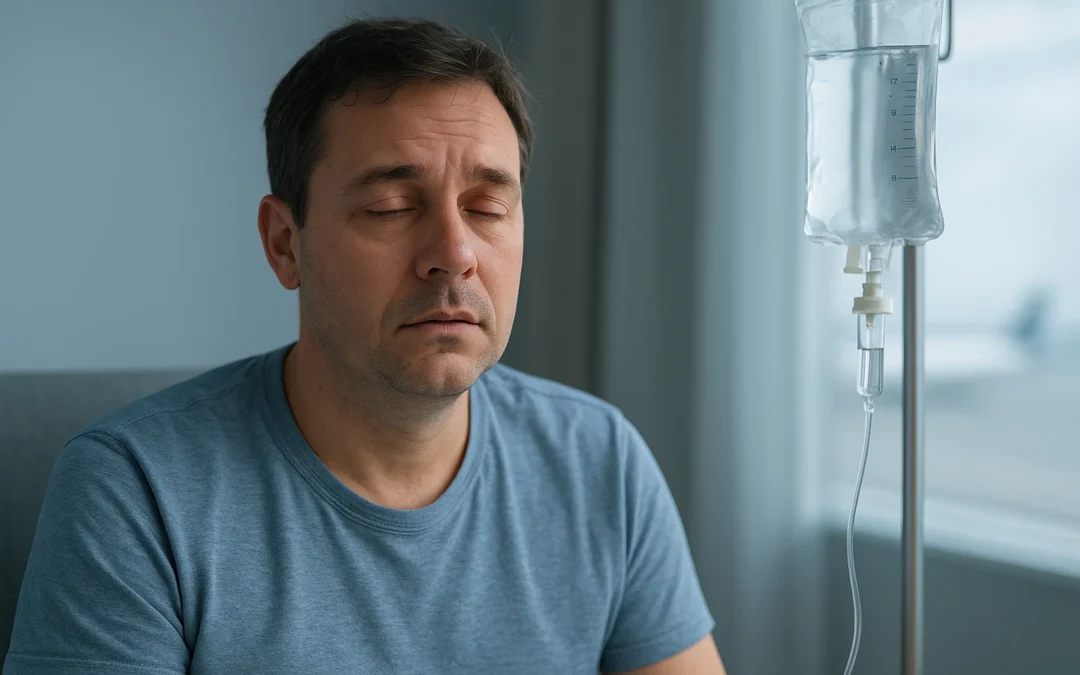
You just spent a week lounging by the pool, eating incredible meals, and sleeping in. By all accounts, you should feel utterly rejuvenated. But as you step off the gangway and onto the concrete pier, something strange happens.
The ground feels like it’s swaying. Your stomach is sloshing. And despite having just been on vacation, a profound wave of exhaustion hits you.
Welcome to the “Cruise Crash.”
For years, the travel industry has suggested that post-cruise fatigue is just the blues of returning to reality, best cured by drinking some lemon water and getting a good night’s sleep. But science tells a different story. The exhaustion you feel isn’t just in your head—it is a distinct metabolic and neurological condition that requires a physiological reset.
Let’s look under the hood at what actually happens to your body during a week at sea, and why targeted recovery is the secret to getting your “land legs” back.
The Anatomy of a Cruise Crash
To understand why you feel so drained, you have to understand the unique environment of a cruise ship. Your body has just spent several days battling a “Triple Threat” of physiological stressors.
1. Systemic Osmotic Dehydration
Think about your environment on the ship. You are constantly surrounded by salty ocean air. Combine that with high-sodium, chef-prepared buffet meals, and perhaps a few more cocktails than you’d normally consume. This creates a high “osmotic load” in your bloodstream. Your body pulls water from your cells to balance out the excess salt and sugar, leaving you cellularly dehydrated, even if you drank water throughout the trip.
2. Circadian Disruption
Cruise life operates on “Lido Deck” time. Late-night shows, midnight buffets, and early morning excursions completely scramble your body’s natural sleep-wake cycle.
3. Vestibular Mismatch (The Sway)
Perhaps the most disorienting part of returning to land is the phantom rocking sensation. This is formally known as Mal de Débarquement Syndrome (MdDS), but most people just call it “land sickness.” For the past week, your brain has been running a complex background program, constantly adjusting your balance to the micro-movements of the ship. When you step onto solid ground, your brain is still running that program—a literal software mismatch between your eyes (which see solid ground) and your inner ear (which expects motion).
Understanding whether dopamine motion sickness and the neurological aspects of sea sickness play a role can help explain why it takes your brain a while to shut off this “at-sea” software.
The “Nausea Paradox” and Gastric Suppression
When travelers feel that post-cruise exhaustion and dehydration, their first instinct is usually to chug a large bottle of water. But have you ever noticed that the water just seems to sit in your stomach, making you feel “sloshy” and even slightly nauseous?
This is known as Gastric Suppression.
When your vestibular system (your inner ear balance center) is overworked trying to adapt to motion, it triggers a protective response that slows down gastric emptying. Your stomach literally stops processing fluids and food efficiently.
This creates a massive roadblock for traditional recovery. You are cellularly dehydrated, but the “vestibular-digestive block” prevents you from absorbing the oral fluids and electrolyte powders you’re desperately trying to consume. You’re trapped in a cycle where you want to hydrate, but feel too nauseous to effectively do so.
The Flight Hazard: Why You Need to Reset Before Takeoff
Here is where the Cruise Crash turns from an annoyance into a legitimate travel hazard. Thousands of cruisers disembark at a port and immediately head to the airport to catch a flight home.
Boarding an airplane while experiencing the Cruise Crash is a recipe for severe travel fatigue. Because you are suffering from osmotic dehydration, your blood is slightly thicker than normal. When you combine this with the dry, pressurized cabin air of a commercial flight, your risk for deep vein thrombosis (DVT) increases, and your post-travel jet lag multiplies.
Securing proper hydration and iv wellness in flight preparation before you board that plane acts as a critical safety shield, thinning the blood and stabilizing your system for the altitude.
The Bioavailability Breakthrough: How IV Therapy Forces a System Restart
If your gut is temporarily blocking oral hydration, how do you fix the problem? You bypass the gut entirely.
This is why clinical-grade IV therapy has become the gold standard for the post-cruise “Golden Hour”—that critical window between disembarking the ship and boarding your flight. By delivering hydration, vitamins, and antioxidants directly into the bloodstream, you achieve 100% bioavailability. It is the quickest way to force-restart your system.
The Ingredients of a True Calibration
A proper post-cruise IV isn’t just saline; it’s a targeted formula designed to combat the Triple Threat:
- Glutathione: Known as the body’s master antioxidant. A week of buffets and unlimited beverage packages taxes your liver. Glutathione acts as a deep cellular cleanser, flushing out toxins and processing residual alcohol.
- B-Complex Vitamins: Essential for mitochondrial energy production. They restore the natural energy reserves depleted by disrupted sleep cycles.
- Magnesium: Calms the nervous system and helps stabilize the neurological “mismatch” causing your land sickness.
Whether you’re looking for a comprehensive Myers Cocktail to restore balance, or a targeted immunity iv therapy to protect you from the travel bugs circulating in crowded airports, delivering these nutrients intravenously provides immediate relief.
Comparative Detox: Fact vs. Fiction
The wellness industry is full of “quick fixes” for post-vacation recovery. Let’s compare how they actually stack up against your body’s physiology:
- Juice Cleanses & Lemon Water: While great for long-term lifestyle habits, they rely on your digestive tract. Because of post-cruise gastric suppression, they absorb too slowly to offer immediate relief from the Cruise Crash.
- “Advanced TRS” (Zeolite Sprays): A popular trend promising to detox the body using oral sprays. However, these focus on slow, systemic heavy-metal detoxing, doing absolutely nothing for the immediate osmotic dehydration and vestibular exhaustion you’re experiencing at the port.
- Clinical IV Therapy: Bypasses the digestive block entirely. Rehydrates cells instantly, restores blood volume for safe flying, and delivers necessary liver-supporting antioxidants in under an hour.
This is why having an experienced critical care nurse administer mobile iv therapy at your hotel or home is vastly superior to over-the-counter travel supplements. You are getting hospital-level calibration in the comfort of your own space.
Your 24-Hour Post-Cruise Recovery Protocol
Ready to conquer the Cruise Crash? Follow this 24-hour checklist to transition smoothly back to land life:
1. The “Land Legs” Gauge
When you first step off the ship, stand still, close your eyes, and notice how much your body sways. If you feel heavily off-balance, your gastric emptying is likely suppressed. Avoid chugging heavy amounts of plain water, which will just cause bloating. Sip slowly.
2. The Golden Hour Reset
Schedule an IV therapy session within 24 hours of disembarking (or immediately at your hotel before your flight). Whether you had a quiet wellness retreat or need an IV for boat party recovery, getting your blood volume and nutrient levels stabilized is step one.
3. The 12-Hour Diet
Stick to simple, easily digestible foods. Your gut has been working overtime processing rich, high-sodium foods for a week. Bone broth, lean proteins, and potassium-rich foods (like bananas) help gently restart your normal digestive rhythm.
4. The 24-Hour Sleep Anchor
Force yourself into your home time zone immediately. Use natural sunlight exposure in the morning to tell your brain’s circadian clock that the Lido Deck schedule is officially over.
Frequently Asked Questions (FAQ)
Is “land sickness” (MdDS) normal after a cruise?Yes, it is entirely normal. Your brain is incredibly adaptable and learned to balance on a moving ship. It simply takes time for the “software” to switch back to dry land. Staying hydrated and resting helps speed up this neurological transition.
Why shouldn’t I just drink sports drinks for electrolytes?Most commercial sports drinks are packed with heavy sugars. When your stomach is already sluggish from vestibular mismatch, dumping heavy sugar into your gut can actually worsen nausea and bloating.
How fast does IV therapy work for post-vacation fatigue?Because the fluids and nutrients enter your bloodstream directly, most people feel a noticeable shift in their energy, mental clarity, and nausea levels before the 45-minute drip is even finished.
Can I get an IV right before I go to the airport?Absolutely. In fact, it is highly recommended. Properly hydrating before a flight thins the blood, reduces the risk of travel-related swelling, and fortifies your immune system against recycled cabin air.
Ready to Reclaim Your Energy?
Returning from a cruise shouldn’t mean spending your first three days back at home feeling sluggish, bloated, and dizzy. By understanding the science behind the Cruise Crash, you can take proactive steps to outsmart it.
If you’re planning your next vacation, or you’ve just stepped off the ship and need to bounce back quickly, exploring professional, nurse-administered IV hydration is the smartest way to ensure your post-vacation glow isn’t overshadowed by travel fatigue. Treat your recovery with the same intention you treated your vacation, and you’ll be ready to hit the ground running.