

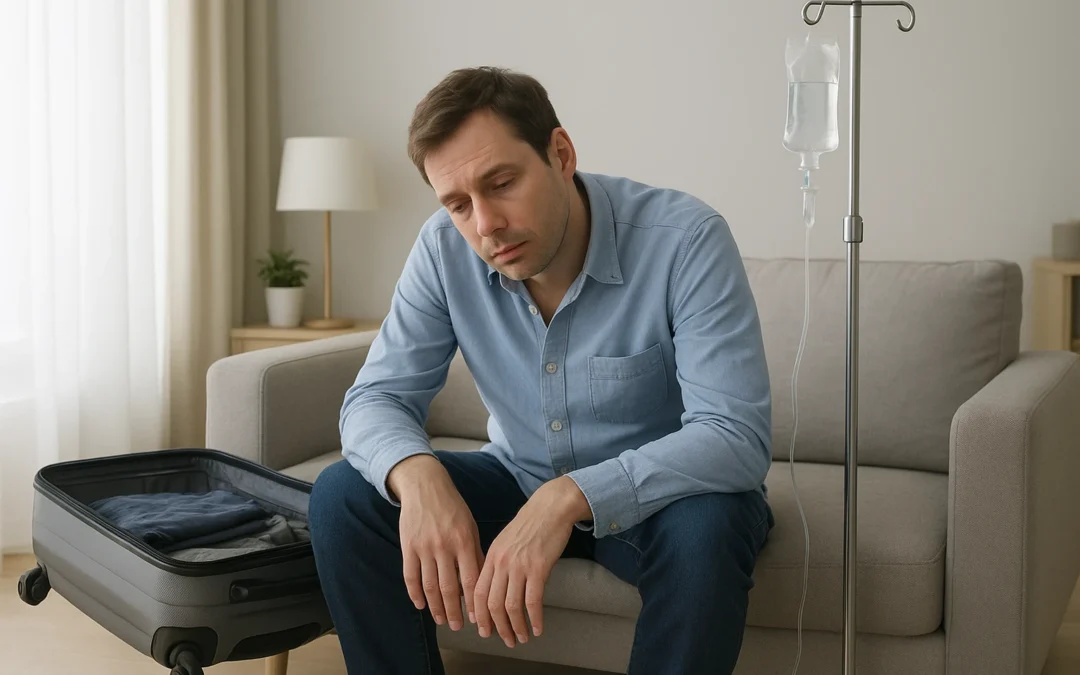
Imagine this: You’ve just spent seven glorious days island-hopping, indulging in five-star dining, and soaking up the sun on the deck of a magnificent ship. But the moment you drag your suitcase through your front door, a heavy, unshakeable exhaustion hits you. By Monday morning, your throat is scratchy, your brain is foggy, and you feel like the room is still gently rocking.
Welcome to the post-vacation crash.
If you are currently furiously searching the internet trying to figure out why you feel like an absolute zombie, take a deep breath. You aren’t imagining it, and it isn’t just the lingering effects of the midnight buffet. You are experiencing a documented physiological response to travel, and understanding exactly what is happening inside your body is the first step to claiming your energy back.
The Anatomy of “Cruise Flu”: More Than Just a Bug
Many travelers mistakenly lump all post-trip misery under the umbrella of “Cruise Flu,” assuming they simply caught a bug in the ship’s elevator. While ships certainly are enclosed environments, the reality of your crash is much more fascinating. It’s not just a mystery illness; it is what wellness experts call the 3-Pronged Crash.
1. The Pathogen Exposure (Immune Debt)
For a week, you were exposed to thousands of people from all over the world. You shared tongs at the buffet, touched handrails, and sat in crowded excursion buses. Your immune system has been working overtime in the background to fight off unfamiliar microbes, leaving your body in a state of “immune debt.”
2. Biological Rhythm Shift (The “Let-Down” Effect)
Vacations are incredibly fun, but they are also physiologically stressful. Late nights at the comedy club, early morning wake-up calls for snorkeling, and the constant stimulation of new environments keep your body pumping out adrenaline and cortisol. Once you arrive home and the excitement stops, your cortisol levels plummet. This sudden drop—often called the “Let-Down Effect”—triggers profound fatigue and leaves you susceptible to illness.
3. Vestibular Re-adjustment
Your brain has spent the last week adapting to the constant, subtle motion of the ocean. When you return to solid ground, your brain gets confused. People often wonder, is sea sickness mental? The reality is that it’s a deeply physical, neurological recalibration. Your inner ear is trying to readjust to stillness, which requires a massive amount of cognitive energy, further draining your stamina.
Land Sickness vs. Fatigue: The Post-Cruise Symptom Checker
Are you dealing with “Land Sickness” (clinically known as Mal de Debarquement Syndrome, or MdDS) or are you suffering from severe nutrient exhaustion? Here is a quick way to check:
- You likely need Vestibular Rest if: You feel a phantom rocking or swaying sensation that actually improves when you are driving in a car or in motion, but worsens when you are sitting perfectly still at your desk.
- You likely need Nutrient Replenishment if: You are experiencing heavy brain fog, muscle aches, a scratchy throat, and a deep cellular tiredness. Maybe you even joked with your friends about needing an iv for boat party recovery during a particularly lively catamaran excursion, but now that you are home, the systemic fatigue is very real.
The Dehydration Illusion: Why Chugging Water Isn’t Enough
After a week of salty ocean breezes, rich foods, and sun-drenched beach days, your body is in a profound state of dehydration.
Most travelers try to fix this by chugging glasses of water and swallowing oral Vitamin C tablets as soon as they get home. But here is the “aha” moment: when your body is highly fatigued and recovering from travel stress, your gastrointestinal tract’s ability to absorb nutrients diminishes.
You can drink gallons of water, but if your cells lack the proper electrical charge (electrolytes) to pull that water inside, the fluid simply flushes right through your system without actually hydrating you. Similarly, only a fraction of the oral vitamins you swallow actually make it into your bloodstream.
This is the bioavailability factor. Bypassing the gut allows for 100% absorption, which is why mobile iv hydration has become the modern traveler’s ultimate physiological reset button.
The IV Recovery Solution: Your Nutritional Reset Button
When you understand that “Cruise Flu” is a combination of immune depletion, cellular dehydration, and cortisol crashes, the solution becomes clear. You don’t just need rest; you need replenishment.
By having critical care nurses administer medical-grade nutrients directly into your bloodstream, you bypass the sluggish digestive system entirely. Here is how specific IV nutrients intervene in the post-cruise crash:
- Glutathione (The Detoxifier): Known as the body’s master antioxidant, glutathione acts like a molecular street sweeper, clearing out the metabolic waste and free radicals accumulated from rich vacation foods and alcohol.
- B-Complex & B12 (The Engine Starter): These essential vitamins are directly responsible for ATP production—the energy currency of your cells. They help clear the brain fog and physically restart your cellular engine.
- Vitamin C & Zinc (The Shield): Because you have an “open window” of diminished immunity after traveling, high-dose immunity iv therapy helps slam that window shut before your coworkers’ office bugs can take hold.
- Electrolytes (The Hydrator): Proper IV fluids go far beyond simple water to correct hydration at a cellular level, using the same principles found in elite athletic recovery iv therapy protocols to bounce back quickly.
The 24-Hour Post-Vacation Protocol
Don’t wait until you’re calling in sick on Tuesday morning to take action. To save your workweek, follow this timeline the moment you disembark:
- Hour 1-2 (The Arrival): Unpack your suitcase immediately. This reduces mental load and visual stress. This is also the perfect time to schedule your wellness intervention. Because intravene mobile iv therapy brings critical care nurses directly to your home, you don’t even have to leave your couch to get clinical-level care.
- Hour 12 (The Next Morning): Focus on lean protein and light, gentle movement to help recalibrate your circadian rhythm. Avoid the temptation to consume heavy caffeine, which only masks your fatigue and worsens cellular dehydration.
- Hour 24 (The Reset): Receive your IV therapy. Sit back in your own living room, rehydrate, replenish your depleted vitamins, and prepare your body to confidently tackle the week ahead.
Frequently Asked Questions (FAQ)
How long does post-cruise fatigue usually last?
If left untreated, the combination of immune debt and circadian disruption can leave you feeling sluggish for 5 to 7 days. Proactive hydration and nutrient therapy can often cut this recovery time down to 24 to 48 hours.
Can I prevent Cruise Flu before my next trip?
Absolutely. The best offense is a good defense. Ensuring your body is fully hydrated and fortified with essential vitamins before you even step foot on the ship can drastically reduce your chances of getting sick. Exploring pre-travel options with intravene wellness therapies ensures you board the ship at peak immunity.
Is IV therapy really better than oral supplements for travel fatigue?
Yes. When you are severely dehydrated or stressed from travel, your gut absorbs a much lower percentage of oral supplements. IV therapy guarantees 100% bioavailability, meaning your cells get exactly what they need, exactly when they need it, resulting in a remarkably faster recovery.
***
Ready to conquer your post-vacation crash? Don’t let exhaustion steal the joy of your recent getaway. Discover how personalized, at-home IV therapy administered by critical care nurses can help you bounce back faster and feel your absolute best.