

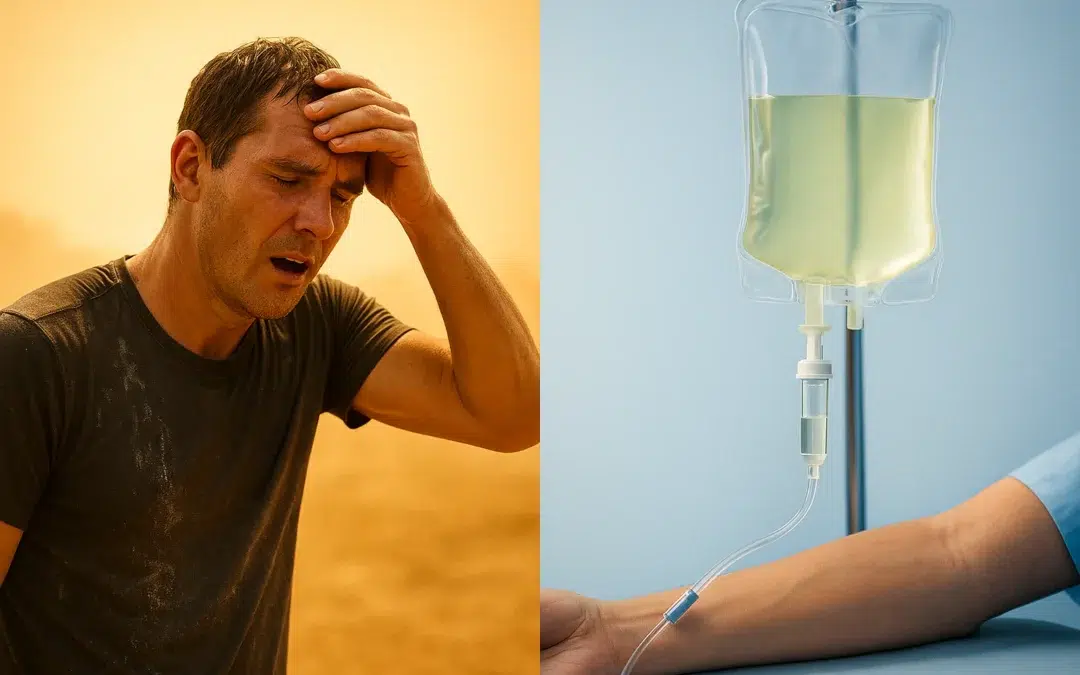
If you have lived in Houston for more than a summer, you know the feeling. You step out of your air-conditioned office or home, and your glasses instantly fog up. The air feels less like a gas and more like a heavy, wet blanket wrapped around your shoulders.
We often joke that we don’t just “sweat” in Houston—we glisten, we melt, or we simply try to survive the steam sauna. But for outdoor workers, runners training for fall marathons, or anyone enjoying a patio brunch in July, that heavy air poses a physiological challenge that simple water often cannot solve.
You might be drinking bottle after bottle of water, yet you still feel drained, dizzy, or struck by a pounding headache. This isn’t just discomfort; it is a specific biological phenomenon known as the “Humidity-Hydration Paradox.” Understanding why your body reacts this way—and how to properly recover—is the key to not just surviving a Houston summer, but thriving in it.
[]
The “60% Wall”: Why Sweating Stops Working
To understand why you feel so terrible even when you are drinking water, we have to look at the physics of how human bodies cool down.
Your body is an engine. When it overheats, it pumps sweat to the surface of your skin. In a dry climate (think Arizona), that sweat evaporates into the air. That evaporation process pulls heat away from your body, cooling your core temperature.
However, Houston plays by different rules. When relative humidity climbs above 60%—which is a standard morning here—the air is already so saturated with moisture that it cannot accept much more.
This creates what experts call “The 60% Wall.”
When you hit this wall, your sweat doesn’t evaporate. It just sits on your skin or soaks your clothes. You are losing vital fluids and electrolytes through that sweat, but because it isn’t evaporating, you aren’t cooling down. This leads to “Insensible Fluid Loss”—you are rapidly dehydrating without the benefit of temperature regulation. Your heart rate rises, your focus drifts, and your body enters a state of thermal stress.
The Danger of Over-Hydrating with Water Alone
The most common advice we hear is: “Just drink more water.” While well-intentioned, in a hyper-humid environment like Houston, this can sometimes make things worse.
When you sweat profusely, you aren’t just losing H2O; you are dumping sodium, magnesium, and potassium. If you aggressively replace those losses with plain water, you risk diluting the remaining salt in your blood.
This condition is called Hyponatremia. It’s often referred to as “water intoxication.” The symptoms—nausea, headache, confusion, and fatigue—mimic dehydration, leading many people to drink even more water, exacerbating the problem.
This is where the concept of specialized hydration comes into play. To break the cycle of heat exhaustion, your body doesn’t just need fluid volume; it needs the right fluid balance.
[]
Identifying the Signs: Are You a “Salty Sweater”?
How do you know if you are just hot, or if you are depleting your electrolyte reserves? Your body gives you clues before you hit the danger zone.
One of the most effective self-diagnostic tools is the “Salty Sweater Test.” After spending an hour outdoors, look at your clothes or hat. Do you see white, chalky streaks? Does your sweat sting your eyes intensely?
If yes, you are a “salty sweater.” You are losing sodium at a rapid rate. For these individuals, rehydration requires a precise blend of electrolytes. Ignoring this can lead to painful muscle cramping and the dreaded “brain fog” that makes it hard to focus on work or conversation.
The Dehydration Spectrum
It is helpful to view heat illness not as a switch, but as a spectrum.
- Mild Dehydration: You feel thirsty and your mouth is dry. You might feel a bit sluggish.
- Heat Exhaustion: You may experience heavy sweating, cold or clammy skin, nausea, and dizziness. This is the critical window where intervention is necessary.
- Heat Stroke: This is a medical emergency. Signs include a high body temperature (103°F+), hot/red/dry skin (no sweating), and unconsciousness. Call 911 immediately.
Recognizing the early symptoms of heat exhaustion allows you to intervene before it becomes a medical emergency.
The Role of Mobile IV Therapy in Heat Recovery
For many Houstonians, oral rehydration solutions (sports drinks) are a good first line of defense. However, when heat exhaustion sets in, the digestive system often slows down. Blood is diverted away from the stomach to the skin in a desperate attempt to cool the body. This can make drinking large amounts of fluid difficult, often leading to bloating or nausea.
This is where mobile IV therapy bridges the gap between lifestyle recovery and medical necessity.
Why Bioavailability Matters
When you receive hydration intravenously, 100% of the fluids and vitamins are available to your body immediately. There is no waiting for digestion. A standard treatment, often comparable to a hospital-grade banana bag iv, can deliver a liter of saline along with:
- Magnesium: To relax muscles and stop cramping.
- Potassium: To restore cellular function.
- B-Complex Vitamins: To restore energy levels depleted by heat stress.
This method restores the body’s equilibrium rapidly, often resolving the “heat hangover” feeling within 30 to 45 minutes.
Strategies for the Houston Heat Index
Living in this climate requires a proactive strategy. You don’t wait until your car engine is smoking to add oil; you shouldn’t wait until you are dizzy to think about hydration.
The “Wet Bulb” Warning
Pay attention to the Wet Bulb Globe Temperature (WBGT). Unlike the standard heat index, WBGT measures temperature, humidity, wind speed, sun angle, and cloud cover. It is the gold standard for athletic recovery iv therapy and outdoor safety. When the WBGT is high, limit your outdoor exertion and pre-hydrate.
Support Your System
Heat puts tremendous stress on your body, similar to fighting off a virus. Chronic exposure to extreme heat can actually tax your immune system. ensuring your body has adequate zinc and vitamin C, similar to an immune boost iv, can help your body withstand the physical stress of summer.
Frequently Asked Questions
Q: Can’t I just drink sports drinks?A: Sports drinks are helpful, but they often contain high amounts of sugar and dyes. For mild cases, they work well. However, for moderate heat exhaustion where nausea is present, IV therapy is more efficient because it bypasses the digestive system.
Q: How do I know if I need an IV or just water?A: If you have been drinking water but still have a headache, muscle cramps, or feel “foggy,” you may be electrolyte depleted. If you feel confused or stop sweating entirely, seek emergency medical care immediately.
Q: Is heat exhaustion similar to a hangover?A: Surprisingly, yes. Both involve severe dehydration and the buildup of toxins (metabolic waste in heat exhaustion, acetaldehyde in hangovers). The recovery protocols are often similar. If you’ve ever looked into a hangover iv miami style treatment, you’ll find the hydration science is nearly identical to heat recovery.
Q: How long does a mobile IV treatment take?A: Most treatments take between 30 to 45 minutes. Intravene uses critical care nurses who can come to your home, office, or hotel, allowing you to recover in the air conditioning.
Q: Is this useful for things other than heat?A: Absolutely. While we focus on heat here, similar hydration protocols are used for everything from flu recovery to generalized wellness. You can read more about various recovery protocols, such as vive hydration therapy – clearwater beach, to see how hydration is managed in other hot climates.
Next Steps for Your Summer Strategy
Don’t let the Houston heat dictate your life. By understanding the “60% Wall” and listening to your body’s signals, you can enjoy the outdoors safely. Whether you are a runner, a roofer, or just someone trying to get through the summer, remember that water is only half the battle—balance is the rest.
If you are feeling the effects of the heat and can’t seem to bounce back, professional hydration support is just a phone call away. Prioritize your recovery so you can get back to doing what you love.