


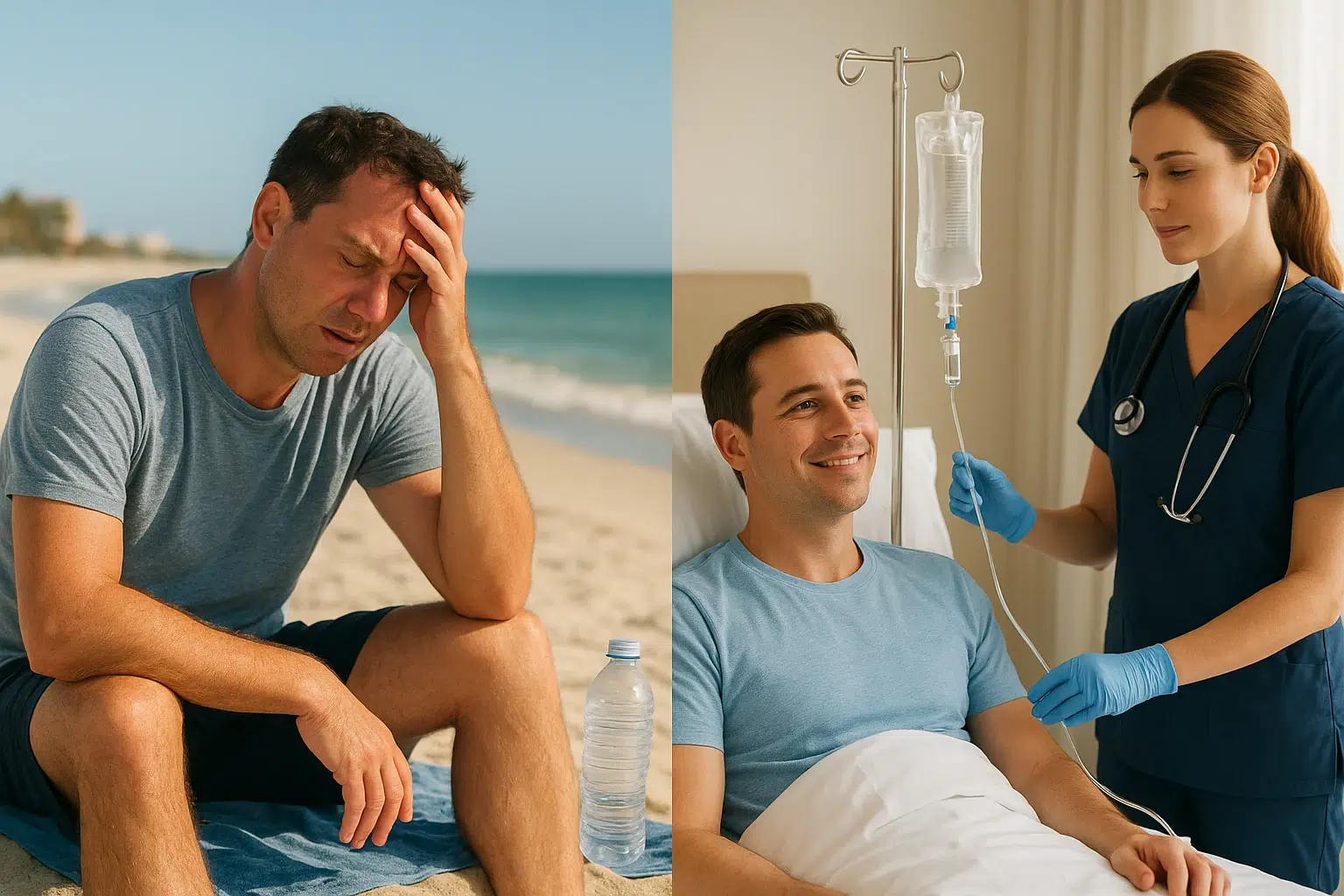
You planned this vacation for months. You pictured yourself lounging on the sugar sands of St. Pete Beach, a cold drink in hand, soaking up the vitamin D. But by 6:00 PM, the reality looks different. You aren’t just “tired”—you’re exhausted down to your bones. You have a pounding headache, you feel surprisingly irritable, and the thought of getting dressed for that nice dinner reservation makes you want to curl up in the hotel bed and sleep until noon tomorrow.
If this sounds familiar, you aren’t weak, and you haven’t necessarily done anything wrong. You are likely experiencing the “Florida Effect”—a unique biological response to Pinellas County’s specific combination of extreme UV exposure and high humidity.
For visitors and even locals who haven’t fully adapted, understanding the physiology of heat exhaustion is the difference between losing two days of your trip to recovery and bouncing back in time for sunset at Pier 60.
The Science of “Invisible Dehydration”
Most people think dehydration is simple: you sweat out water, so you get thirsty. But the climate along the Gulf Coast adds a complex layer to this equation known as the heat index.
In dry climates, sweat evaporates off your skin, which cools your blood. In Florida, where humidity often hovers above 80%, the air is already saturated with moisture. Your sweat has nowhere to go. It stays on your skin, failing to cool you down. In response, your body works into overdrive, pumping more blood to the surface of your skin in a desperate attempt to release heat.
This leads to “Invisible Dehydration.” You might not feel thirsty because you aren’t sweating effectively, but your blood plasma volume is dropping rapidly.
The Acclimatization Gap
There is a biological reason why the locals seem to handle a day at the beach better than visitors from the Midwest or Northeast. It’s called heat acclimatization. It takes the human body approximately 10 to 14 days to physiologically adapt to high heat and humidity. During this period, your body learns to sweat sooner and retain more salt.
If you are here for a week-long vacation, your body is essentially running a marathon without training. This is why mobile iv therapy near me searches skyrocket during the summer months—visitors are looking for a solution to a physiological problem they didn’t know they had.
The Biological Wall: Why Drinking Water Sometimes Fails
Here is the most frustrating part of heat exhaustion: you know you need to hydrate, but chugging a bottle of water often makes you feel nauseous or bloated.
This happens because of a survival mechanism called gastric emptying. When your body overheats, it diverts blood flow away from “non-essential” systems—like your digestion—and sends it to your skin and muscles to help cool you down. Your stomach essentially goes offline.
When you pour a liter of water into a stressed stomach, it sits there sloshing around because your gut isn’t absorbing it efficiently. In severe heat, the absorption rate of oral fluids can drop significantly. This is the “Biological Wall.” You are putting water in, but your body isn’t getting it.
Recognizing the Signs: It’s Not Just a “Hangover”
Many tourists confuse heat exhaustion with a hangover, especially if they’ve been enjoying cocktails at the tiki bars along St. Pete Beach. While alcohol certainly contributes to dehydration, the sun can mimic a hangover all on its own.
Be on the lookout for these specific signs that you’ve crossed the line from “sun-tired” to heat exhaustion:
- The Cessation of Sweating: If you are hot but your skin is dry, this is a major red flag.
- Irritability and Confusion: Often called “brain fog,” this indicates your brain is struggling with electrolyte imbalances.
- Nausea: As mentioned above, this is your digestive system shutting down.
- Muscle Cramps: A sign that your magnesium and potassium levels have crashed.
If you are experiencing these symptoms, simply resting in the AC might not be enough to salvage your evening.
The Recovery Protocol: Restoring Osmotic Balance
To recover from the Florida Effect, you need to do more than just cool down; you need to restore your body’s fluid volume and electrolyte balance immediately. This is where the concept of bioavailability becomes critical.
Bioavailability refers to the percentage of a substance that actually enters your bloodstream to have an active effect.
- Oral Hydration (Water/Sports Drinks): Limited by your digestive speed. In high heat, absorption is slow and incomplete.
- Intravenous (IV) Hydration: 100% bioavailability.
How IV Therapy Bypasses the Gut
IV therapy Tampa and Pinellas residents rely on works by bypassing the digestive system entirely. By introducing fluids, electrolytes, and vitamins directly into the bloodstream, your body doesn’t have to “work” to process them. The hydration is immediate, often helping visitors feel like themselves again within 45 to 60 minutes.
This method allows for the administration of crucial nutrients that are hard to absorb orally, such as:
- Magnesium: To stop muscle cramping.
- B-Complex Vitamins: To restore energy levels depleted by heat stress.
- Glutathione: A powerful antioxidant that helps repair cellular damage caused by UV radiation.
- Anti-nausea medication: Which can be added directly to the IV to settle the stomach instantly.
Safety First: The Importance of Critical Care Nurses
While IV therapy is a fantastic tool for saving your vacation, it is still a medical procedure. It is vital to ensure that the person administering your treatment is highly qualified.
At Intravene, we prioritize safety by utilizing Critical Care Nurses—professionals with backgrounds in the ER and ICU. This distinction is crucial. An ER-trained nurse knows the difference between simple dehydration and heat stroke that requires hospitalization. They can assess your vital signs, listen to your heart and lungs, and tailor the treatment to your specific physiological needs right in the comfort of your hotel room or rental.
Frequently Asked Questions
Is IV therapy just for hangovers?
No. While it is highly effective for hangovers, our immune boost iv and hydration protocols are frequently used for jet lag, cold and flu recovery, athletic recovery, and specifically for heat exhaustion.
How long does a treatment take?
Most sessions take between 45 to 60 minutes. Because we are a mobile service, we come to you—whether you are staying at The Don CeSar, a condo in Clearwater, or a home in St. Petersburg. You can relax on your couch while you recover.
Does it hurt?
Most clients report feeling only a tiny pinch. Our nurses are experts in vascular access, often with years of experience starting IVs in difficult emergency situations, making the process smooth and comfortable for you.
Can’t I just drink sports drinks?
Sports drinks can help, but they often contain high amounts of sugar, which can sometimes worsen dehydration by pulling water into the gut to digest the sugar (osmosis). IV therapy provides pure hydration and electrolytes without the sugar crash.
Don’t Let the Sun Set on Your Vacation
Pinellas County is home to some of the most beautiful beaches in the world. You deserve to enjoy every minute of your time here, from the morning swim to the late-night dinner.
If the sun has drained your battery, you don’t have to wait 24 hours to feel better. Understanding your body’s biological response to heat is the first step; giving it the tools it needs to recover is the second.
Whether you need an iv therapy st pete local solution or are visiting the wider Tampa Bay area, rapid relief is just a phone call away. Prioritize your recovery so you can get back to making memories.