

It’s a familiar Seattle weekend scenario: You just conquered the relentless 4,000-foot vertical drop of the old Mailbox Peak trail, or perhaps you’re driving back down I-90 after a grueling day pushing toward Camp Muir. You drank plenty of water on the trail. You stretched at the trailhead.
Yet, an hour later, you’re lying on your couch in Ballard or Capitol Hill feeling awful. Your head is pounding, your quads are locked in a vicious spasm, and that liter of water you just chugged is simply sloshing around in your stomach, leaving you bloated and nauseated.
If you’ve ever wondered why simply resting and drinking water doesn’t always cure the “post-trail crash,” you aren’t alone. You haven’t failed at your fitness or hydration strategy; rather, your body is dealing with a profound, exercise-induced physiological deficit unique to Pacific Northwest mountain environments.
Let’s dive into the fascinating cellular mechanics of what actually happens to your body on our rugged local trails, why your digestive system stalls after hard exertion, and how targeted mobile iv therapy can rapidly reverse the damage.
The Anatomy of a Pacific Northwest Exertion Hangover
Most recreational hikers and athletes believe that drinking water and taking a nap is enough to reset their bodies after a long day in the mountains. But this overlooks the intense, stealthy toll that high-altitude environments and steep terrains take on human physiology.
The Deceptive Dehydration of the PNW
In the Pacific Northwest, where misty 50-degree weather is the norm, hikers rarely feel dripping hot. But this environment tricks your body in two distinct ways:
- Cold-Induced Diuresis: When cool mountain air hits your skin, your blood vessels constrict to keep your core warm. This raises your arterial pressure, signaling your kidneys to actually dump water.
- Insensible Respiratory Loss: As you climb through the dry, high-elevation air of the Cascades (like the Enchantments or Mount Rainier), you are evaporating massive amounts of moisture purely through heavy breathing.
Because you aren’t sweating like you would in a hot desert, your thirst reflex remains suppressed. You can easily return to your car 3% to 5% dehydrated by volume without even realizing it.
The Downhill Eccentric Muscle Toll
Seattle-area trails are notoriously steep. Descending switchbacks on Mount Si or Mailbox Peak forces your leg muscles to act as biological brakes. This constant “eccentric contraction” causes microscopic ruptures in your muscle fibers (sarcomeres).
As these fibers tear, they leak intracellular calcium and deplete local magnesium stores, leading to those vicious, involuntary muscle cramps you experience hours later. This isn’t just standard fatigue; it’s significant localized cellular trauma.
The Gut Bottleneck: Why Chugging Water Leaves You “Sloshing”
So, you get home and immediately try to drink a massive bottle of water to rehydrate. Why does it make you feel nauseated?
During intense alpine climbs, your body enters a “fight or flight” sympathetic nervous system state. To prioritize keeping your brain, heart, and leg muscles fueled, your body aggressively constricts the blood vessels leading to your digestive tract. In exercise physiology, this is called splanchnic hypoperfusion. Essentially, your gut is temporarily shut down.
Under normal resting conditions, the human stomach can only absorb about 600 to 800 milliliters of fluid per hour. After a grueling mountain effort, that absorption rate plummets. When you pour a liter of water into an irritated, under-perfused stomach, it can’t empty into your intestines. It just sits there, causing the dreaded “slosh effect.”
The Danger of Plain Tap Water
Furthermore, chugging plain tap water can actually be dangerous in this state. When you sweat and breathe heavily for 8 hours, you lose massive amounts of sodium. If you rapidly reintroduce pure, sodium-free water into a depleted system, you dilute your remaining blood sodium.
This condition—Exercise-Associated Hyponatremia (EAH)—forces water into your cells to balance the osmotic pressure. The result? Cellular swelling that causes worse muscle cramps, swollen fingers, and severe headaches.
The Cellular Mechanics of IV Fluid Restoration
This is exactly where intravenous (IV) fluid restoration shifts the paradigm of athletic recovery.
By delivering hydration and electrolytes directly into your bloodstream, IV therapy completely bypasses the stalled “gut bottleneck.”
When isotonic fluids (like Normal Saline or Lactated Ringer’s) enter your veins, they boast 100% immediate intravascular bioavailability. They instantly expand your plasma volume, lower your elevated heart rate, and restore critical blood flow (microvascular perfusion) to your damaged muscle tissues so they can begin flushing out metabolic waste.
Ingredient Science: What Actually Works (and What’s Marketing Hype)
If you’re researching a recovery iv near me, it’s crucial to separate legitimate sports medicine science from generic wellness marketing. A proper recovery protocol isn’t a magical potion; it’s a targeted biochemical replenishment.
Here is what your cells actually need after a brutal day in the Cascades:
- Isotonic Crystalloids (Saline/Lactated Ringer’s): The non-negotiable bedrock of recovery. This fluid perfectly mimics the osmolality of human blood, safely expanding plasma volume without causing cellular swelling.
- Magnesium Sulfate: The ultimate antidote for the “eccentric muscle toll.” Magnesium helps relax hyper-excitable muscle membranes, halting the biochemical cascade that causes severe cramping.
- B-Complex & Glutathione: Endurance efforts cause massive systemic oxidative stress. B-vitamins act as coenzymes to help your cells produce ATP (energy), while glutathione works in your liver to sweep up exercise-induced free radicals. You’ll often see these paired in comprehensive treatments like a banana bag iv for aggressive replenishment.
- Ketorolac (Toradol): A powerful, non-opioid anti-inflammatory that works wonders for joint pain. However, it must be administered clinically. Toradol should only be given after adequate hydration is verified to protect your kidneys—which is exactly why having an experienced registered nurse administer your IV is vital.
Debunking the Altitude Sickness Myth
You may see spas claiming IV therapy “cures” Acute Mountain Sickness (AMS). Let’s be scientifically honest: it doesn’t. True altitude sickness is a barometric pressure issue requiring immediate descent and oxygen. However, IV therapy is exceptionally effective at curing the severe dehydration, headaches, and nausea that mountain athletes frequently mistake for altitude sickness after returning to lower elevations.
Clinical Safety: Listening to Your Body
When recovering at home, knowing the difference between normal muscle soreness and a medical red flag is crucial.
Delayed Onset Muscle Soreness (DOMS) peaking 48 hours after your hike is normal. However, if you experience profound, unremitting weakness, extreme localized swelling, or tea-colored urine, you may be experiencing Exertional Rhabdomyolysis—a serious condition where damaged muscle tissue breaks down too rapidly for the kidneys to filter.
This highlights why premier IV providers rely exclusively on critical-care-trained nurses (from ICUs and ERs). A highly trained nurse isn’t just there to find a vein; they are there to monitor your vital signs, assess your symptoms, and ensure your post-hike recovery is physiologically safe. (Note for competitive athletes: Always check WADA/USADA volume limitations regarding intravenous infusions if you are a tested mountain runner).
The Seamless Seattle Home Recovery Protocol
Outdoor recovery shouldn’t require driving to a clinical strip mall while your legs are cramping. The modern standard for athletic recovery is built around your home logistics.
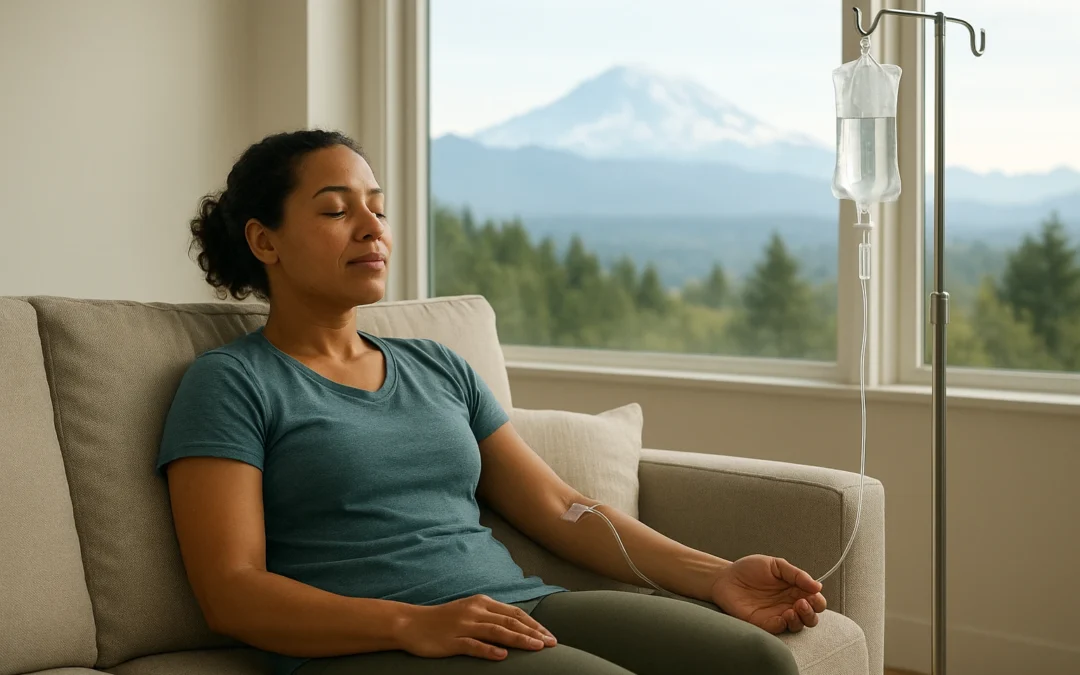
Whether you’re rolling back into West Seattle, Fremont, Capitol Hill, or the Eastside, the protocol is brilliantly simple. Once you’re comfortable on your couch, an ER-trained nurse arrives to assess your vitals and hydration deficit. Within a 45-minute resting window, you receive a perfectly balanced delivery of fluids, magnesium, and essential vitamins—turning what used to be a three-day “exertion hangover” into a rapid bounce-back.
If you are looking for specialized iv therapy seattle to integrate into your training and recovery routine, prioritizing a service rooted in critical care expertise and actual physiological science is the ultimate hack for Pacific Northwest athletes.
Frequently Asked Questions (FAQ)
How long does an athletic recovery IV take?The infusion itself typically takes between 30 to 45 minutes, allowing you to relax, read, or watch TV while your plasma volume is restored.
Is an IV better than a sports drink after a hike?Yes. While sports drinks are great for maintenance during a hike, your gastrointestinal tract struggles to absorb oral fluids efficiently once you reach heavy exhaustion. IV therapy bypasses the gut for 100% immediate absorption.
Can you use HSA for IV therapy?Many clients wonder about the financial logistics of medical wellness, including can you use hsa for iv therapy. In many cases, yes, if the therapy is prescribed or recommended by a medical professional to treat a specific condition like severe dehydration or nutrient deficiency. We always recommend checking with your specific plan administrator.
Does this help with jet lag from adventure travel?Absolutely. The fundamental issue with jet lag and air travel is the extreme insensible dehydration caused by airplane cabin air, compounded by disrupted circadian rhythms. Intravenous hydration rapidly corrects this baseline deficit.
***
Ready to transform how you recover from your Pacific Northwest adventures? Your muscles—and your stomach—will thank you for upgrading your replenishment strategy.