

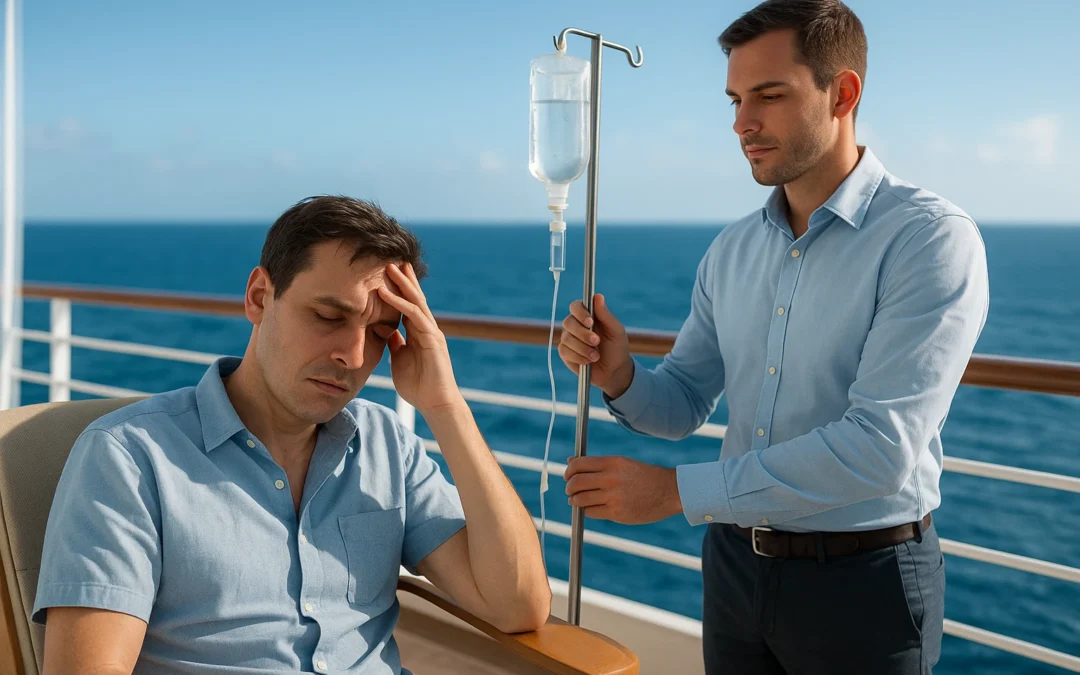
You’ve spent months planning your vacation, purchased the premium unlimited drink package, and finally stepped onto the sun-drenched deck of your multi-day cruise. The first 48 hours are pure magic: sunset cocktails, dancing until 2:00 AM, and lounging on a private island.
Then, usually around the morning of Day 3, you hit a physical wall.
Getting out of bed feels impossible. Your head is pounding, your stomach is churning, and the sheer thought of looking at another piña colada makes you want to crawl back under the covers. You confidently mix your packed electrolyte powder into a glass of water, but hours pass, and you still feel terrible.
You aren’t just experiencing a standard hangover. You are experiencing compounding, multi-day cruise party fatigue—a systemic physical deficit that oral hydration alone simply cannot fix.
Here is everything you need to know about the science of cruise dehydration, the hidden risks of seeking onboard medical help, and why IV therapy has become the ultimate secret weapon for saving your hard-earned vacation.
The Cruise Hangover Quadrant: Why You Feel So Bad
On land, a hangover is usually a straightforward equation of drinking too much alcohol and not enough water. At sea, your body faces a coordinated, four-way assault on its homeostatic mechanisms:
- Ethanol Diuresis: Alcohol blocks the release of vasopressin, an antidiuretic hormone. This tricks your kidneys into flushing water out of your system much faster than you take it in, leading to rapid cellular fluid loss.
- Tropical Sun & Wind: Hours spent by the pool or on a beach excursion lead to accelerated perspiration. The continuous ocean breeze evaporates sweat so quickly you often don’t even realize how much fluid you’re losing.
- Vestibular Strain: Even on the largest mega-ships, there is mild, subconscious movement. Your inner ear is working overtime to maintain balance. This low-grade vestibular strain causes subtle nausea that amplifies standard hangover symptoms.
- Salty Air Dehydration: Simply breathing highly saline ocean air subtly increases your baseline hydration needs.
When these four factors combine over several days, your body enters an acute deficit.
The Physiology of Failure: Why Hydration Packets Stop Working
Most experienced cruisers know to pack electrolyte powders or hydration multipliers. So why do they stop working on Day 3?
The answer lies in the physiological limits of your digestive system. Your gastrointestinal (GI) tract has an osmotic absorption ceiling—it can only process and absorb roughly one liter of water per hour. When you are severely dehydrated from compounding cruise fatigue, your gut simply cannot absorb water fast enough to keep up with the massive cellular deficit.
Furthermore, prolonged alcohol consumption causes gastritis (stomach inflammation), which dramatically slows gastric emptying. If you’re feeling nauseous, your digestive system has essentially hit the “pause” button, rendering oral fluids and pills almost completely useless.
This is where the science of bioavailability changes the game. When you take vitamins or hydration orally, they must pass through your digestive tract and liver—a process called “first-pass metabolism”—which can destroy up to 80% of their potency. By contrast, an iv for boat party recovery or a wellness drip delivers fluids, electrolytes, and medications directly into your bloodstream with 100% bioavailability. It’s the difference between trying to put out a house fire with a garden hose versus a fire hydrant.
The Crucial Warning: The Norovirus Quarantine Trap
If you wake up severely nauseous and dehydrated on a ship, your first instinct might be to call the ship’s official Medical Center. Proceed with extreme caution.
This is one of the most critical insider secrets in the cruising world. The Ship Medical Center operates as a maritime emergency room. Because cruise lines live in constant fear of highly contagious gastrointestinal outbreaks, their infection-control protocols are ruthless.
If you present to the ship’s doctor with acute vomiting and dehydration, you run a high risk of being officially flagged for a potential Norovirus infection. The standard protocol? A mandatory 24-to-48-hour quarantine confined to your cabin, complete with deactivated room keys to ensure you cannot leave.
To get wellness-based relief without risking your vacation days, you need to visit the onboard Medi-Spa (which is entirely separate from the Medical Center) or utilize a trusted land-based IV clinic before you board or at a port of call.
The Onboard IV Directory: Where to Find Relief at Sea
Many major cruise lines have quietly integrated advanced IV therapy into their luxury spa offerings to combat multi-day fatigue. Here is where to look:
Virgin Voyages
Known for its health-and-wellness-meets-party-lifestyle brand, Virgin Voyages offers IV therapy at The Tune Up, located on Deck 15. Administered by licensed medical professionals, prices typically start around $220 for a basic hydration drip, with advanced vitamin booster bags reaching up to $500.
Carnival Cruise Line
Carnival has leaned into recovery by offering the trademarked “REPAIR IV” inside their Cloud 9 Spas. Designed specifically to target hangover and fatigue symptoms, base prices hover around $299, with optional booster shots available for an additional fee.
Celebrity Cruises & Norwegian Cruise Line (NCL)
Both lines offer premium medi-spa IV treatments. NCL provides them through the Mandara Spa, while Celebrity integrates them into their broad wellness menus. Treatments generally start around $299 for a 500ml drip.
The Ingredient Audit: What to Demand in Your Drip
Not all IVs are created equal. If you are paying premium cruise pricing, ensure your drip isn’t just basic vitamin water. A true recovery IV should include:
- Normal Saline or Lactated Ringer’s: The essential base that instantly restores extracellular fluid volume.
- B-Complex Vitamins: Crucial coenzymes that assist your liver in metabolizing toxic acetaldehyde (the primary byproduct of alcohol).
- Magnesium: Relaxes constricted blood vessels in the brain, effectively neutralizing throbbing hangover headaches.
- Glutathione: The body’s “master antioxidant” that directly aids the liver in detoxification.
- Zofran or Toradol: Highly potent prescription additives that instantly switch off severe nausea and systemic inflammation. (Note: Powerful anti-inflammatory blends are often similar to what you’d find in a specialized migraine cocktail iv at a premium land clinic).
The Multi-Day Prevention & Recovery Blueprint
Don’t wait until you’re confined to your cabin to think about hydration. The smartest cruisers treat their wellness strategically.
Phase 1: The Pre-Game
The best way to survive a multi-day cruise is to board the ship already operating at 110% hydration. On the morning of your embarkation, book a premium immunity iv therapy session. Flooding your system with Vitamin C, Zinc, and pure hydration builds a powerful physiological buffer before your first cocktail. If you are prone to motion sickness, asking a critical care nurse for a specialized sea sickness injection alongside your fluids can be a total game-changer.
Phase 2: Onboard Maintenance
Pace yourself. For every two alcoholic beverages, consume a full glass of water mixed with a high-quality electrolyte powder. While it won’t prevent a hangover entirely, it slows the depletion of your body’s water reserves.
Phase 3: The Port-of-Call Hack
Onboard medi-spas are highly convenient, but they carry massive maritime markups. Experienced cruisers often utilize mobile iv therapy services that will literally meet them at their pre-cruise hotel or port dock. For example, if you are sailing out of South Florida, scheduling a rapid hangover iv miami session before you set sail—or the morning you return—ensures you get hospital-grade care from critical care nurses at a fraction of the ship’s spa price.
Phase 4: The Debarkation Detox
When you finally step off the ship, you’re likely dealing with “sea legs,” massive sleep debt, and lingering toxins. A post-cruise detox IV helps rapidly flush the remaining alcohol metabolites from your system so you don’t spend your first week back home feeling utterly exhausted.
Frequently Asked Questions
Is getting an IV at a cruise ship spa safe?
Yes, onboard medi-spas employ licensed nurses or doctors to administer treatments. However, the gold standard for IV therapy—both on land and at sea—is having treatments administered by specialized critical care nurses (those with ICU or ER experience) who are experts in vascular access and patient safety.
Will the cruise line let me bring my own electrolyte powders onboard?
Absolutely. Bringing dry hydration packets, Liquid I.V., or sports drink powders is highly recommended and completely allowed by all major cruise lines.
Why is IV therapy so expensive on a cruise ship?
You are paying a premium for maritime convenience. Onboard spas are usually operated by third-party contractors (like OneSpaWorld) who factor in the logistical costs of operating at sea. This is why utilizing land-based port clinics before and after your cruise is often much more cost-effective.
Do hangover IVs actually work immediately?
Yes. Because intravenous therapy bypasses the digestive system entirely, the fluids, electrolytes, and anti-nausea medications enter your bloodstream immediately. Most people report feeling significant, physical relief within 15 to 30 minutes of the drip starting.
Ready to Elevate Your Travel Wellness?
A multi-day cruise should be a celebration to remember, not an endurance test of fatigue and dehydration. Understanding how your body reacts to the unique maritime environment is the first step toward hacking your vacation wellness.
If you’re looking for hospital-level expertise in the comfort of your own space—whether you’re recovering at home, prepping in a hotel, or resetting after a long voyage—choosing a provider that utilizes highly trained critical care nurses guarantees the safest and most effective results. Learn more about how personalized therapies can keep you feeling your best by exploring our comprehensive guides to travel wellness and recovery.