

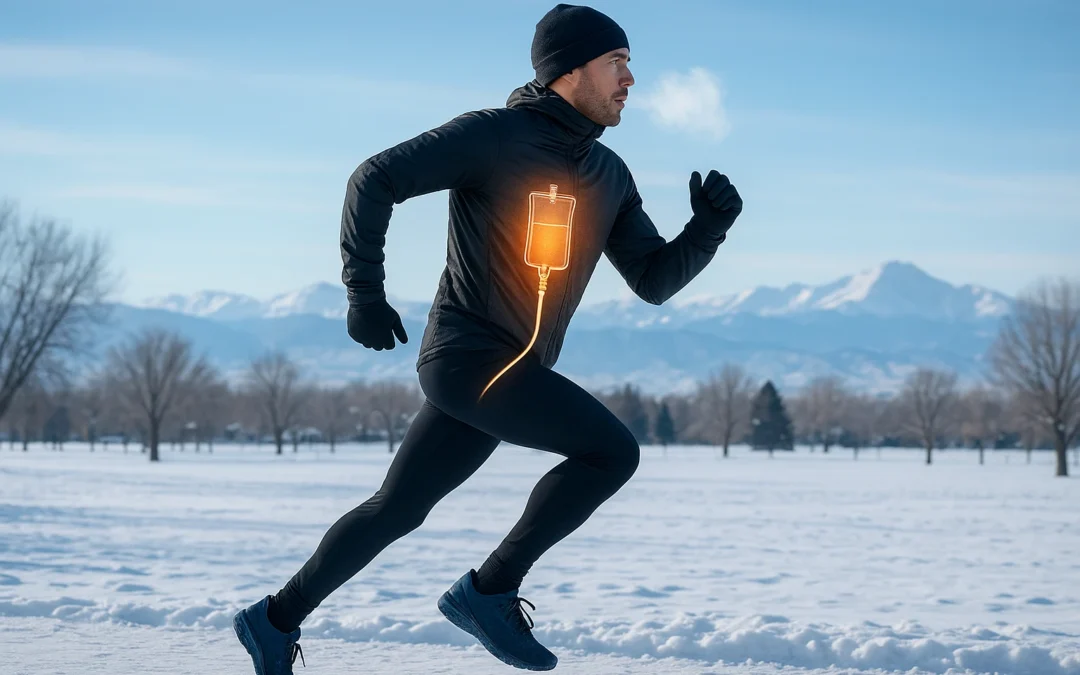
If you’re an active Northglenn resident, you already know the routine. When January hits and the Front Range temperatures plummet, you don’t stay inside—you layer up. You invest in thermal leggings, wind-resistant jackets, and moisture-wicking base layers to brave the loop around EB Rains Memorial Park or the trails near Croke Reservoir.
But have you ever returned from a brisk 20-degree jog feeling completely exhausted, sluggish, or battling a dry, scratchy throat, despite wearing the best cold weather running gear on the market?
Most outdoor brands sell us external layers to protect our skin from the harsh Colorado winter. However, they miss a critical biological reality: no amount of high-end outerwear can protect you from the severe, hidden dehydration and immune system degradation caused by our high-altitude winter climate.
If you want to perform your best and stay healthy this season, it’s time to look beyond your jacket. You need to start thinking about your “internal cold weather gear.”
The Science: The Stealth Dehydrator of the Front Range
During the summer, dehydration is obvious. You sweat profusely, your mouth gets dry, and your body practically begs for water. In fact, most active individuals are well aware of the need for iv hydration therapy for heat exhaustion when the July sun beats down.
But winter dehydration is a stealthy opponent. It tricks your brain, drains your fluids, and compromises your performance without you ever realizing it. Here is the fascinating science behind what happens to your body during a winter workout.
The “Sensing False Abundance” Trap
When you step into freezing temperatures, your body’s survival mechanisms kick in. Your blood vessels constrict (a process called peripheral vasoconstriction) to move blood away from your freezing extremities and into your core to protect your vital organs.
Because so much blood rushes to your chest and abdomen, the central receptors in your heart and brain get confused. They detect this increased blood volume and mistake it for hyper-hydration. In response, your brain suppresses your thirst hormone (Vasopressin) by up to 40% and signals your kidneys to increase urine output—a phenomenon known as Cold-Induced Diuresis.
The “Aha” moment? You are actively dehydrating yourself from the inside out, and your brain is suppressing your thirst signals so you don’t even know it.
The High-Altitude Respiratory Drain
Northglenn sits at an altitude of roughly 5,300 feet. At this elevation, the frigid winter air holds near-zero humidity. However, your lungs require air to be 100% humidified and warmed to 98.6°F before it can be processed.
Where does that moisture come from? Your body’s own internal hydration reserves. Every time you exhale a visible cloud of breath in the cold air, you are literally breathing out your hydration status. Sports science research reveals that running in cold, dry climates drastically accelerates respiratory moisture loss compared to sea-level environments.
The Hidden Sweat Phenomenon
Those amazing thermal layers that keep you warm? They trap heat. Because the dry Colorado wind evaporates moisture almost instantly, runners rarely feel sweaty. But beneath the windbreaker, your body is still sweating to regulate the heat generated by your muscles, further depleting your cellular water levels.
The Immune Connection: How Winter Dehydration Disarms Your Body
Why does winter dehydration matter so much? Because it directly impacts your immune system’s first line of defense.
Your nasal passages and respiratory tracts are lined with mucous membranes. When adequately hydrated, these membranes act as a sticky physical trap for winter airborne pathogens. However, when the combination of dry indoor furnace heat and freezing outdoor air dries out your mucosal lining, microscopic tears form. This degraded barrier allows seasonal cold, flu, and RSV viruses to easily take hold.
Furthermore, the metabolic stress of shivering and exercising in sub-freezing temperatures rapidly depletes your body of systemic vitamins (especially B-Vitamins and Vitamin C) and immune-critical minerals like Zinc.
(Note: This systemic depletion isn’t just a local winter sports problem. It’s the exact same physiological crash travelers experience during winter getaways. It’s the reason people frantically search for cruise immunity pills before a vacation, wonder why am i so tired after a cruise when they return, or desperately need mardi gras recovery—profound dehydration and vitamin depletion destroy your immune defenses!)
The Solution: Mobile IV Therapy as “Internal Cold Weather Gear”
So, how do you combat this? Your first instinct might be to chug water after your run. But drinking freezing water after a winter workout can shock your digestive system, lower your core temperature, and trigger stomach cramping.
This is where clinical science meets athletic performance. Instead of relying solely on your digestive tract, treating your hydration like medical-grade recovery changes the game.
An immune boost iv bypasses the gut entirely. Administered by critical care nurses, these treatments deliver 100% bioavailable normal saline directly into your bloodstream. This process:
- Overrides the suppressed thirst reflex, instantly expanding blood volume.
- Rapidly rehydrates dry mucous membranes, patching up your body’s physical barriers against viruses.
- Delivers a concentrated dose of nutrients, flooding depleted tissues with Vitamin C, high-dose Vitamin D, Zinc, and B-Complex vitamins.
Whether you’re looking for standard fluids near me or searching for the best mobile iv therapy near me to come directly to your living room in the 80233 or 80234 zip codes, bypassing the digestive system is the most efficient way to recover from winter metabolic stress.
The Northglenn Winter Resilience Action Guide
To truly conquer the Front Range winter, you need to combine your external gear with an internal hydration strategy.
- Layer Smartly: Continue using moisture-wicking base layers and wind-resistant outerwear to protect your skin and trap body heat.
- Calculate Your Loss: Remember that at 5,300 feet, you are losing nearly double the respiratory fluid you would at sea level. Do not trust your thirst mechanism—drink warm or room-temperature electrolyte fluids before you feel thirsty.
- Avoid the Post-Run Coffee Trap: While a hot coffee feels great after a cold run, caffeine acts as a mild diuretic, exacerbating the fluid loss you just experienced.
- Schedule Cellular Recovery: For peak conditioning, consider integrating IV therapy into your recovery routine. If you are an athlete looking for dedicated athlete recovery thornton or Northglenn services, having a critical care nurse arrive at your home just as you finish your cool-down stretch provides unmatched, hospital-level replenishment.
Frequently Asked Questions (FAQ)
Why don’t I feel thirsty when exercising in the winter?Cold temperatures cause your blood vessels to constrict, sending blood to your core. Your brain interprets this increased core blood volume as a sign that you are fully hydrated, suppressing your thirst hormone (Vasopressin) by up to 40%.
Is drinking water enough to rehydrate after a winter run?While drinking water is essential, oral hydration takes time to process through the digestive system. Furthermore, cold water can shock a warm, fatigued stomach, leading to cramps. IV therapy bypasses the gut to provide instant, 100% bioavailable cellular hydration.
Can dry winter air actually make me sick?Yes. High-altitude dry air (combined with indoor heating) dries out the mucous membranes in your nose and throat. These membranes are your body’s first line of physical defense; when they crack, viruses have a much easier time entering your system.
What is the “Gastric Bypass Advantage” of IV Therapy?When you take oral vitamins or drink water, your digestive system filters out a significant percentage of those nutrients. IV therapy bypasses the gastrointestinal tract, allowing essential hydration, Vitamin C, Vitamin D, and Zinc to enter the bloodstream directly for immediate cellular absorption.
Ready to Upgrade Your Winter Gear?
True winter wellness in Northglenn requires more than just a thicker jacket. By understanding the hidden physiological challenges of high-altitude cold weather—from muted thirst signals to respiratory moisture drain—you can take proactive steps to protect your health.
When you’re ready to treat your internal hydration with the same care you give your external running gear, explore how customized, nurse-administered IV therapies can keep you resilient, hydrated, and immune-boosted all season long.