

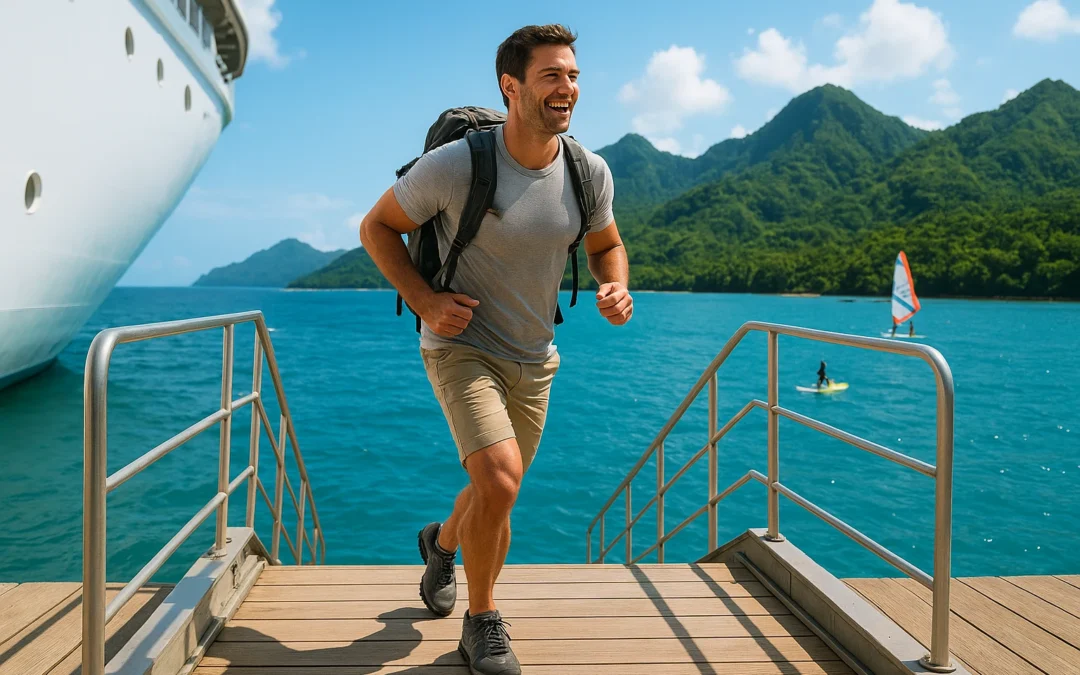
Imagine this: It’s Day 3 of your dream Caribbean cruise. You’ve booked an incredible, demanding hike through the El Yunque rainforest. You have the right shoes, the perfect backpack, and an adventurous spirit. But as you step off the ship, instead of feeling energized, your legs feel like lead, and a subtle headache is blooming behind your eyes.
You’ve just hit what seasoned travelers call the “Cruise Wall.”
When we figure out how to prepare for international travel, we usually focus on packing lists, passports, and itineraries. But we often overlook our bio-individual physiological preparation. Whether you are prepping for a high-altitude glacier trek in Alaska or sea kayaking in Cozumel, sustained cellular endurance requires far more than an extra cup of coffee at the breakfast buffet.
Let’s dive into the fascinating science of how your body handles extreme excursions, and how targeted nutrient loading is changing the way modern travelers prepare for adventure.
The Physiology of Excursion Exhaustion: The “Triple Threat”
Before we look at solutions, we need to understand the physiological gauntlet your body runs on a cruise. Excursion exhaustion isn’t just in your head; it’s a biological response to three specific stressors:
- Continuous HVAC Cabin Air: Ship cabins circulate deeply dehumidified air, quietly stripping your body of moisture while you sleep.
- Environmental Extremes: Tropical sun reflection off the ocean or high-altitude oxygen depletion dramatically increases your metabolic burn rate.
- The Vacation Diet Shift: Higher intakes of sodium, rich foods, and alcohol fundamentally alter your body’s cellular hydration balance.
The “Aha Moment”: Gastric Emptying vs. Cellular Absorption
Have you ever chugged a bottle of water on a hot, strenuous hike, only to feel it “sloshing” around in your stomach while you still feel thirsty?
This phenomenon is caused by delayed gastric emptying. When your body is under intense physical and heat stress, your sympathetic nervous system diverts blood flow away from your digestive tract and pumps it toward your skin (for cooling) and your muscles (for movement).
This is where the conversation about advanced hydration begins. While oral hydration is vital, during acute stress, your gut becomes a bottleneck. Intravenous (IV) therapy bypasses this bottleneck. By introducing isotonic saline directly into the bloodstream, it rapidly expands intravascular volume, aiding cardiac output and thermoregulation almost instantly.
If you are researching what’s the best way to stay hydrated on the cruise ship, the answer isn’t just drinking more water—it’s understanding how your body actually absorbs it.
Oral vs. Intravenous Rehydration: The Medical Reality Check
Let’s set the scientific record straight: oral hydration combined with electrolytes remains the evidence-based gold standard for routine daily living. IV drips are not meant to replace your water bottle.
Instead, athletic recovery iv therapy should be viewed as an accelerated adjunct. It is a targeted tool used when your body faces acute depletion that oral fluids simply cannot catch up with in time.
Debunking the Myth: Can an IV “Flush Out” Lactic Acid?
If you’ve looked into excursion recovery, you might have read claims that IV drips “flush out lactic acid” to prevent muscle soreness. Physiologically speaking, this is a myth.
Your body’s hepatic system naturally clears lactic acid within one to two hours after you stop exercising. That heavy, painful stiffness you feel 24 to 48 hours after a mountain trek is actually Delayed Onset Muscle Soreness (DOMS)—the result of microscopic muscle tears and oxidative stress.
Targeted IV nutrients don’t “flush” lactic acid; they give your cells the building blocks to repair DOMS and generate ATP (cellular energy):
- Magnesium & Calcium: Relaxes vascular smooth muscle, mitigating severe muscle cramping during steep ascents.
- B-Complex (B1-B6, B12): Acts as essential enzymatic cofactors, converting the food you eat into usable cellular energy.
- L-Carnitine & CoQ10: Shuttles long-chain fatty acids directly into your mitochondria to sustain endurance.
- Glutathione & Vitamin C: Powerful antioxidants that neutralize the oxidative stress caused by intense physical exertion.
Activity-Specific Preparation Protocols
To truly protect your vacation ROI, generic energy drips won’t cut it. Your body needs specific protocols based on the demands of your port days.
Protocol A: Mountain Trekking & Altitude Tours
(e.g., El Yunque rainforest, Mount Roberts, or Machu Picchu day trips)
- Pre-Excursion (24-48 Hours Before): Proactive hydration loading. Focus on formulas rich in Magnesium to prevent trail cramps and B-Complex for ATP generation. Setting this up at your embarkation hotel before you sail is ideal.
- Intra-Excursion (On the Trail): Consume 500–750mL of oral electrolyte fluids and 30–60g of carbohydrates per hour.
- Post-Excursion: A recovery drip featuring Glutathione and Vitamin B12 to target inflammation and micro-tears.
Protocol B: High-Intensity Water Sports & Kayaking
(e.g., Norwegian Fjords kayaking, Cozumel drift snorkeling)
- Pre-Excursion: High-isotonic saline with an emphasis on Sodium/Potassium replenishment and Vitamin C to combat UV oxidative stress.
- Intra-Excursion: Continuous oral sipping of an electrolyte mix.
- Post-Excursion: Sun exposure and physical exertion compound fatigue. A specialized boat day recovery iv drip helps rapidly restore plasma volume lost to unseen sweat on the water.
Port Logistics & Crucial Safety Checkpoints
IV therapy is a clinical procedure, not a casual spa treatment. As you prepare for your trip, safety and logistics must be your top priority.
The Financial Reality: Waiting until you are severely dehydrated on the ship is costly. Cruise ship infirmary treatments for dehydration often range from $500 to $800+ and are typically considered out-of-network non-covered medical expenses. In contrast, scheduling a credentialed athletic recovery iv proactively at your pre-cruise hotel or port stop typically ranges from $150 to $300.
The Medical Safety Standard:Never get an unvetted IV drip in an unregulated foreign port. Always look for mobile services that employ highly trained critical care nurses (those with ICU or ER experience). A qualified practitioner will always:
- Screen your renal (kidney) and cardiac health before administering fluids.
- Check for genetic contraindications like G6PD deficiency.
- Ensure proper vein health to prevent infiltration or bruising.
Whether you are looking for centennial home iv hydration before flying out of Colorado, or searching for a myers cocktail iv near me at your departure port in Florida or Seattle, insist on critical-care level expertise.
The Complete Excursion Preparation Checklist
Ready to build your stamina for that upcoming adventure? Add these steps to your travel prep:
- T-Minus 1 Week: Finalize your physical training and lock in your excursion itineraries.
- T-Minus 48 Hours: Book your pre-cruise IV therapy to top off cellular hydration and load your mitochondria with essential cofactors.
- Embarkation Day: Limit alcohol and sodium intake to preserve your newly established hydration baseline.
- Excursion Day: Pack dry carbohydrates and an oral electrolyte powder to mix with bottled water on the trail.
By bridging the gap between high-level travel planning and bio-individual cellular preparation, you ensure that your body is as ready for the adventure as your mind is.
***
Frequently Asked Questions (FAQ)
Is an IV drip better than drinking a sports drink before a hike?They serve different purposes. Oral hydration is your physiological foundation and should never be skipped. However, an IV drip acts as an accelerated adjunct that bypasses the GI tract, loading your cells with 100% bioavailable nutrients and expanding your plasma volume before you face extreme heat and exertion.
How do I time an IV drip so it doesn’t disrupt my port schedule?The most strategic time to receive an IV is 24 to 48 hours prior to your most strenuous excursion. Many travelers opt to use a mobile IV service at their hotel the day before embarkation, or they book a recovery drip for the late afternoon right after returning from a heavy port day.
Are there any medical risks to getting an IV before traveling?Yes, IV therapy is a medical procedure. Risks include fluid overload (particularly for those with certain heart conditions), vein infiltration, and improper mineral balances if you have renal impairment. This is exactly why treatments should only be administered by critical care nurses who perform thorough medical screenings prior to any infusion.