

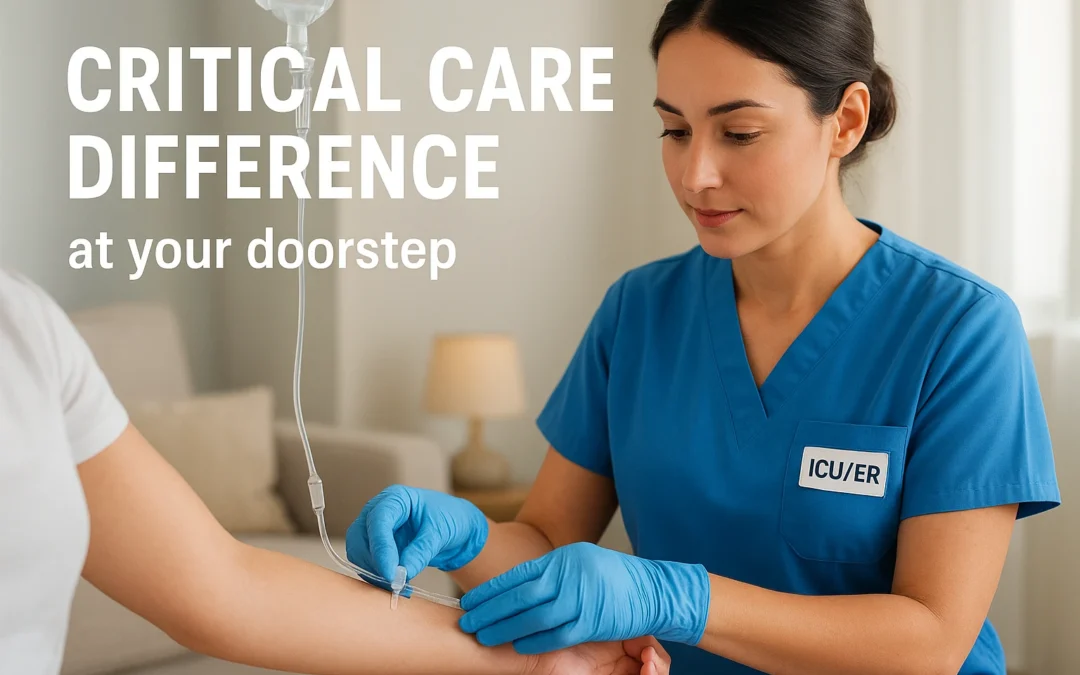
Imagine ordering a premium service to your doorstep in Pinellas County. Whether it’s a ride to St. Pete-Clearwater International Airport or groceries for the week, the modern world thrives on convenience. But when you invite a healthcare provider into your home, convenience should never mean clinical compromise.
The mobile IV market has experienced a boom recently, but it’s often accompanied by a quiet “race to the bottom” regarding clinical standards. What many view as simple “hydration” is actually a complex medical procedure involving hemodynamic stability and vascular access.
If you’ve found yourself asking, “Are are mobile ivs safe when administered in a living room?” you’re asking the right question. Let’s pull back the curtain on the medical protocols, safety standards, and the unparalleled “Critical Care Difference” that transforms your home into a safe, hospital-grade healing environment.
The Pyramid of Care: Why Who Holds the Needle Matters
Not all medical credentials are created equal, especially when you step outside the controlled environment of a hospital. To understand the safety of home-based treatments, it helps to look at the “Pyramid of Expertise” in the mobile IV space.
At the base of the pyramid are standard paramedics and newer Registered Nurses (RNs). They possess foundational training and can administer fluids. However, at the very peak—representing the top 0.1% of mobile providers—are Critical Care Nurses. These are the veterans of Intensive Care Units (ICUs) and Emergency Departments (ERs).
When you book a standard mobile nurse, they are trained to follow instructions. When you are treated by a Critical Care nurse, you are benefiting from the “Clinical Eye.”
What is the “Clinical Eye”?
Years spent in high-stakes hospital environments train ER and ICU nurses to see things before they happen. While an average provider might just monitor the IV drip rate, a Critical Care nurse is continuously assessing for subtle physiological shifts. They can identify the earliest signs of “fluid overload”—a critical risk for patients with underlying heart or kidney issues—long before it becomes a problem. They don’t just treat you; they proactively protect you.
Radical Transparency: The Hidden Risks of Home IVs
In a rush to market their services as spa-like luxuries, many mobile IV companies sanitize their language, avoiding any mention of medical risks. We believe in the transparency of risk. By understanding the potential complications, you can understand exactly why rigorous protocols are non-negotiable.
Preventing Infiltration and Fluid Overload
According to the National Center for Biotechnology Information (NCBI) guidelines for vascular access, complications like infiltration (when IV fluid leaks into surrounding tissue) require immediate, specialized management. Standard IV bars often gloss over this. A Critical Care nurse uses hospital-grade aseptic techniques and back-priming methods to ensure absolute precision, maintaining the structural integrity of your veins.
The “Clinical Safety-Net” Protocol
What happens if you have an unexpected reaction at home? This is where the concept of “Safety-Netting” comes in. Safety-netting is the clinical bridge between your living room and emergency medical services.
Amateur providers often lack a clear plan for uncertainty. A premium mobile iv therapy provider, however, operates with strict emergency protocols. This includes a direct, real-time communication loop between the field nurse treating you and a supervising Medical Director, ensuring that hospital-level oversight is always present.
The “Gold Standard” Protocol: Inside the Med Bag
The difference between a boutique wellness mixer and a clinical-grade provider often comes down to what is inside the IV bag and how it got there.
Ingredient Integrity and Safety Data Sheets (SDS)
Did you know that every medical-grade vitamin, mineral, and electrolyte should come with a Safety Data Sheet (SDS)? While some cut-rate providers source bulk ingredients from questionable compounding pharmacies to save money, rigorous providers maintain strict SDS documentation. This ensures that the B-vitamins, Glutathione, or NAD+ entering your bloodstream are 100% sterile, verified, and traceably sourced.
Financial Logistics: Navigating HSA, FSA, and Medical Necessity
One of the biggest hurdles consumers face when exploring mobile iv hydration therapy is understanding the financial logistics. Can you use your health savings accounts?
Many assume that because Medicare rarely covers “wellness” treatments, HSA and FSA accounts won’t either. However, under specific IRS codes (like Publication 502 for Medical and Dental Expenses), mobile IV therapy can be an eligible medical expense if it treats a specific medical condition (like chronic migraines, severe dehydration, or specific nutrient deficiencies).
The Key is the LMN: To utilize your HSA or FSA funds seamlessly, you often need a Letter of Medical Necessity (LMN) from a doctor. Premium providers assist in providing the necessary clinical documentation so you can confidently submit your claims without fear of audit or rejection.
Your Pinellas Provider Checklist: 5 Questions to Ask
Before you let anyone administer an IV in your home, use this checklist to weed out the amateurs from the clinical authorities:
- “Are your nurses exclusively ER/ICU trained?” (If they say “we use a mix of paramedics and RNs,” that’s a red flag).
- “Can you provide the Safety Data Sheets (SDS) for your vitamins?”
- “What is your exact safety-netting protocol if an adverse reaction occurs?”
- “Do you conduct a comprehensive medical history review, including checking for heart and kidney contraindications?”
- “Do you provide documentation for HSA/FSA reimbursement?”
Frequently Asked Questions (FAQ)
Is mobile IV therapy actually safe?
Yes, but safety is entirely dependent on the provider’s protocols and the nurse’s qualifications. When administered by Critical Care nurses using NCBI and CDC-compliant vascular access protocols, mobile IV therapy is incredibly safe. The risk dramatically increases when companies use underqualified staff to cut costs.
Does insurance cover the cost of IV hydration?
Traditional health insurance and Medicare typically do not cover proactive or “wellness-based” IV therapy. However, if the therapy is prescribed for a specific medical condition, you can often use pre-tax dollars from your Health Savings Account (HSA) or Flexible Spending Account (FSA) by utilizing a Letter of Medical Necessity.
Can I get an IV if I have heart or kidney issues?
This is a critical question. Individuals with heart conditions (like congestive heart failure) or kidney disease are at a high risk for “fluid overload.” A standard mobile iv nurse might not screen for this, but a Critical Care nurse will thoroughly evaluate your medical history and may adjust the fluid volume, drip rate, or advise against the treatment entirely to prioritize your safety.
What is the difference between an ER nurse and a standard RN?
While both are highly respected medical professionals, an ER or ICU nurse has thousands of hours of specialized training in high-acuity environments. They are experts in hemodynamic monitoring, complex vascular access (difficult veins), and rapid emergency response, giving them a level of clinical judgment that standard RNs are still developing.
Next Steps: Elevating Your Home Health Experience
Education is your best defense against clinical compromise. Now that you understand the intricacies of safety-netting, the importance of the “Clinical Eye,” and the rigorous standards required for true medical safety, you are empowered to make the best choice for your health.
Whether you are recovering from an illness, seeking a longevity boost, or needing fast hydration in Pinellas County, demand the hospital-at-home benchmark. To learn more about how intravene wellness therapies is setting the gold standard for mobile healthcare, explore our medical protocols and discover the peace of mind that comes with true critical care expertise.