


You know the feeling. You’ve just spent an incredible weekend at the Reggae Rise Up festival at Vinoy Park, or perhaps you tailgated a little too hard before a Bucs game. The experience was unforgettable, but the physical toll is undeniable. Monday morning looms, and you feel like you’ve been hit by a truck.
Living in the Tampa Bay area, we deal with a unique physiological adversary: the “Florida Factor.” It’s the combination of intense humidity, high heat, and the active lifestyle that defines Pinellas County. Whether you are jumping in a mosh pit at Jannus Live or cheering at Tropicana Field, your body loses fluids faster than you can replace them orally.
For years, the only solution was to chug sports drinks and hope for the best. But recently, a shift has occurred. Savvy locals and seasoned travelers are turning to a recovery method once reserved for hospitals and elite athletes: on-demand IV therapy. But how does it work, is it safe, and is it right for your next big event?
The Science of Speed: Why Water Isn’t Enough
To understand why IV therapy has become the “secret weapon” for event-goers, we have to look at biology. When you are dehydrated—whether from heat, exertion, or alcohol consumption—your digestive system actually slows down. It’s a survival mechanism, but it works against you when you are trying to recover.
The Bioavailability Breakthrough
When you drink water or sports drinks, the fluid must pass through your esophagus, stomach, and intestines before it hits your bloodstream. This is a slow process with only about 20-30% absorption efficiency (bioavailability) when your body is under stress.
IV therapy bypasses the digestive system entirely. It delivers hydration, vitamins, and minerals directly into your bloodstream for 100% bioavailability.
Think of it like Tampa Bay traffic. Drinking water is like taking US-19 during rush hour—lots of stops, lights, and delays. IV therapy is the express lane on the Veteran’s Expressway with zero traffic. This is why many people feel relief within 15 to 30 minutes of a treatment, rather than waiting hours for oral rehydration to kick in.
Mapping Your Recovery: Venue-Specific Protocols
One of the biggest questions first-timers have is about logistics. “Does a nurse just show up at the concert?” Not exactly. To get the most out of mobile iv therapy near me, you need a strategy based on where you are.
Here is a breakdown of how to handle recovery for Pinellas County’s most popular venues.
1. The Downtown St. Pete Strategy (Jannus Live & The Pier)
The Scenario: You are staying at a hotel or Airbnb in downtown St. Pete for a concert series.The Logistics: Parking is a nightmare downtown. Do not try to meet a mobile nurse in a public parking garage.The Protocol: Schedule your session for the morning before the event (pre-hydration) or the morning after at your hotel. Nurses can easily access hotel rooms or private rentals. This is popular for bachelorette parties or groups staying at The Vinoy or Hollander.
2. The Tailgate Recovery (Raymond James & Tropicana Field)
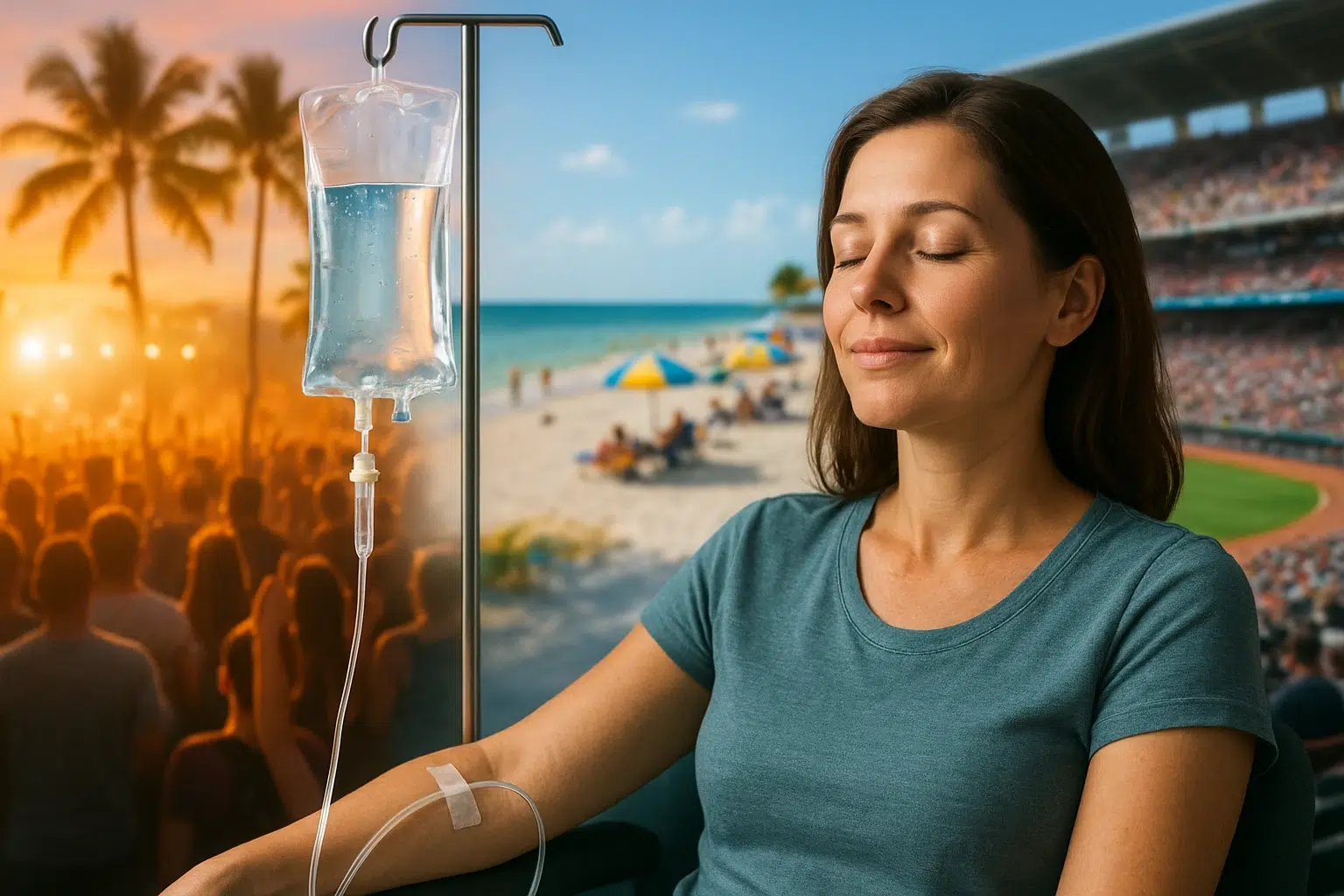
The Scenario: You have a group of 5-10 friends for a Bucs or Rays game. It’s 90 degrees out.The Logistics: Coordinating individual appointments is inefficient.The Protocol: This is where iv events services shine. You can book a nurse to meet your group at a designated house before you head to the stadium. Many fans are now treating hydration like a pre-game strategy, loading up on electrolytes and B-vitamins to prevent heat exhaustion before the first pitch is thrown.
3. The Beach Festival Plan (Clearwater & St. Pete Beach)
The Scenario: All-day sun exposure at festivals like the Sugar Sand Festival.The Logistics: Sand and medical equipment don’t mix.The Protocol: Retreat to a nearby condo or hotel lobby. Recovery works best in a cool, sanitized environment.
Beyond the Hangover: Athletic Recovery
While the “hangover bus” concept made IVs famous, the application for athletes is perhaps even more compelling. Pinellas hosts massive sporting events, from the St. Anthony’s Triathlon to the Firestone Grand Prix.
For endurance athletes, athletic recovery iv therapy isn’t about fixing a night out—it’s about cellular repair. High-intensity events deplete magnesium and zinc levels, which leads to cramping and fatigue. An IV drip formulated with amino acids and electrolytes can significantly reduce DOMS (Delayed Onset Muscle Soreness), allowing you to get back to training days sooner than with rest alone.
What’s Actually in the Bag?
If you are new to this, the terminology can be confusing. Here is a simple translation of common IV ingredients used for event recovery:
- Saline/Lactated Ringers: The base fluid that restores volume and flushes toxins.
- B-Complex (B1, B2, B3, B5, B6): The energy boosters. Alcohol depletes B vitamins rapidly, which contributes to that foggy, sluggish feeling.
- Toradol: A powerful non-narcotic anti-inflammatory. Think of it as a super-charged ibuprofen for headaches and body aches.
- Zofran: The gold standard for nausea relief. If you can’t keep water down, this is the game-changer.
- Glutathione: The “master antioxidant.” It helps the liver process toxins more efficiently.
Many providers offer a “Myers’ Cocktail” or a hangover iv, which are pre-mixed blends of these ingredients designed to target specific symptoms.
The Pinellas Safety Standard: What to Look For
Not all IV services are created equal. As mobile IV therapy grows in popularity across Florida, it is vital to prioritize safety over the lowest price point.
When researching providers, look for Critical Care expertise. The safest treatments are administered by Registered Nurses (RNs) who have backgrounds in the ER or ICU. These nurses are trained to spot complications and manage difficult veins.
Additionally, verify that the service has a Medical Director (an MD or DO) overseeing their emergency protocols. In Florida, proper medical oversight is a legal requirement and a hallmark of a reputable healthcare service.
The Cost-Benefit Analysis
A common hesitation for first-timers is cost. A typical mobile IV session ranges from $200 to $300. Is it worth it?
Consider the alternatives:
- The “Wait it Out” Method: Costs you a full day of your vacation or weekend. If you spent $500 on concert tickets and a hotel, losing a day to misery is a high hidden cost.
- The ER Visit: If dehydration becomes severe, an Emergency Room visit can cost upwards of $1,500 and take 4-6 hours of waiting time.
When viewed through this lens, mobile IV therapy is an insurance policy for your time and experience.
Frequently Asked Questions
Does it hurt?Most clients report a small pinch, similar to a blood draw. Experienced critical care nurses are experts at making this process as painless as possible.
How long does it take?Once the nurse sets up, the drip itself usually takes 30 to 45 minutes. It’s the perfect time to nap, watch TV, or chat with friends.
Can we book for a whole wedding party?Yes. Group bookings are actually the most efficient way to use the service. It lowers the cost per person and ensures the whole group is ready for the main event.
Next Steps
Whether you are gearing up for the next big festival at Vinoy Park or planning a reunion at a Bucs game, your recovery strategy matters. By understanding the science of bioavailability and the logistics of mobile care, you can ensure that your memories of the event aren’t overshadowed by how you felt the next day.
Treat your body like the high-performance machine it is, and enjoy everything Pinellas has to offer—safely and hydrated.