

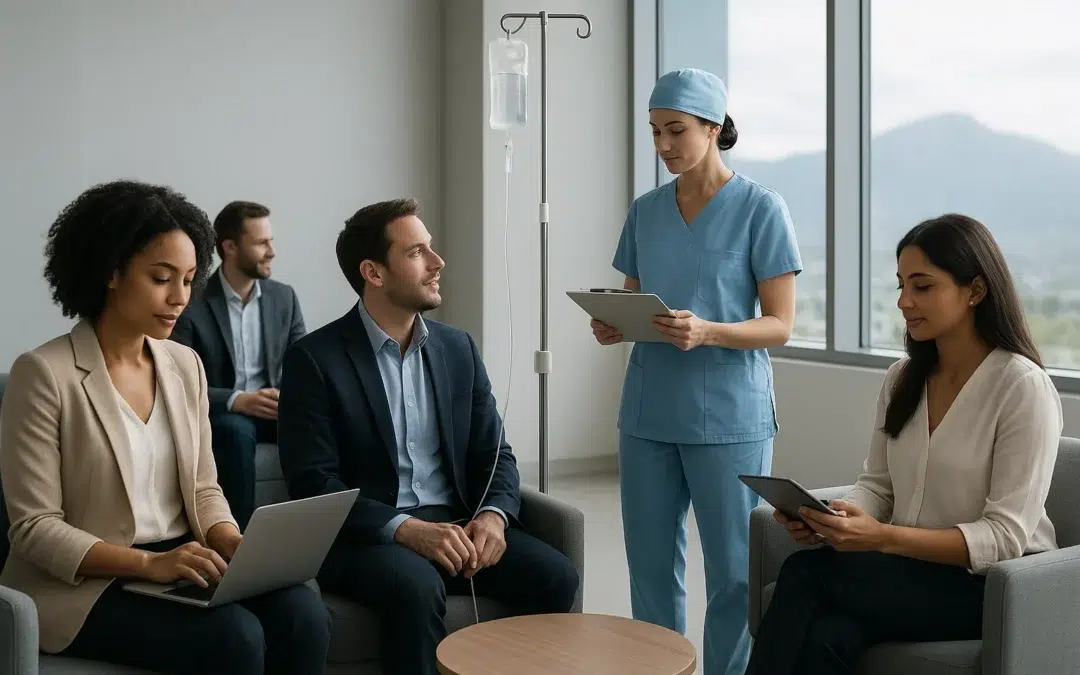
Imagine the scene: It’s 2:00 PM on the second day of a high-stakes tech summit in Centennial. The initial energy has faded, replaced by the collective glaze of “conference fatigue.” In the Denver Tech Center (DTC), this isn’t just about a lack of caffeine. You are battling physiology.
At 5,800 feet above sea level, the air is thinner and drier than most visitors realize. For corporate planners and event organizers, this presents a unique challenge. How do you keep a team sharp, engaged, and chemically optimized when the environment is working against them?
The answer increasingly lies in bringing clinical-grade hydration directly to the conference room. But this isn’t about trendy “party drips” or recreational recovery; it’s about understanding the science of cognitive endurance.
The Hidden Science of Altitude and Productivity
To understand why a simple pitcher of water isn’t enough for your team, we have to look at the kidneys. Specifically, a part of the kidney called the distal convoluted tubule.
When your attendees travel to Centennial from sea level, their bodies immediately attempt to acclimatize. This process triggers hormonal shifts, specifically regarding aldosterone, which regulates how your body holds onto sodium and water. In the dry air of the DTC, “insensible water loss” (moisture lost through breathing and skin) skyrockets.
By the time someone feels thirsty, their cognitive function has already dipped. They are experiencing slower reaction times and “brain fog.” This is where mobile IV therapy bridges the gap between basic survival and peak performance.
Unlike drinking water, which must pass through the digestive system and can take hours to absorb (with much of it lost to filtration), intravenous therapy bypasses the gut entirely. This allows for 100% absorption and immediate rehydration at the cellular level, restoring the electrolyte balance required for neurons to fire efficiently.
Moving Beyond the “Party Bus”: Clinical Safety in Group Settings
When organizing a corporate event, liability and safety are paramount. Unfortunately, the mobile IV industry varies wildly in quality. There is a distinct difference between a “wellness spa” approach and a medical model.
For a corporate environment, you need the “Clinical Authority” model. This means the service isn’t just delivering vitamins; they are adhering to rigorous medical standards.
The Role of Osmolarity and Pharmacology
A safe drip starts with the basics: 0.9% Normal Saline. This specific concentration is “isotonic,” meaning it matches the osmolarity of human blood. If a provider cannot explain why this balance prevents cellular damage (lysis or crenation), they shouldn’t be treating your team.
Furthermore, safety involves a Good Faith Evaluation (GFE). Before a single IV line is started, a medical professional reviews the health history of every participant. This ensures that the hydration plan accounts for individual variables—like specific medications or blood pressure concerns—rather than applying a “one-size-fits-all” approach.
[]
This level of rigor turns a simple wellness perk into a medically sound strategy for corporate wellness IV therapy, ensuring that your team is in the hands of specialists, such as critical care nurses, rather than generalists.
The Logistics of a “Hydration Station” in the DTC
Integrating a wellness component into a professional setting requires logistical finesse. Whether you are hosting a breakout session at The Village Workspace or a large-scale event at a hotel near Southglenn, the setup must be seamless.
A professional mobile team functions like a “pop-up” clinic but with the aesthetic of a lounge. Here is what that typically looks like:
- Space Requirements: A dedicated corner or breakout room is usually sufficient. A team of nurses can manage multiple chairs simultaneously without disrupting the flow of the event.
- Timing: Drips generally take 45 to 60 minutes. This fits perfectly into a lunch break or an afternoon “wellness hour.”
- Workflow: Participants can continue to network, check emails, or participate in casual meetings while receiving treatment.
By bringing the clinic to the office, you eliminate the downtime of travel, keeping the itinerary on track while significantly boosting the energy in the room.
Optimizing the Drip: The Science of Cognitive Endurance
Once the safety protocols are in place, we can look at the ingredients. For a business context, the goal is “Cognitive Optimization.”
The Power of NAD+
For executives and high-performers, NAD+ IV therapy cost is an investment in mental clarity. NAD+ (Nicotinamide Adenine Dinucleotide) is a coenzyme found in every living cell. It powers the mitochondria—the “batteries” of your cells. Supplementing NAD+ can help clear mental fog and restore focus, making it a premium option for leadership retreats.
The Myers Cocktail Standard
The most common request for group events is the Myers Cocktail. This foundational blend includes Magnesium, Calcium, B-Vitamins, and Vitamin C.
- Magnesium: Aids in relaxation and combating stress.
- B-Complex: Vital for energy production and converting food into fuel.
- Vitamin C: Provides a necessary immune boost IV capability, crucial for conferences where people are shaking hands and sharing spaces.
A Planner’s Guide: What to Ask Before You Book
Not all IV providers are equipped for the corporate stage. To ensure you are hiring a team that prioritizes safety over spectacle, use this “Authority Filter” checklist.
- Who administers the IVs? Look for Critical Care Nurses (ICU/ER background). Their experience with complex vein access and emergency protocols is unmatched.
- What is your medical oversight? There should be a Medical Director involved in the protocols.
- How do you handle medical screenings? If they don’t ask for a medical history (GFE) prior to treatment, it is a red flag.
- Do you carry emergency equipment? A professional team always carries anaphylaxis kits and emergency supplies, even if they rarely need them.
[]
Common Questions About Corporate IV Therapy
Is it safe to treat everyone at the office?
Yes, provided individual screenings are conducted. A reputable provider will review medical histories to ensure no contraindications exist, such as heart failure or renal issues where fluid overload is a risk. This is why intravene specialists emphasize the pre-screening process.
How much space do we need?
You don’t need a hospital wing. A conference room or a quiet corner of an event hall works perfectly. The mobile team brings all necessary equipment, including IV poles and supplies.
Can people work while getting an IV?
Absolutely. The IV is typically placed in the non-dominant arm (or hand, upon request), leaving the other hand free for a phone or laptop. It is a productive way to rest.
Does altitude really change how we should hydrate?
Yes. At Centennial’s elevation, the body’s respiratory rate increases, expelling more moisture. Alcohol and caffeine also hit the system harder here. Intravenous hydration restores balance faster than oral fluids because it doesn’t rely on the digestive tract’s absorption rate.
Creating a Culture of Wellness
In the competitive landscape of the Denver Tech Center, companies are defined by how they treat their people. Offering high-quality, clinical-grade care during intense periods of work signals that you value their health as much as their output.
By choosing a provider that prioritizes medical rigor—understanding everything from renal physiology to precise dosage calculations—you aren’t just booking a service; you’re securing a safety net for your team’s performance.
If you are planning an event in the Centennial area and want to explore how clinical IV therapy Denver services can support your goals, take the time to research providers who put safety and science first. Your team’s productivity—and health—will thank you.