

It’s 11:00 AM on a Sunday. Last night, you were screaming the lyrics to “Many of Horror” with Biffy Clyro or vibing to the Vulfpeck funk on the lawn at the White River Amphitheatre (WRA). You had the time of your life.
But right now? You feel like you’ve been hit by a truck.
Your calves are throbbing, your head is pounding, and you’re experiencing a level of dehydration that feels deeper than a standard night out. If you’re a Pacific Northwest concert veteran, you know this feeling has a name. It’s not just a hangover; it’s the White River Restoration deficit.
While generic “hydration tips” tell you to drink a bottle of water before bed, they fail to account for the unique physiological toll of the WRA experience: the steep incline of “The Hill,” the heat retained by the Muckleshoot plaza, and the notorious “Traffic Trap” exit that keeps you stationary and dehydrated for hours after the encore.
Here is the science behind why the post-concert slump hits so hard in Auburn—and the blueprint for bouncing back before the work week starts.
[]
The Science of “The Hill”: Why Your Body Hurts Different Here
Local concert-goers often joke about “The Hill” at White River, but from a physiological standpoint, it presents a unique athletic challenge. Unlike stadium seating where your body is supported, the lawn requires constant engagement of stabilizer muscles in your legs, core, and lower back to maintain balance on the incline.
When you combine 4+ hours of standing on a slope with dancing and summer heat, you aren’t just tired; you are physically depleted.
The “Traffic Trap” Amplifier
The physical exertion is compounded by the infamous exit logic. After sweating through the setlist, thousands of fans funnel into the parking lot, often facing exit times ranging from 60 to 90 minutes.
During this window, two critical things happen:
- The Adrenaline Crash: As the excitement fades, your cortisol levels drop, revealing the true state of your physical exhaustion.
- Stagnant Dehydration: Sitting in a hot car without immediate access to fluids or airflow accelerates dehydration. This period of stagnation prevents your body from flushing out lactic acid (the source of muscle soreness), locking it into your tissues.
This is why looking for iv therapy near me becomes a Monday morning ritual for so many Auburn and Seattle music fans.
The “Pre-Game” Fallacy
A common misconception is that drinking two liters of water before the show will save you. While pre-hydration is important, the biology doesn’t quite work that way.
Water is processed relatively quickly. By the time the headliner takes the stage, you have likely sweated out those initial fluids. Furthermore, water alone lacks the salt, potassium, and magnesium required to hold that hydration in your cells. When you drink plain water while sweating heavily, you can actually dilute your remaining electrolyte levels, leading to headaches and dizziness—a condition known as hyponatremia.
To truly recover, your body doesn’t just need fluid; it needs a rapid delivery system that bypasses the digestive tract (which slows down absorption) and replenishes the specific nutrients burned on the lawn.
[]
Decoding the Menu: “Red” vs. “Indigo” Drips
If you have been frantically Googling “Red IV” or “recovery drip” while lying in bed, you aren’t alone. In the world of IV therapy, different formulations target different symptoms. Here is how to translate your symptoms into the right recovery solution.
The “Red” Drip: For the Classic Morning After
If your primary symptoms are nausea, a splitting headache, and sensitivity to light, you are likely dealing with acute alcohol toxicity combined with dehydration.
In clinical terms, this often aligns with our Revive Hangover IV. The “Red” often refers to the inclusion of hydroxocobalamin (B12), which can give fluids a reddish tint. This treatment typically includes:
- Zofran: To settle the stomach immediately.
- Toradol: A powerful anti-inflammatory for headaches.
- B-Complex Vitamins: To replenish energy stores depleted by alcohol processing.
The “Indigo” Performance Drip: For “The Hill” Fatigue
If you feel physically battered—sore calves, general exhaustion, and “brain fog”—your issue is likely metabolic depletion and lactic acid buildup.
This calls for a performance-focused blend, similar to our Peak Perform IV. This formulation is heavy on:
- Magnesium: To relax tense muscles and stop cramping.
- Amino Acids: To repair tissue micro-tears caused by standing on the incline.
- Glutathione: The “master antioxidant” that scrubs toxins from your cells.
This isn’t just for marathon runners; it’s for anyone who survived the mosh pit or the hike back to the parking lot.
The “Traffic Recovery Hack”: A Strategy for Locals
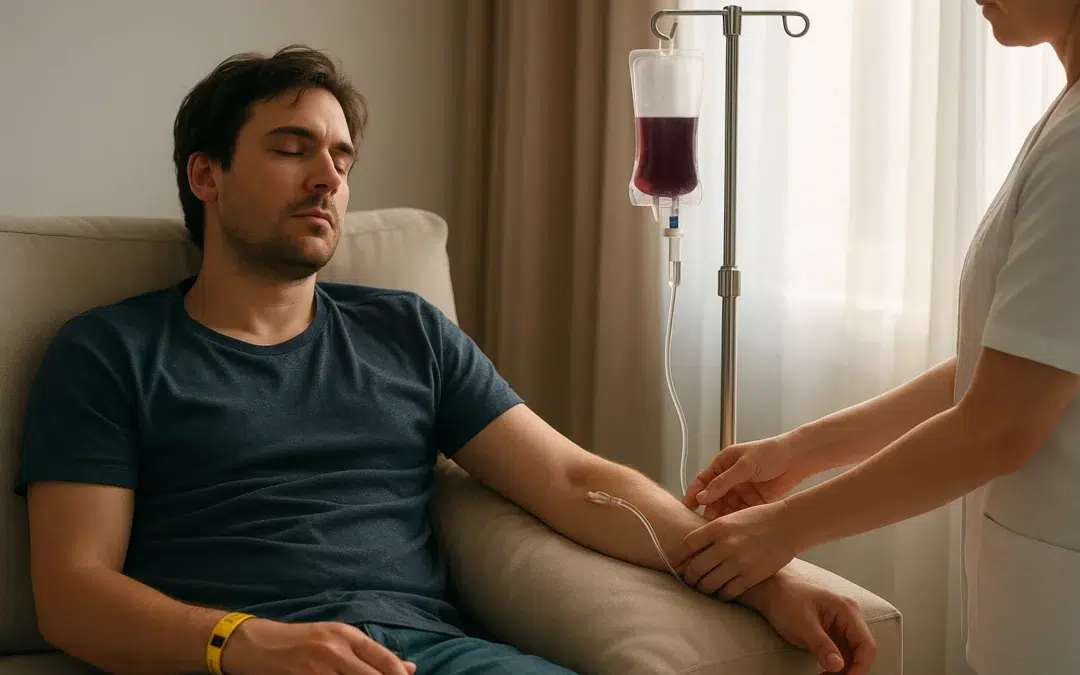
The smartest concert-goers in the PNW have started treating their recovery with the same logistical planning as their parking strategy. Instead of waking up at 10 AM and hoping the feeling passes, they utilize mobile iv services to bridge the gap between the venue and real life.
How Mobile Recovery Works
You don’t need to drive to a clinic (which is the last thing you want to do when recovering). Mobile IV therapy brings hospital-grade hydration to your:
- Hotel room (perfect for those staying at the Muckleshoot Casino Resort or local Auburn hotels).
- Airbnb or rental.
- Private residence.
The Nurse Advantage
It is vital to know who is sticking a needle in your arm. While some services use general technicians, Intravene employs drip iv auburn specialists who are Critical Care Nurses. These are professionals with ICU and ER backgrounds who understand vein physiology and safety protocols, ensuring that your recovery is safe, sterile, and effective.
The Festival Flu Factor
One final consideration for the WRA crowd is the “post-festival cold.” Being packed in a crowd of 20,000 people exposes you to a myriad of airborne pathogens.
If you notice a scratchy throat alongside your hangover, many attendees opt for an immunity iv boost. High doses of Vitamin C and Zinc can help your immune system fight off whatever was circulating in the pit before it turns into a full-blown week of sickness.
[]
Frequently Asked Questions
Is IV therapy really faster than drinking water?
Yes. When you drink water, it must pass through your digestive system, where absorption can be slow and inefficient (especially if you are nauseous). IV therapy delivers hydration and nutrients directly into your bloodstream for 100% bioavailability, meaning your body can use them instantly.
Can you treat my whole group at our Airbnb?
Absolutely. Group bookings are very common for concert weekends. It allows the whole crew to recover simultaneously while recapping the show.
How much does mobile IV therapy cost in Auburn?
Prices generally range from $194 to $350 depending on the specific ingredients (like medications or premium vitamins like NAD+). Considering the cost of lost productivity or a wasted Sunday, many find it a high-value investment.
Does it hurt?
Most clients report feeling only a tiny pinch. Intravene nurses are experts at vascular access, making the process as comfortable as possible.
Your Next Steps for Survival
The next time you see “White River Amphitheatre” on your ticket, don’t just plan your outfit—plan your restoration. Whether you are prepping for a heavy metal marathon or a laid-back country jam, your body will thank you for thinking ahead.
Ready to secure your recovery? Don’t wait until you’re stuck in traffic on Highway 164. Explore your options for mobile iv therapy near me and ensure your Monday morning feels as good as your Saturday night.