

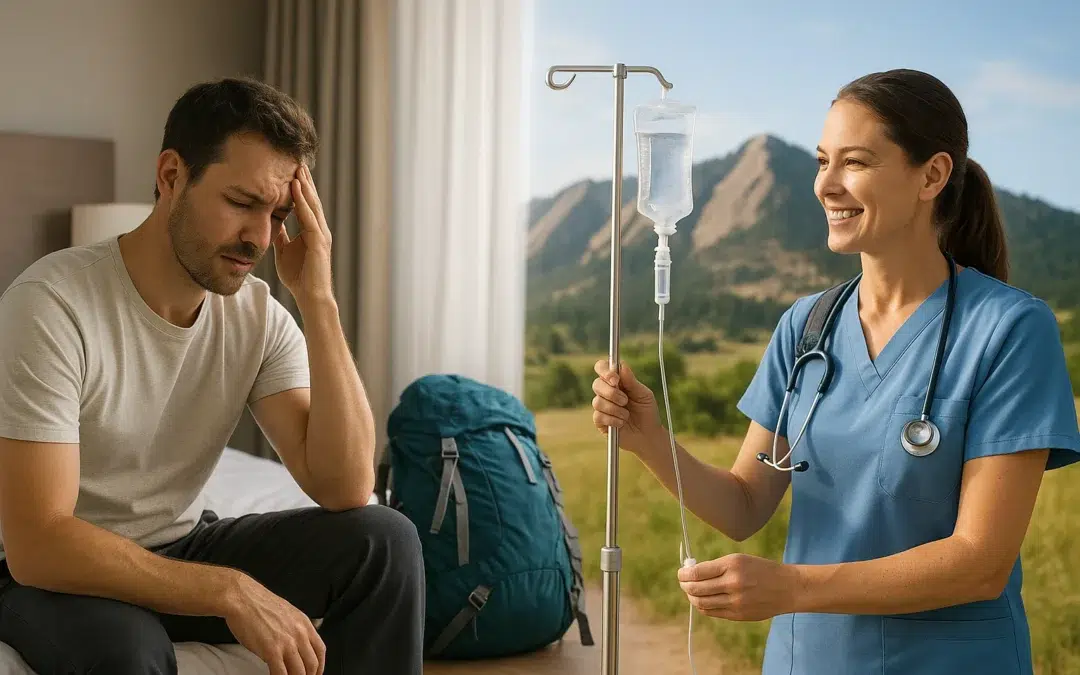
You step off the plane or get out of your car in Boulder, ready for a week of hiking the Flatirons or exploring Pearl Street. You’re fit, you’re healthy, and you’re nowhere near the summit of Everest. Yet, within six hours, a dull headache sets in behind your eyes. You feel winded walking up a single flight of stairs, and despite drinking three bottles of water, you’re still thirsty.
Welcome to the “Boulder Gateway Effect.”
For many visitors, there is a misconception that altitude issues only happen on the high peaks of the Rockies. However, the elevation of Boulder (5,430 ft) represents a critical physiological threshold. It is the “biological collision” point where your body realizes the oxygen rules have changed, triggering a cascade of adaptation responses.
Understanding what is happening inside your veins during these first 24 hours is the key to turning a trip spent recovering in a hotel room into the adventure you planned.
The Biology of the “Gateway”: What Happens at 5,430 Feet?
When you arrive in Boulder from sea level, you aren’t just dealing with “thin air.” You are dealing with a fundamental shift in blood chemistry.
At 5,430 feet, there is approximately 17% less effective oxygen available compared to sea level. While this isn’t enough to cause immediate danger for most healthy people, it is enough to trigger your body’s emergency acclimatization protocols.
Your body wants to maintain oxygen delivery to your brain and muscles. To do this in an oxygen-poor environment, it attempts to thicken your blood to increase the concentration of red blood cells (the oxygen carriers). This leads to a phenomenon known as the “Thick Blood” Paradox. Your body actively tries to dehydrate itself to optimize oxygen transport, which explains why you can feel terrible even if you haven’t exerted yourself.
The “Peeing It Out” Phenomenon: Understanding Altitude Diuresis
One of the most confusing symptoms for new visitors to the Rockies is the frequent need to use the restroom, even if they feel dehydrated. You might ask yourself, “Why am I losing fluid when I’m so thirsty?”
[]
This is called Altitude Diuresis, and it is your body’s deliberate attempt to acclimatize.
Here is the physiological chain reaction:
- Hypoxia Detection: Your carotid bodies (sensors in your neck) detect lower oxygen levels.
- Kidney Signal: Your body signals the kidneys to excrete bicarbonate and fluid.
- Blood Concentration: By reducing plasma volume (water), your body relatively increases the density of hemoglobin (red blood cells).
- Result: You breathe faster and your blood carries oxygen more efficiently, but you become rapidly dehydrated and lose vital electrolytes like magnesium and potassium in the process.
This is why simply “drinking more water” often fails. You are fighting your own biology. Your kidneys are flushing water out faster than your gut can absorb it, often leaving you with a “sloshy stomach” feeling but continued symptoms of dehydration.
Why Your Travel Kit Isn’t Enough: The Gravol Trap
When the headache and nausea set in—often termed “mountain sickness” or Acute Mountain Sickness (AMS)—the natural instinct is to reach for the medicine cabinet. Many travelers rely on over-the-counter remedies like Gravol (Dramamine), ibuprofen, or caffeine.
While these might mask the symptoms, they fall into the “Gravol Trap.”
- Gravol/Anti-nausea meds: These suppress the nausea signal in the brain, but they do nothing to fix the oxygen deprivation or cellular dehydration. You might stop feeling like vomiting, but your energy levels will remain tanked because your cells are still starving for resources.
- Painkillers: Ibuprofen effectively dulls the headache, but it can be hard on a stomach that is already sensitive due to hypoxia.
- Caffeine: While it can stimulate respiration, it is also a diuretic, which accelerates the dehydration process described above.
To truly recover, you need to address the root cause: oxidative stress and rapid fluid/electrolyte loss.
The Physiology of Relief: How IV Therapy Accelerates Acclimatization
This is where the conversation shifts from “symptom masking” to “biological adjustment.” For those struggling with the transition, iv therapy boulder residents and visitors rely on offers a distinct physiological advantage: 100% absorption.
When you drink water at altitude, it must pass through your digestive system, which slows down significantly in hypoxic conditions (digestive system hypoxia). This is why oral hydration is often inefficient when you are already symptomatic.
[]
Intravene’s specific formulation for this environment, the Mile Hydrate, acts as a biological adjustment tool rather than just a bag of saline. It uses a three-pronged approach to bypass the digestive bottleneck:
- Immediate Rehydration: By delivering fluids directly into the bloodstream, it counteracts the plasma loss from Altitude Diuresis instantly, lowering your heart rate and resolving the “thick blood” feeling.
- Magnesium & B12: Altitude depletes magnesium rapidly. Replenishing this mineral relaxes the constricted blood vessels that cause altitude headaches. High-dose B12 supports energy production at a cellular level, combatting the fatigue of lower oxygen.
- Glutathione: Perhaps the most critical component, Glutathione is the body’s master antioxidant. High altitude causes a spike in oxidative stress (free radicals). Glutathione neutralizes this stress, aiding in faster acclimatization.
Because Intravene utilizes Critical Care Nurses—professionals trained in ICU and ER settings—the assessment goes beyond simple hydration. These nurses understand the nuance between standard dehydration and early signs of High Altitude Pulmonary Edema (HAPE), ensuring that your treatment is safe and medically appropriate.
Mapping the Risk: From Pearl Street to the Peaks
Not all altitude is created equal. Understanding where you fall on the “Height-Sickness Level Matrix” can help you predict how your body will react.
| Location | Elevation | Oxygen Level (vs. Sea Level) | Risk Level | The “Feel” |
|---|---|---|---|---|
| Boulder (Pearl St) | 5,430 ft | ~83% | Moderate (Gateway) | Mild headache, thirsty, winded on stairs. |
| Chautauqua Park | 5,700 ft | ~81% | Moderate | Noticeable fatigue during exercise. |
| Estes Park | 7,522 ft | ~76% | High | Nausea likely if not acclimatized. |
| Rocky Mtn National Park | 12,000+ ft | ~60% | Severe | High risk of AMS without prior acclimatization at 5k ft. |
Note: Many visitors make the mistake of driving straight from the airport (Denver) to Trail Ridge Road (12,000 ft). This bypasses the necessary adjustment period in the “Gateway Zone” of Boulder.
The Boulder Protocol: Your First 24 Hours
To successfully transition to the Rockies without losing days to illness, consider this protocol used by altitude physiology experts.
- The 24-Hour Rule: Spend at least one full night at Boulder’s elevation (5,400 ft) before attempting any summits or drives into Rocky Mountain National Park.
- Pre-Hydrate with Electrolytes: Water isn’t enough. You need sodium and potassium to retain fluid.
- Avoid Alcohol Night One: Alcohol depresses respiration during sleep, which worsens the overnight drop in blood oxygen levels.
- Consider Mobile IV Therapy: If you are prone to headaches or have a short trip planned, scheduling mobile iv therapy upon arrival can “hack” the acclimatization curve. A preventative drip can top off your electrolyte reserves before the altitude diuresis depletes them.
Frequently Asked Questions (FAQ)
Can you really get altitude sickness at only 5,000 feet?Yes. While medical texts often cite 8,000 feet as the threshold for severe AMS, “Adjustment Syndrome”—characterized by fatigue, mild headache, and dehydration—is extremely common at 5,000 feet. This is your body reacting to the 17% drop in oxygen.
Does Gravol help altitude sickness?Gravol helps with the symptom of nausea, but it does not cure altitude sickness. It does not help your body absorb oxygen or retain fluids. It effectively masks the problem while your body continues to struggle with hypoxia.
Why do I pee so much at high altitude?This is Altitude Diuresis. Your kidneys are actively dumping fluid to concentrate your red blood cells. It is a survival mechanism to transport oxygen more efficiently, but it leads to rapid dehydration.
Is IV therapy safe for altitude sickness?Yes, when administered by professionals. iv for altitude sickness is a standard treatment to rapidly restore fluid volume and electrolytes. Intravene uses Critical Care Nurses who can differentiate between simple altitude sickness and more serious conditions that require hospital care.
How long does altitude sickness last?For most people in Boulder, symptoms subside within 24 to 48 hours as the body acclimatizes. However, untreated dehydration can prolong feelings of fatigue for the duration of your trip.
Continued Learning
Your trip to Boulder should be defined by the views, the food, and the adventure—not by a crushing headache. Understanding the physiology of the “Gateway Effect” empowers you to take proactive steps toward recovery.
Whether you choose to focus on aggressive oral hydration or opt for the rapid relief of mobile iv therapy, listening to your body during those first 24 hours is the most important thing you can do.
Disclaimer: This content is for educational purposes only and does not constitute medical advice. If you experience severe shortness of breath, confusion, or chest pain, seek emergency medical attention immediately.