

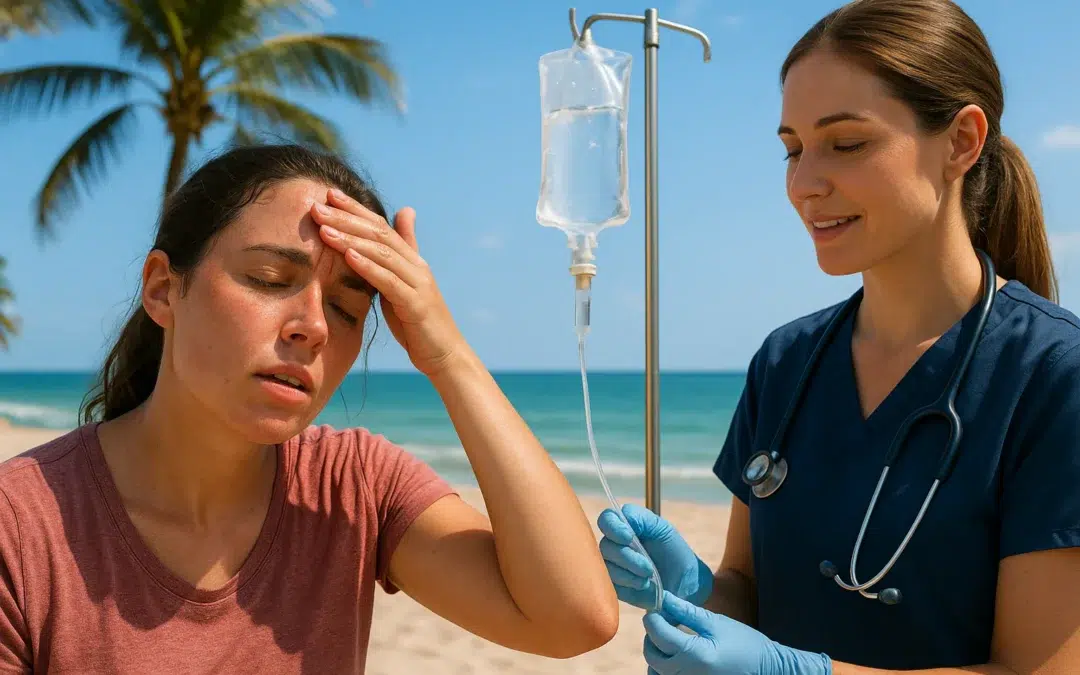
If you have ever stepped out of the Fort Lauderdale-Hollywood International Airport and felt like you were immediately wrapped in a heavy, wet blanket, you have experienced the “Thermal Wall.”
For tourists, this is often a shock. For locals and outdoor workers, it is a daily battle. But what many people don’t realize is that the fatigue, brain fog, and sudden nausea you feel after a day at Las Olas Beach or an afternoon waiting for a cruise at Port Everglades isn’t just “being hot.” It is a specific physiological response to Florida’s unique climate physics.
In the medical community, we know that hydration is about more than just drinking water. It is about understanding how your body interacts with the environment. In Fort Lauderdale, where humidity regularly tops 80%, the rules of survival change.
Here is the science behind why the Florida sun hits differently, and how mobile iv therapy is shifting from a luxury recovery option to a vital tool for environmental safety.
The Physics of the “Thermal Wall”: Why You Can’t Sweat It Out
To understand why you feel so drained here, you have to understand how the human body cools itself. We rely almost entirely on evaporative cooling. You sweat, the air absorbs that moisture, and as it evaporates, it pulls heat away from your skin, cooling your blood.
This system works perfectly in a dry heat like Arizona. But in Fort Lauderdale, the air is often already saturated with moisture.
The 95/95 Rule:When the temperature is 95°F and the humidity is 95%, the air physically cannot accept any more moisture. Your sweat has nowhere to go. It sits on your skin, insulating you like a wetsuit of hot water. Instead of cooling down, your core body temperature continues to rise.
This leads to a rapid depletion of electrolytes—sodium, potassium, and magnesium—without the cooling payoff. You are losing the fuel your muscles and nerves need to function, but you are staying hot. This is the “Sweat Paradox,” and it is the primary driver of heat exhaustion in our region.
The Anatomy of a Crash: When Water Isn’t Enough
The most common advice you will hear is, “Just drink more water.” While well-intentioned, this advice can sometimes fail due to a biological mechanism known as the Gastrointestinal (GI) Shutdown.
When your body enters a state of heat stress, it goes into emergency mode. It diverts blood flow away from your digestive system and sends it to your skin in a desperate attempt to release heat.
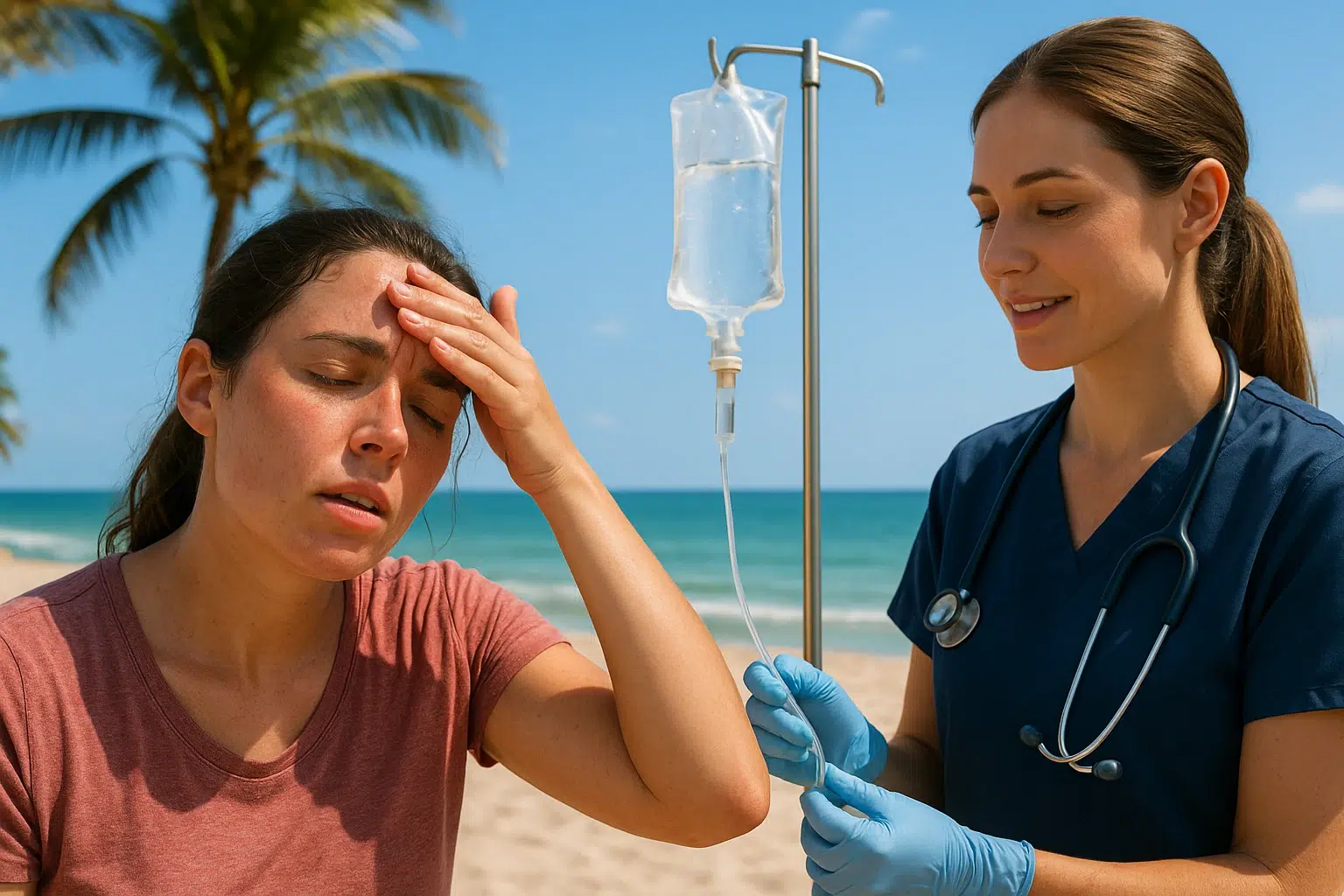
Because your stomach is deprived of blood flow, it stops absorbing fluids efficiently. If you have ever chugged a bottle of water on a hot day and immediately felt water sloshing around in your stomach, or felt sudden nausea, you have experienced this.
At this stage, your stomach is effectively “locked.” You can drink water, but your body can’t process it fast enough to cool you down or rehydrate your vital organs. This is the danger zone where heat exhaustion can escalate quickly.
The Science of Survival: How IV Therapy Bypasses the Blockage
This is where the clinical advantage of mobile IV therapy becomes clear. It is not just about convenience; it is a “medical bypass” for a compromised digestive system.
When a critical care nurse administers an IV, we are bypassing the GI tract entirely.
- Immediate Absorption: The fluids, electrolytes, and vitamins are delivered directly into the bloodstream, offering 100% bioavailability. There is no waiting for digestion.
- Thermal Cooling: The fluids in an IV bag are generally cooler than your internal body temperature. Infusing them helps lower your core temperature from the inside out—something oral water cannot do nearly as quickly.
- Electrolyte Restoration: We don’t just replace water; we replace the precise salt balance lost through excessive sweating, which stops muscle cramping and brain fog.
Targeted Recovery: Matching the Drip to the Distress
Not all heat fatigue is created equal. Depending on whether you are recovering from a bachelor party on a boat or a long week of landscaping work, your body requires different nutrients.
- For the “Work Hard, Play Hard” Crowd: The Revive drip is designed for the dual-threat of dehydration and toxin buildup (often from alcohol). It combines rehydration with anti-nausea medication and anti-inflammatories to reset the system.
- For the Outdoor Athlete & Worker: The Mile Hydrate focuses on intense electrolyte replacement to prevent cramping and fatigue caused by physical exertion in the humidity.
- For Sun-Damaged Skin: Intense UV exposure damages skin cells. Therapies rich in antioxidants and Vitamin C support cellular repair. Furthermore, biotin iv therapy can be a powerful adjunct for supporting the long-term health of skin, hair, and nails that have been stressed by saltwater and sun.
The “Shore Leave” Protocol: A Guide for Cruise Travelers
Fort Lauderdale is the cruise capital of the world, and we see a specific phenomenon we call “Shore Fatigue.”
Travelers disembarking at Port Everglades often spend hours standing in the sun, dealing with luggage, and navigating customs. This creates a dangerous gap between leaving the ship and arriving at the airport or hotel.
If you are transitioning from a cruise:
- Pre-Hydrate: Start drinking water before you leave the ship.
- Monitor for “Vacation Brain”: Confusion or irritability is often the first sign of heat stress, not just tiredness.
- Recover Fast: Many travelers book a mobile IV to their hotel room immediately post-cruise to flush out the “Caribbean Heat” and reset their immunity before flying home. Recognizing these symptoms early can save your travel day.
Frequently Asked Questions
Q: Is heat exhaustion different from heat stroke?A: Yes, and the difference is critical. Heat exhaustion involves heavy sweating, weakness, and nausea. Heat stroke is a medical emergency where sweating stops, and body temperature spikes above 103°F. If you suspect heat stroke, call 911 immediately. IV therapy is for recovery from exhaustion and dehydration, not for treating acute heat stroke in the field.
Q: Why can’t I just use electrolyte powders?A: Electrolyte powders are great for maintenance. However, if you are already nauseous or significantly dehydrated, the “GI Shutdown” we discussed earlier may prevent you from absorbing those electrolytes efficiently.
Q: Who administers the treatment?A: At Intravene, safety is our core value. Every treatment is administered by a Critical Care Nurse—highly trained professionals with ICU or ER experience. This ensures that your heart rate, blood pressure, and lung sounds are monitored, providing hospital-level care in your living room.
Q: How quickly does it work?A: Most clients feel a cooling sensation immediately as the fluids enter the bloodstream. Symptom relief from headaches, nausea, and fatigue typically begins within 15 to 30 minutes.
Taking Control of Your Environment
Living in or visiting Fort Lauderdale means respecting the power of the climate. The sun here is beautiful, but the humidity creates a “Thermal Wall” that requires a smart strategy to navigate.
Whether you are here for work, a wedding, or a weekend on the water, understanding the physics of your body allows you to stay safe and energized. You don’t have to lose a day of your vacation to the heat.
Ready to replenish what the Florida sun took out? Learn more about our specialized mobile iv therapy options delivered directly to your door.