

Imagine this scenario: You have spent months curating the perfect corporate retreat or bachelorette weekend in Denver. The itinerary is flawless, the reservations are set in LoDo, and the mountain excursion is booked. Yet, by day two, half your group is dragging. They aren’t just tired; they are dealing with headaches, lethargy, and dry skin.
It’s not necessarily the open bar from the night before—it’s the environment.
Hosting events in the Mile High City comes with a unique set of physiological challenges that traditional planning often overlooks. Between the altitude and the arid climate, keeping a group energized requires more than just water bottles and coffee breaks.
[]
This guide explores how Mobile IV Therapy has evolved from a niche medical service into essential event infrastructure, helping planners and hosts ensure their guests feel their best despite the altitude.
The “Denver Variable”: Why Your Guests Are Dehydrated
To understand why group IV therapy has become a staple for Denver events, you first have to understand the physiology of being a mile above sea level.
Visitors landing at DIA are stepping into an environment with approximately 15% to 20% less oxygen than at sea level. To compensate, the body breathes faster and deeper. Combined with Denver’s notoriously low humidity, this leads to “insensible water loss”—moisture leaving the body simply through respiration.
Research suggests that high-altitude environments can double your water requirements. The problem? Drinking water is a slow process. Oral hydration relies on the digestive system, which can take hours to absorb fluids completely.
The 300% Rule
This is where intravenous (IV) therapy bridges the gap. By bypassing the digestive system and delivering fluids directly into the bloodstream, IV therapy can rehydrate the body effectively and rapidly—often quoted by wellness experts as up to 300% more efficient than drinking water alone.
For event planners, this isn’t just biology; it’s logistics. It means less downtime for recovery and more engagement during your event.
Mobile IVs as Event Infrastructure
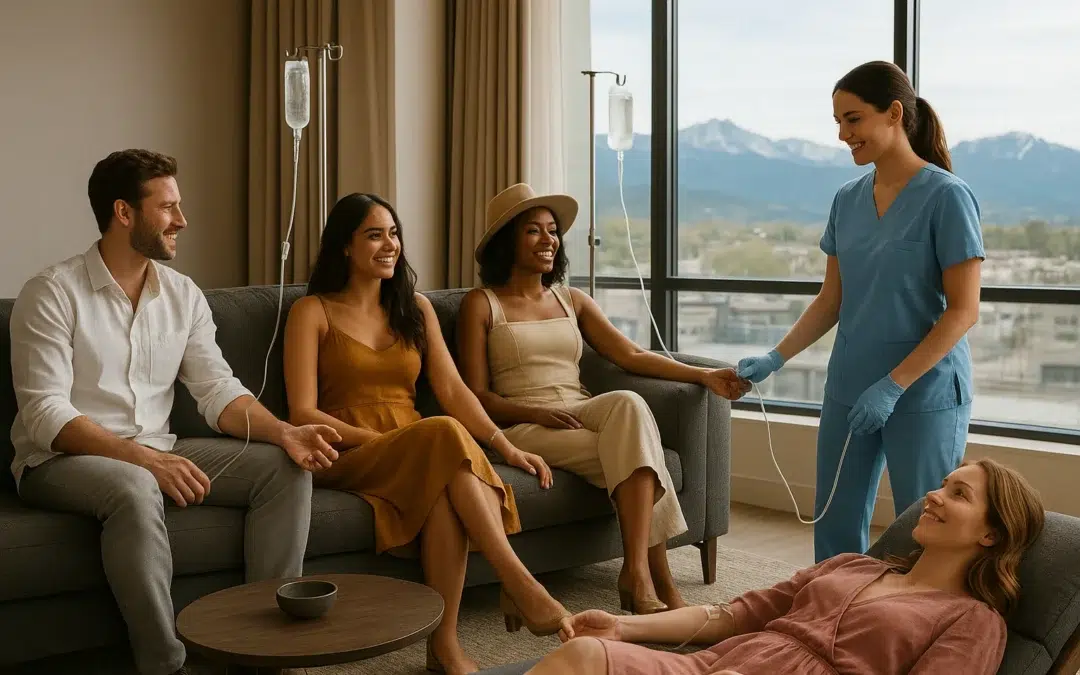
Historically, IV therapy was confined to hospitals. Today, the “mobile wellness” model allows critical care nurses to bring hospital-grade treatments directly to hotel suites, office conference rooms, or private venues.
Here is how this integrates into different event types:
1. Corporate Wellness & Retreats
In the high-stress, high-altitude corporate environment, brain fog is a productivity killer. Companies are increasingly using mobile IV services not as a “perk,” but as a performance tool. Setting up a “hydration lounge” during a multi-day conference or following a team outing can significantly improve alertness and participation.
By integrating corporate wellness programs into the schedule, you are essentially purchasing insurance against altitude sickness and fatigue, ensuring your team gets the most out of the investment.
2. Bachelorette Parties & Weddings
Denver and the surrounding mountains are premier destinations for weddings and bachelor/bachelorette parties. However, a night of celebration combined with altitude can lead to severe hangovers that derail the next day’s plans.
A scheduled group drip—often booked for the morning of the big day or the day after a night out—ensures the wedding party looks radiant (thanks to hydration plumping the skin) and feels energetic.
[]
3. Festival Recovery (Red Rocks & Beyond)
For groups traveling to see a show at Red Rocks or attending a festival, the physical exertion combined with heat and alcohol can be dangerous. Mobile IV units often serve as a recovery basecamp, providing rapid replenishment of electrolytes lost during hours of dancing and hiking.
The Logistics Blueprint: How to Plan for a Group Drip
If you are considering adding this to your itinerary, you likely have logistical questions. Unlike ordering catering, this involves medical professionals and equipment. Here is what you need to know to explore group IV therapy options successfully.
Space Requirements
You don’t need a clinical setting, but you do need comfort.
- Seating: Plan for one comfortable spot per person (couches, armchairs, or even beds in a hotel suite work well).
- Space: Nurses need room to move around each person to access veins and hang IV bags.
- Environment: Good lighting is essential for the nurses to work safely, though it can be dimmed once treatments begin.
Timing the Treatment
- The Session: A typical IV drip takes 30-45 minutes.
- The Setup: Allow an extra 10–20 minutes for the nurses to check vitals, review medical history, and set up equipment.
- The Strategy: For weddings, 24 hours before the ceremony is ideal for the “beauty glow.” For bachelor parties, the morning after the big night out is the standard “resurrection” window.
Customization and Menus
One size rarely fits all. Most mobile providers allow individuals within the group to select different “cocktails” based on their needs:
- The Myers’ Cocktail: The gold standard for overall wellness and fatigue.
- B12 & Energy Blends: Best for corporate groups needing a mental boost.
- Anti-Nausea & Pain Relief: Critical for hangover recovery or acute altitude sickness.
Safety First: Vetting Your Provider
Because mobile IV therapy feels like a spa service, it is easy to forget it is a medical procedure. When booking for a group, safety is paramount.
The “Critical Care” Standard
Not all IV services are created equal. The most reputable companies in Denver, such as Intravene, differentiate themselves by employing Critical Care Nurses (RNs with ICU or ER experience). These professionals are experts at vascular access (finding veins in dehydrated people) and monitoring for adverse reactions.
Checklist for Planners:
- Who is administering the drip? Look for Registered Nurses (RNs), not just phlebotomists.
- Is there medical oversight? There should be a Medical Director (MD) associated with the service.
- Are they insured? Ensure the company carries proper liability insurance for off-site services.
[]
Conclusion: Elevating the Experience
In a city defined by its elevation, successful event planning requires respecting the environment. Integrating vitamin IV therapy into your Denver event isn’t just about curing a hangover; it’s about physiological optimization. It shows your guests that you care about their well-being and ensures that the memories they make are of the experience, not the exhaustion.
Frequently Asked Questions
Is mobile IV therapy safe for everyone in my group?
Generally, yes. However, reputable services will always perform a medical intake and check vitals (blood pressure, heart rate) before administering fluids. Certain conditions, such as heart failure or kidney issues, may contraindicate treatment.
How far in advance should we book for a large group?
For weekends and busy seasons (wedding season, summer festivals), it is recommended to book at least 2–3 weeks in advance to secure enough nurses for your specific time slot.
Can we do this in a hotel room?
Absolutely. Hotel rooms are one of the most common locations for mobile IV services. Nurses are accustomed to navigating hotel logistics and setting up in compact spaces.
Does IV therapy actually help with altitude sickness?
Yes. Altitude sickness is often exacerbated by dehydration. Rehydrating intravenously helps restore blood volume and oxygen delivery more efficiently than oral hydration, relieving headaches and nausea associated with altitude.