

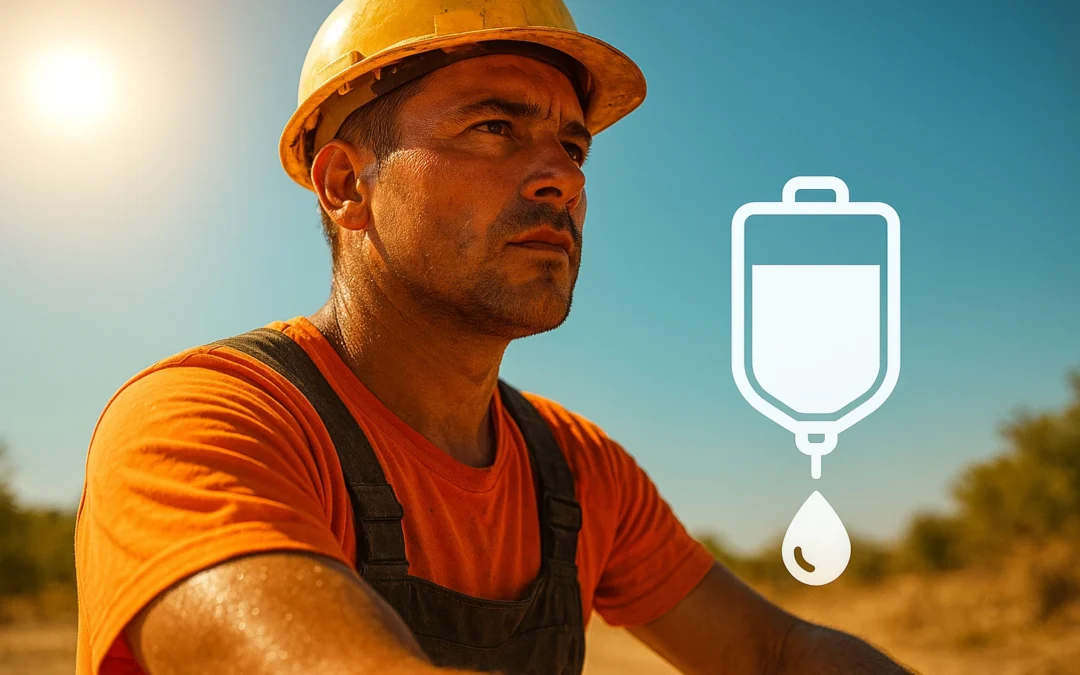
Imagine it is 2:00 PM on a mid-July job site. The concrete is radiating heat, the Wet Bulb Globe Temperature (WBGT) is peaking, and your crew is heavily sweating under their PPE. As a site supervisor or EHS manager, you’ve strictly enforced the occupational safety golden rule: Water, Rest, Shade.
Yet, by 3:00 PM, one of your best roofers is sitting in the shade, dizzy, cramped, and unable to continue working.
If you followed the guidelines perfectly, why did your worker still go down? The answer doesn’t lie in a lack of compliance—it lies in a biological bottleneck that standard safety manuals rarely discuss.
In high-risk outdoor occupations like construction, landscaping, and utility maintenance, preventing heat exhaustion requires more than just providing cases of water. It requires an understanding of human physiology and the strategic integration of clinical tools to keep workers safe, compliant, and productive.
The Physiology of Outdoor Work: Sweat Rates, Plasma Loss & The Absorption Bottleneck
To understand why workers suffer from heat illness despite drinking water, we have to look inside the body during extreme thermal stress.
According to research from the National Institutes of Health, a human working at a high exertion level in extreme heat (above 95°F / 35°C) can easily lose 1.5 to 2.5 liters of sweat per hour.
However, the human gut has a strict physiological limit. Even under optimal conditions, the stomach and intestines can only absorb roughly 750 to 1,000 mL (about 1 liter) of fluid per hour.
This creates a massive “hydration deficit.” Even if a worker drinks constantly, they are mathematically losing fluid faster than their gut can absorb it. Just like endurance runners utilizing an athletic recovery iv after a marathon, industrial workers face compounding physical depletion that oral fluids alone struggle to reverse during peak shifts.
The Danger of Blood Plasma Contraction
When this hydration deficit occurs, the body’s blood plasma volume begins to drop, causing the blood to literally thicken. This leads to a dangerous cascade:
- Cardiovascular Drift: The heart has to pump 10 to 20 beats per minute faster just to circulate this thicker blood.
- Resource Allocation: The body struggles to send blood to working muscles (for movement) and to the skin (for cooling sweat) simultaneously.
- Core Overheating: Sweat production slows down, the core temperature spikes, and the worker crosses the threshold into heat exhaustion.
Oral vs. Intravenous Hydration: The Science, Myths, and Triage Criteria
When EHS managers realize the biological limitations of oral hydration, they often ask, “where can i get an iv for dehydration to support my crew?” But before deploying advanced interventions, it is crucial to understand the proper triage criteria.
There is a prevalent myth that IV therapy can replace drinking water on a job site. This is entirely false. Mobile IV therapy is not a magic bullet, nor is it an excuse to skip OSHA-mandated breaks. It is an advanced tactical tool designed to supplement oral hydration when the biological bottleneck has been reached.
Comparative Triage Guide
- Mild Exertion & Baseline Hydration: Oral water and electrolyte packets are highly effective. The worker’s sweat rate matches their gastric absorption rate.
- Moderate to Severe Heat Strain (Cramps, Fatigue): The hydration deficit is growing. This is where preventative intravenous therapy shines. By bypassing the GI tract, an IV delivers 100% bioavailable fluids and electrolytes directly into the bloodstream, rapidly expanding plasma volume and lowering core temperature safely.
- Medical Emergency (Confusion, Fainting, Core Temp >104°F): This is heat stroke. IV hydration in the field is not a substitute for 911. Emergency EMS cooling and immediate hospital transport are required.
Integrating Mobile IV into Site Operations: OSHA Compliance, Legal Guardrails & ROI
For operations executives and safety directors, introducing medical interventions to a job site brings up critical questions regarding compliance and liability.
Navigating OSHA Recordability
Under OSHA standard 1904.7, employers must record work-related injuries that require “medical treatment beyond first aid.” Intravenous fluids administered after a worker exhibits symptoms of severe heat illness are typically considered a recordable medical treatment.
However, proactive wellness and baseline hydration programs administered before an injury occurs fall into a different category. By utilizing a preventative mobile iv strategy for at-risk crews during extreme heat waves, companies can mitigate the physiological deficits that lead to recordable incidents in the first place.
The Legal Guardrails
Intravenous therapy is an invasive medical procedure. It is not something to be taken lightly or administered by underqualified staff. A best-in-class site safety program requires partnering with providers who utilize exclusively critical care-trained nurses (such as those with ER or ICU backgrounds). The intravene standard of care ensures that extensive medical screening, strict adherence to physician standing orders, and rigorous safety protocols are maintained on the job site.
The Financial ROI Model
Consider the economic impact of heat illness:
- Lost productivity and project delays due to halted work.
- Emergency room visits and EMS transport fees.
- Workers’ compensation claims and subsequent insurance premium hikes.
Compared to these catastrophic costs, scheduling a preventative mobile IV clinic during a severe heatwave is a fraction of the expense, providing a clear, measurable ROI while deeply boosting crew morale and retention.
Implementation Blueprint: SOPs, Supervisor Checklists & Weather Triggers
How do you practically integrate these protocols into your daily operations? You need a modern Heat Illness Prevention Plan (HIPP) that goes beyond basic mandates.
Whether you are managing a massive construction project in Texas or organizing localized infrastructure developments that require targeted support—like setting up mobile iv therapy riverview operations for your Florida-based teams—you need clear Standard Operating Procedures (SOPs).
Establish Weather Triggers (WBGT)
Don’t rely solely on the heat index; use WBGT, which factors in humidity, wind, and solar radiation.
- WBGT Green/Yellow: Standard oral hydration protocols. Water, Rest, Shade.
- WBGT Red/Black (Extreme Heat): Trigger preventative hydration protocols. If searching for “mobile iv therapy near me” to support your crew, ensure your medical partner is pre-vetted and on standby to administer fluids during extended lunch breaks or shift changes.
Create a Job-Site Triage Decision Tree
Equip your foremen and site supervisors with a simple visual flowchart:
- Is the worker thirsty but alert? Provide oral electrolytes.
- Is the worker experiencing severe muscle cramps, profound fatigue, or a headache, but still fully lucid? Move to active cooling and evaluate for preventative IV intervention.
- Is the worker confused, dizzy, or slurring words? Initiate the 911 emergency protocol instantly.
Frequently Asked Questions About Job-Site Hydration
What are the earliest signs of heat exhaustion in construction workers?
Before a worker collapses, they will often exhibit subtle signs like heavy sweating followed by a sudden cessation of sweat, extreme irritability, clumsiness, headaches, and a noticeably faster breathing rate.
How much water do outdoor workers actually need per hour under OSHA guidelines?
OSHA generally recommends that workers drink 1 cup (8 ounces) of water every 15 to 20 minutes in the heat. This equals roughly 1 quart (32 ounces) per hour. However, as noted earlier, heavy exertion can cause workers to sweat out fluids faster than this recommended intake can replace.
Does Liquid IV or a commercial electrolyte drink work as fast as an IV?
Oral electrolytes are excellent for maintenance, but they still have to pass through the digestive system, taking 30 to 60 minutes to enter the bloodstream (and subject to the 1-liter-per-hour absorption limit). A mobile iv therapy bypasses the gut, delivering hydration directly into the bloodstream instantly, which is why it is utilized for rapid physiological recovery.
How do I find safe dehydration iv fluids near me for my commercial crew?
When looking for corporate or commercial IV partners, look exclusively for providers that use critical care-certified nurses (ICU/ER backgrounds), operate under clear medical director standing orders, and are willing to integrate seamlessly with your company’s EHS guidelines.
Next Steps for EHS Managers and Site Leaders
Protecting outdoor workers in an era of increasingly extreme temperatures requires a proactive, science-based approach. “Water, Rest, Shade” is your foundation, but bridging the biological hydration gap requires advanced planning.
Take time this week to review your current Heat Illness Prevention Plan (HIPP). Ask yourself: Do we have a protocol for when oral hydration fails? By understanding the physiological limits of the human body and evaluating advanced clinical solutions, you can elevate your safety standards, protect your workforce, and ensure your job site remains productive through the hottest months of the year.