

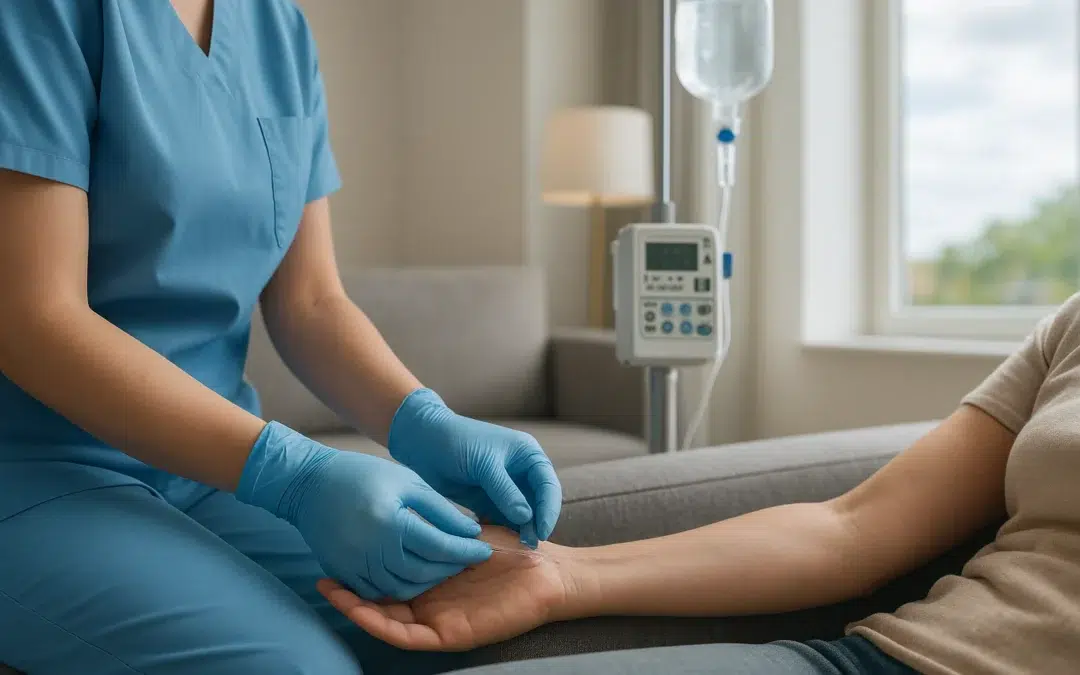
You’ve likely experienced it: that specific type of fatigue that hits after a long summer day at Centennial Center Park, or the lingering headache that follows a corporate event at Topgolf. Living at 5,820 feet presents a unique “triple threat” to your physiology: high altitude, an active outdoor lifestyle, and a semi-arid climate that evaporates moisture from your skin before you even realize you’re sweating.
When you reach that point of depletion, the idea of sitting in an urgent care waiting room is unbearable. This is where mobile IV therapy bridges the gap. However, for many Centennial residents, the concept of ordering medical care to the home still feels opaque. Is it safe? How fast can they get to Foxfield versus Cherry Creek? Is this just for hangovers, or is it actual healthcare?
Understanding the logistics of mobile IV therapy isn’t just about convenience; it’s about recognizing the difference between a novelty wellness service and professional critical care brought to your living room.
The Reality of “Same-Day” Response: Triage vs. Rush
In the world of on-demand services, we are conditioned to expect “instant.” We track our pizzas and ride-shares in real-time. But when it comes to intravenous therapy, “fastest” isn’t always synonymous with “safest.”
A true medical-grade response involves a process called tele-triage. Before a nurse is dispatched to your home in Centennial, a safety assessment must occur. This ensures that your symptoms (like fatigue or nausea) aren’t masking a more serious condition requiring an ER visit.
While some services might promise a 30-minute arrival, a high-quality provider operates within a safe 1-to-2-hour window. This allows time for:
- Medical Screening: Reviewing your history to rule out contraindications (reasons you shouldn’t receive fluids, such as certain heart conditions).
- Protocol Selection: Determining if you need a simple saline recharge or a complex immune boost iv with vitamins and minerals.
- Sterile Prep: Ensuring all equipment is sealed and prepared for transport.

Neighborhood Logistics: Navigating Centennial’s Geography
Centennial is unique because it isn’t a single grid; it’s a collection of diverse neighborhoods, each with different logistical challenges. A nurse’s ability to provide centennial home iv hydration efficiently depends on their knowledge of these local nuances.
Cherry Creek Village & The Urban Core
- The Landscape: Denser streets, closer to the DTC corridor.
- The Response: Response times here are often the fastest due to proximity to major arteries. However, parking and access in townhome complexes can add minutes to arrival. Professional nurses know to ask for gate codes and specific parking instructions before driving to ensure the “door-to-needle” time is minimized.
Foxfield & The Acreage Zones
- The Landscape: Large lots, rural atmosphere, set back from the road.
- The Response: GPS can be spotty in semi-rural driveways. The challenge here isn’t traffic; it’s specific location finding. Experienced mobile teams use satellite mapping to locate main houses versus outbuildings, ensuring they arrive at your front door, not your barn. This is popular territory for residents seeking privacy during recovery.
Homestead & Family Communities
- The Landscape: Winding suburban streets, cul-de-sacs, high family density.
- The Response: This is often where “household” treatments happen—where a husband and wife might book back-to-back appointments. Efficiency here relies on the nurse bringing ample supplies for multiple treatments (like a Myer’s Cocktail followed by an athletic recovery bag) without needing to restock.
Altitude & Acclimation: The Local Factor
Visitors and residents often underestimate the “Centennial Lift.” At roughly 5,800 feet, your body loses water through respiration twice as fast as it does at sea level. This is why iv therapy centennial searches spike after weekends—people aren’t sick; they are technically acclimating.
Symptoms of altitude dehydration often mimic a hangover or the flu:
- Headache
- Nausea
- Fatigue
- Shortness of breath
For those new to the area or returning from sea-level travel, a “Mile Hydrate” protocol—typically a liter of fluids balanced with electrolytes—serves as an acclimation tool, resetting the body’s hydration baseline faster than drinking water alone could achieve.
Frequently Asked Questions
Is mobile IV therapy safe for seniors or teenagers?Yes, but with caveats. Specialized nurses (like those with ICU/ER backgrounds) are trained to adjust protocols for different age groups. For seniors, we monitor fluid volume carefully to avoid stress on the heart. For teens (often student athletes), parental consent is required, and doses are adjusted for body weight.
Does insurance cover same-day mobile IVs?Generally, mobile IV therapy is an out-of-pocket wellness service. However, many clients successfully use HSA (Health Savings Account) or FSA (Flexible Spending Account) cards to pay for treatments, as they are medical services administered by licensed nurses.
How often should I get IV therapy?This depends on your goals. For acute issues like food poisoning or a hangover, it is a one-time rapid response. For wellness maintenance (like immune support or athletic recovery), many clients find a bi-weekly or monthly cadence works best. You can read more about how often should you get iv therapy to determine the right schedule for your lifestyle.
What is the difference between an IV and drinking water?Oral hydration is only about 50-60% efficient because it must pass through the digestive system, where nutrients are lost. IV therapy is 100% bioavailable, bypassing the gut to deliver fluids and vitamins directly into the bloodstream for immediate cellular uptake.
Taking the Next Step in Your Wellness Journey
Whether you are recovering from a marathon, fighting off a cold, or simply struggling with the Colorado altitude, understanding the mechanics of mobile IV therapy empowers you to make safer choices. It’s not just about getting fluids fast—it’s about getting them safely, administered by critical care experts who know your neighborhood.
If you are ready to explore how professional hydration can support your health, you can view our intravene wellness therapies menu or check availability in your specific Centennial neighborhood today.