

If you’ve ever woken up in the middle of the night with the sudden, relentless onset of the stomach flu or norovirus, you know the immediate sense of panic. Your body is rapidly losing fluids, you can’t keep a single sip of water down, and you’re faced with an uncomfortable dilemma: do you ride it out on the bathroom floor, or do you drag yourself to a crowded urgent care waiting room?
When you’re in the thick of severe gastroenteritis, the internet can be a confusing place. You might search for quick relief, only to find overlapping advice about sports drinks, electrolyte powders, or even unrelated medical procedures.
In this comprehensive guide, we are going to demystify the science of rapid rehydration. We’ll explore exactly why oral fluids fail during active vomiting, how mobile iv therapy bypasses your inflamed stomach to deliver instant relief, and how to safely determine if home treatment is the right step for your recovery.
The Triage Decision: Urgent Care, ER, or Mobile IV?
Before diving into how intravenous hydration works, it is crucial to establish a safety framework. When you or a loved one is losing fluids rapidly, knowing what level of medical care you need is step one.
While receiving iv fluids at home is incredibly effective for acute viral gastroenteritis (stomach bugs) and simple food poisoning, it is not a cure-all for every abdominal issue.
The Emergency Red Flag Checklist
A highly trained critical care nurse will always screen you for these symptoms before administering an IV. You should head immediately to an Emergency Room if you experience:
- Signs of Hypovolemic Shock: Confusion, lethargy, fainting upon standing, or a dangerously high heart rate.
- Blood in Vomit or Stool: Red or “coffee-ground” vomit, or black/bloody diarrhea.
- Unmanageable High Fever: A sustained temperature over 103°F (39.4°C) that doesn’t respond to medication.
- “Acute Abdomen” Symptoms: Severe, localized, rigid pain that is different from general stomach flu cramping.
Knowing the Difference: What Mobile IV Does Not Treat
Often, people searching for home hydration solutions bundle disparate conditions together. It’s important to distinguish acute stomach flu recovery from other medical needs:
- Pancreatitis & Gallstones: While these cause severe nausea, they require strict clinical monitoring, surgical evaluation, or specialized bowel rest—not just a simple home hydration drip.
- Ascites: Searching for home symptom relief shouldn’t be confused with peritoneal fluid drainage for chronic liver conditions.
- Enteral Feeding: Conditions requiring a PEG or G-tube deal with long-term nutritional stomas, which is entirely different from acute peripheral IV placement.
If your symptoms align with a classic, acute bout of norovirus or stomach bug—frequent watery diarrhea, nausea, and vomiting without the red flags above—you are likely a perfect candidate for in-home relief.
The Gastrointestinal Absorption Barrier: Why Oral Hydration Fails
There is a common point of confusion for many people trying to recover at home: mistaking oral electrolyte powders (like “Liquid I.V.”) for actual intravenous therapy.
Under normal circumstances, oral electrolyte drinks are fantastic. When you swallow water, it travels down to your small intestine. There, tiny mechanisms called sodium-glucose co-transporters (SGLT1) pull the water and electrolytes across the intestinal wall and into your bloodstream.
However, during an acute bout of norovirus, your body triggers gastric antiperistalsis—a clinical term for vomiting. Your stomach is actively inflamed and rejecting everything. Because the liquid is violently expelled before it can reach the small intestine, those SGLT1 transporters never get a chance to do their job.
This creates an absolute mucosal barrier. No matter how much water, sports drink, or oral rehydration solution you force down, you cannot absorb it. In fact, chugging plain water or sugary sports drinks can often pull more water into your gut via osmosis, worsening diarrhea.
The Intravenous Bypass Mechanism
This is where the true power of intravenous therapy shines. By placing a small IV line in your arm, a nurse completely bypasses the inflamed gastrointestinal tract. The fluids and essential medications are delivered directly into your intravascular system (your bloodstream). This provides 100% absorption instantly, restoring your circulating blood volume and stabilizing your blood pressure in minutes, not hours.
Inside a Stomach Flu IV Drip: The Clinical Composition
Not all IV drips are created equal. When a critical care nurse arrives to treat severe dehydration, they aren’t just giving you water; they are administering a carefully balanced clinical formula designed to target your specific physiological deficits.
Fluid Bases: Normal Saline vs. Lactated Ringer’s
The base of your IV will typically be one of two crystalloid solutions:
- Normal Saline (0.9% NaCl): An isotonic solution that perfectly mimics the sodium concentration of your blood. It is exceptional for rapidly expanding your intravascular volume and raising your blood pressure when you feel faint and dehydrated.
- Lactated Ringer’s (LR): Often the gold standard for severe gastrointestinal illness. Severe lower GI fluid loss (diarrhea) depletes your body of bicarbonate, leading to metabolic acidosis. Lactated Ringer’s supplies lactate, which your liver quickly metabolizes into bicarbonate, helping to restore your body’s delicate pH balance.
Targeted IV Additives for Symptom Relief
Fluids replace what you’ve lost, but medications stop the active loss. Understanding the iv additives used during treatment can help you see why this therapy is so effective:
- Ondansetron (Zofran): This is a powerful antiemetic. It works as a selective 5-HT3 receptor antagonist, meaning it effectively blocks the specific serotonin signals in your brain and gut that trigger the vomit reflex. It essentially “freezes” nausea in its tracks.
- Famotidine (Pepcid): An antacid that reduces gastric acid production. If you are wondering, does pepcid help with food poisoning, the answer is a resounding yes. It soothes an overactive, burning stomach lining, providing immense relief.
- B-Complex Vitamins: Rapid fluid loss flushes out water-soluble vitamins, leaving you feeling entirely drained of energy. Replenishing these helps shake off the post-flu fatigue.
The At-Home Clinical Workflow: What to Expect
The thought of receiving medical care at home might feel unfamiliar, but the process is highly structured and designed for your utmost comfort. If you’ve been searching for iv therapy for food poisoning or stomach flu relief, here is exactly what happens when you book an appointment:
- Clinical Assessment & Vitals: A licensed, critical care-trained nurse (someone with extensive ICU or ER experience) arrives at your home. They will first check your vital signs—blood pressure, heart rate, oxygen levels—and assess your skin turgor to gauge the severity of your dehydration.
- Comfortable Vein Access: Using their specialized training, the nurse will select an appropriate vein. Because they do this every day in high-stress hospital environments, the pinch is minimal and the process is swift.
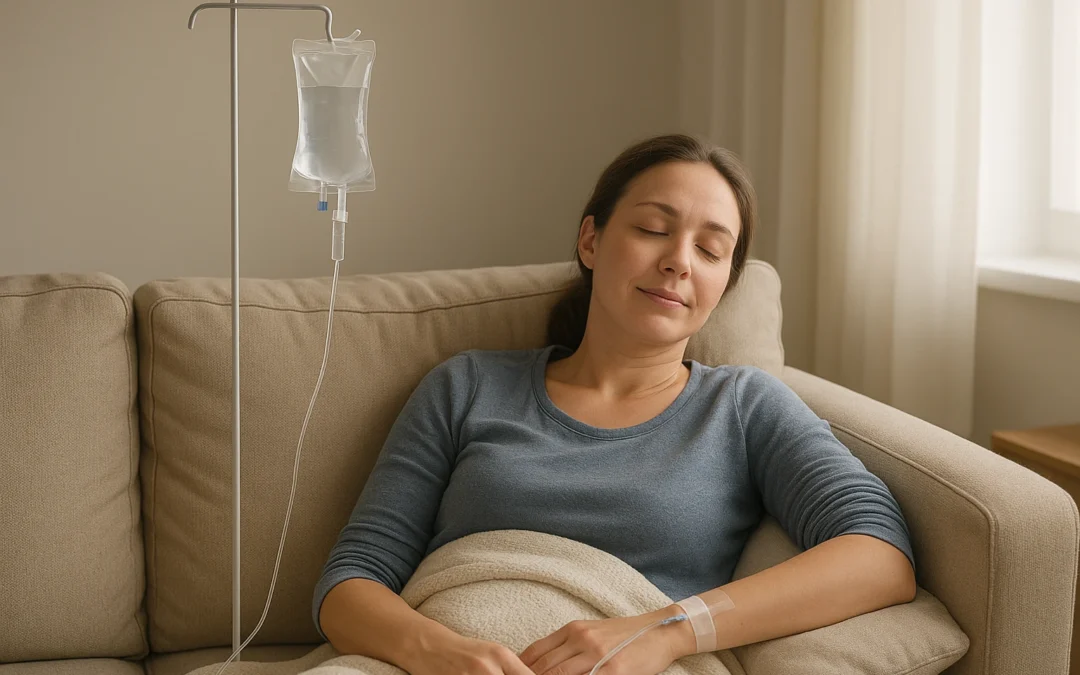
- The Drip Phase (30-60 Minutes): You can stay curled up on your couch or in your bed. The infusion rate is carefully controlled. During this time, the anti-nausea medication will take effect—usually within 5 to 10 minutes—providing a profound sense of relief.
- Post-Drip Vitals & Discharge Education: Once the fluid is complete, the nurse will check your vitals again to ensure your body has stabilized before removing the IV and guiding you on your next steps.
By choosing this route, you avoid the out-of-pocket unpredictability of emergency rooms, the hours spent in an urgent care waiting room, and the risk of exposing others (or yourself) to more viral contagions.
Transitioning Back to Normal: Post-IV Recovery Protocol
An IV drip breaks the relentless cycle of vomiting, but your stomach is still healing. To ensure you don’t trigger a relapse, follow this gentle reintroduction protocol:
- Wait 1-2 Hours: Let your stomach rest completely immediately following the IV, even if your nausea is gone.
- Sips, Not Gulps: Begin with small sips of an oral rehydration solution, plain water, or clear broth.
- The BRAT Diet: When you feel ready for food, stick to the classics: Bananas, Rice, Applesauce, and Toast. These bland foods are easy to digest and help firm up stool.
- Avoid Irritants: Stay entirely away from dairy, caffeine, alcohol, greasy foods, and heavily spiced meals for at least 48 hours.
Frequently Asked Questions (FAQ)
Is it normal to throw up after an IV infusion?It is highly uncommon if an antiemetic like Zofran is included in your drip. The IV medication blocks the vomit reflex efficiently. However, if you immediately chug a large glass of water or eat a heavy meal right after the nurse leaves, your sensitive stomach may still rebel. Pacing is key.
How long does IV rehydration take to work for norovirus?Most patients report feeling a significant reduction in nausea within 10 to 15 minutes of the anti-nausea medication entering the bloodstream. The physical effects of rehydration (alleviated headaches, increased energy, resolved dizziness) usually peak by the end of the 45-minute drip.
Can oral powders like Liquid I.V. replace an IV fluid drip?No. While excellent for daily hydration or mild illness, oral powders require an active, functioning digestive tract to work. If you have severe vomiting, the powder will be expelled before your body can absorb the electrolytes.
Do I need a prescription to get an IV at home?When you book with a reputable provider offering mobile iv services, they operate under a medical director. The critical care nurse assesses you on-site and the necessary protocols and standing orders are provided through their clinical oversight, meaning you do not need to visit your primary care doctor first.
Taking the Next Step in Your Recovery Journey
Understanding the science behind hydration empowers you to make the best decisions for your health when you’re feeling your worst. You don’t have to suffer through the dangerous cycle of acute dehydration, nor do you have to endure the stress of a hospital waiting room when high-level clinical care can come directly to your couch.
If you want to learn more about how targeted intravenous wellness can support your health—whether recovering from an acute illness, preparing for an athletic event, or simply optimizing your daily vitality—exploring the comprehensive solutions provided by mobile iv therapy is a great place to start. Stay educated, stay hydrated, and prioritize your body’s need for recovery.