

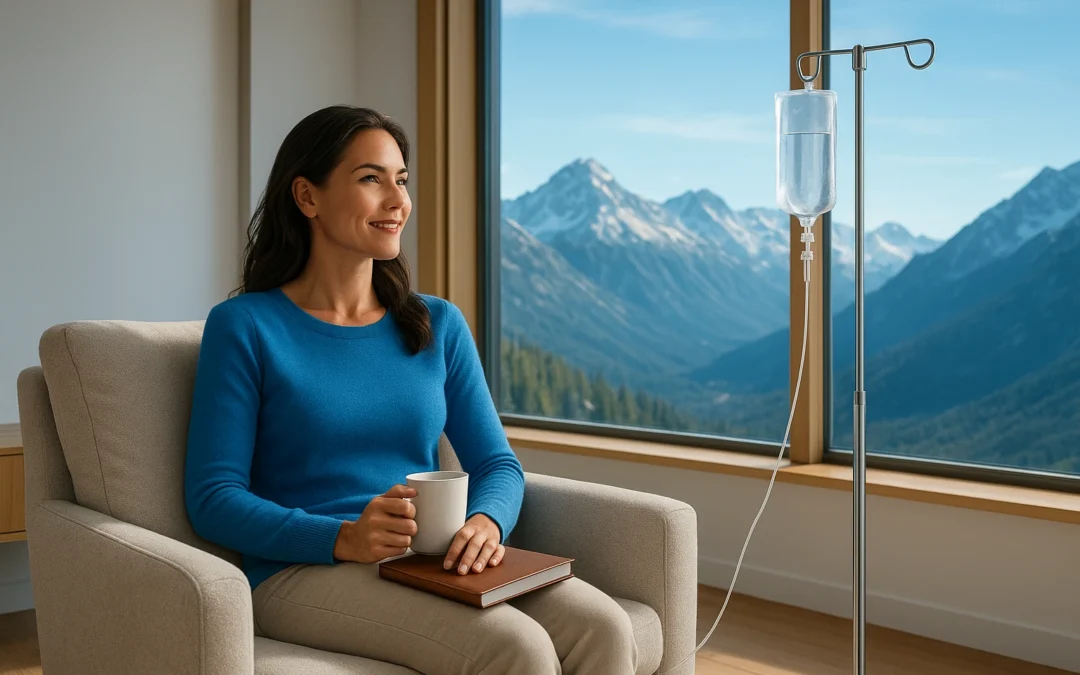
You moved to the mountains for the lifestyle. The crisp air, the endless trails, the stunning views. Yet, even after living in Colorado, Utah, or New Mexico for years, you might find yourself quietly wondering: Why am I still waking up tired?
If you frequently experience unexplained fatigue, a lingering mental fog, or the sensation that drinking a gallon of water just isn’t quenching your thirst, you aren’t alone. In fact, you’re experiencing a widespread but rarely discussed phenomenon among mountain locals.
Most of the information out there about high elevation is written for tourists visiting for a ski weekend. While vacationers frantically search for iv therapy for altitude sickness to cure their acute headaches, permanent residents face a completely different biological challenge: chronic mountain strain.
Let’s explore the fascinating science of what your body is doing behind the scenes at 5,000 to 10,000+ feet, and how long-term residents are using targeted intravenous wellness protocols to reclaim their energy and thrive.
The Silent Altitude Drain: Why Living High Takes a Toll
There is a common misconception that once you “acclimatize” to high elevation, your body functions exactly as it did at sea level.
Acclimatization is real—your body produces more red blood cells to capture oxygen more efficiently. But while your body adapts, the environment doesn’t change. The barometric pressure remains lower. The air remains incredibly dry. Your body is perpetually working harder just to maintain its baseline, like a car engine constantly driving up a slight incline. Over months and years, this continuous effort creates a low-grade physical strain that can deplete your cellular energy and nutrient reserves.
High-Altitude Physiology: The Science of Mountain Fatigue
To understand why you might feel sluggish, we have to look at the three major physiological shifts happening in your body 24/7.
1. The Oxygen Gap and Mitochondrial Stress
At elevations above 8,000 feet, the effective oxygen available in every breath drops by roughly 25%. Even if you are used to it, this chronic mild hypoxia (lower oxygen levels) affects your mitochondria—the powerhouses of your cells.
When oxygen is lower, your mitochondria’s electron transport chain slows down, leading to a decrease in ATP (cellular energy) production. This slow-down also generates free radicals, leading to cellular oxidative stress. It’s the biological reason why your muscles might feel heavier and your recovery times take longer than they used to.
2. The Quadruple Water Loss Engine
Living near a high altitude mountain fundamentally changes how you process fluids. You are losing water at an accelerated rate through four distinct pathways:
- Hyperventilation: Because the air is thinner, your respiratory rate increases, even at rest.
- Insensible Respiratory Loss: Mountain air has incredibly low relative humidity (often below 20%). Every time you exhale, you breathe out vital moisture. At high altitudes, respiratory water loss increases by 200% to 300%.
- Altitude Diuresis: High elevations naturally trigger your kidneys to excrete more fluids and sodium to help concentrate your blood.
- Thermal Regulation: The intense mountain sun and dry winds evaporate sweat so quickly you often don’t even realize you’re sweating.
3. Blood Viscosity and Polycythemia
To compensate for less oxygen, your body produces more red blood cells (polycythemia). This is a helpful adaptation, but it makes your blood thicker and more viscous. If you become even slightly dehydrated, this thicker blood moves more slowly through your capillaries, contributing directly to high-altitude brain fog and cold hands and feet.
The “Salt-and-Water Trap”: Why Chugging Water Isn’t Enough
The standard advice for high-altitude living is simply, “Drink more water.” But this can actually backfire.
When you continuously lose fluids through breathing and altitude diuresis, you aren’t just losing water; you are losing essential electrolytes. If you try to replace those losses by chugging massive amounts of plain tap water, you end up diluting the sodium and potassium remaining in your bloodstream.
This creates a “Salt-and-Water Trap.” Your cells actually flush fluid out in an attempt to balance the diluted sodium levels—a mild state of hyponatremia. The result? You feel bloated, you make frequent trips to the bathroom, yet your cells remain profoundly dehydrated and starved for minerals.
Furthermore, chronic mild hypoxia can slow down your gastrointestinal (GI) tract. When your GI motility is sluggish, taking oral vitamins and drinking electrolyte mixes doesn’t guarantee your body is actually absorbing them efficiently.
Overcoming Altitude Fatigue: The Case for Intravenous Support
This is where the paradigm shifts from drinking water to cellular hydration. If you’ve ever found yourself looking for dehydration iv fluids near me after a long hike or a restless night of mountain sleep, your body was intuitively seeking a faster, more effective delivery system.
Because the high-altitude gut can be slow to absorb nutrients, mobile iv therapy offers a powerful alternative. By bypassing the digestive system entirely, IV therapy delivers fluids, electrolytes, and micronutrients directly into the bloodstream with 100% bioavailability.
For mountain residents, regular IV therapy isn’t a quick fix for a hangover; it is a vital physiological bridge that immediately restores plasma volume, thins out viscous blood, and delivers the exact nutrients your cells need to combat high-altitude oxidative stress.
The High-Altitude IV Wellness Matrix: What Your Body Actually Needs
Not all IV drips are created equal. When designing a protocol for long-term mountain living, the specific nutrients matter immensely.
- Isotonic Fluid Base (Lactated Ringer’s or Normal Saline): Instead of pure water, these solutions precisely mimic the body’s natural blood plasma, pulling you out of the Salt-and-Water Trap and deeply hydrating your cells without causing a diuretic flushing effect.
- B-Complex & Vitamin B12: Essential for fueling mitochondrial ATP generation. They support red blood cell health and are crucial for converting food into usable energy when oxygen levels are low.
- Magnesium Chloride: High altitude naturally causes slight vascular constriction. Magnesium helps dilate blood vessels, easing altitude-induced tension headaches, reducing blood pressure, and calming tight, cramping muscles.
- Glutathione & Vitamin C: These are the master antioxidants. Because high-altitude living generates excess free radicals, Glutathione and Vitamin C neutralize oxidative stress, speeding up tissue repair. This makes an athletic recovery iv loaded with antioxidants highly effective for mountain runners, skiers, and cyclists.
Building a Routine: Integrating IV Hydration Into Mountain Life
For permanent residents, waiting until you feel completely drained isn’t the best strategy. The goal is maintenance and optimization.
Many health-conscious locals adopt seasonal schedules. During the brutally dry winter months, when indoor heating plummets the humidity even further, a monthly maintenance drip can keep your immune system strong and your skin hydrated. During the active summer months, quarterly tune-ups or post-endurance event recoveries help flush out lactic acid and replenish trace minerals.
The ultimate key to this lifestyle integration is convenience and safety. Utilizing highly trained critical care nurses—those with extensive ICU or ER experience—ensures that you are receiving hospital-level clinical expertise in the comfort of your own living room or home office.
Frequently Asked Questions (FAQ)
Why am I constantly tired living at altitude, even after several years?
While your body adapts by producing more red blood cells (acclimatization), the barometric pressure and oxygen levels remain permanently lower. Your respiratory system and heart are always working slightly harder than they would at sea level, requiring more cellular energy and burning through water and nutrients at an accelerated pace.
How does dry mountain air cause fluid loss through breathing?
Mountain air is typically very cold and lacks humidity. When you inhale, your lungs must warm and humidify that air. When you exhale, that moisture is released into the environment. Because you breathe faster at high altitudes, you lose significantly more water simply by existing.
What is the difference between oral hydration and IV hydration for mountain residents?
Oral hydration requires water and nutrients to pass through the digestive tract, which can be sluggish and inefficient due to mild hypoxia at altitude. Furthermore, drinking excessive plain water can dilute your electrolytes. IV hydration bypasses the gut, offering 100% absorption of perfectly balanced fluids and vitamins directly into the bloodstream.
how much is mobile iv therapy typically?
For premium, home-delivered services administered by specialized critical care nurses, customized IV treatments generally range between $194 and $350. The specific cost depends on the bespoke blend of vitamins, antioxidants, and fluid volume required to meet your unique physiological needs.
How often should a high-altitude resident get a mobile IV drip?
For long-term wellness, many residents opt for a once-a-month maintenance protocol to keep their plasma volume balanced and micronutrient levels optimized. However, active individuals may prefer bi-weekly sessions during peak training seasons or simply use it on an as-needed basis for immunity support and rapid recovery.
Your Next Steps Toward Mountain Vitality
Living at elevation is incredibly rewarding, but it demands a higher level of physiological care. You don’t have to accept fatigue, brain fog, and chronic dehydration as just “part of the mountain lifestyle.” By understanding the science of respiratory water loss, mitochondrial stress, and the limitations of oral hydration, you can take proactive steps to support your body’s unique needs.
When exploring your options with Intravene, you’ll find a partner dedicated to your long-term vitality. Administered exclusively by critical care nurses, our mobile IV therapies bring the highest standard of personalized wellness directly to your home—helping you finally unlock the sustained energy you need to fully enjoy the high-altitude life you love.