

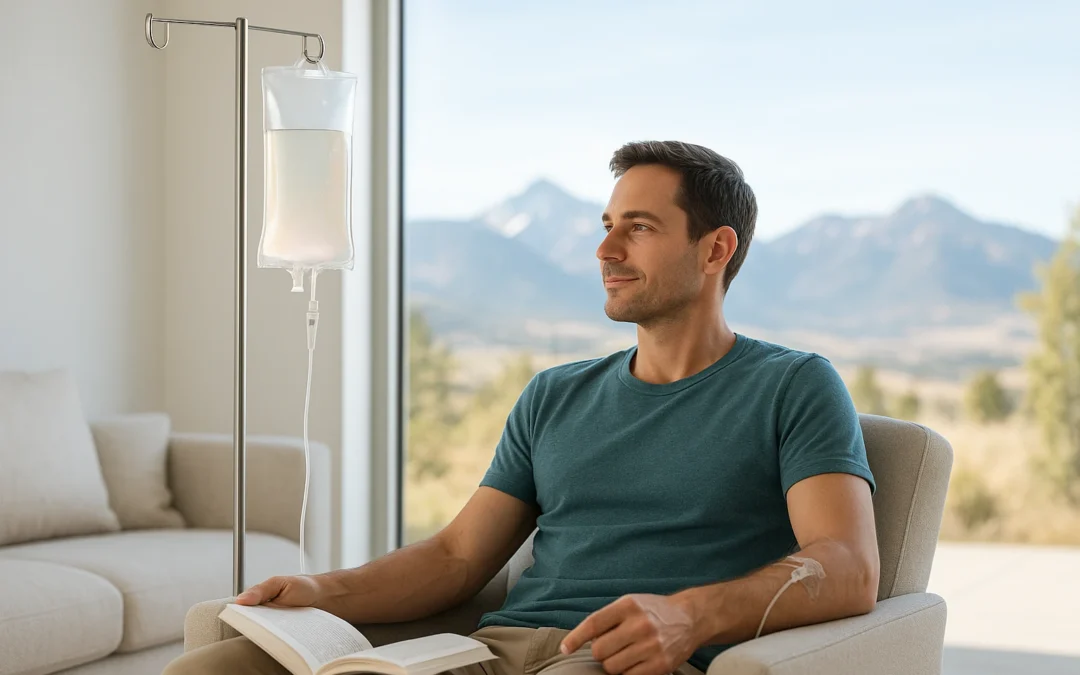
If you live in Aurora, Colorado, you are likely walking around in a state of mild, continuous dehydration without even realizing it.
Living in a high-desert environment at over 5,000 feet of elevation creates a phenomenon we call “Silent Dehydration.” Because the air is incredibly dry, your sweat evaporates almost instantly. You don’t feel sticky, and you often don’t feel thirsty, but your body is rapidly losing fluids. Add to that our active, outdoor-heavy lifestyles, and it’s easy to see why a simple glass of water sometimes doesn’t cut it.
As more people look for effective ways to bridge this gap, intravenous therapy has moved from hospital rooms directly into our living rooms. But what exactly is happening when you bypass the digestive system? Let’s decode the science behind personalized IV formulations, how your body absorbs nutrients, and why the “one-size-fits-all” approach to wellness is a thing of the past.
The “Traffic Jam” vs. The “Expressway”: Understanding Bioavailability
You might be wondering, “Why can’t I just drink a sports drink or take a multivitamin?” To understand the answer, we have to talk about bioavailability—a fancy medical term for how much of a nutrient actually makes it into your bloodstream to be used by your cells.
When you swallow a vitamin pill or chug water, it enters your digestive tract. Think of your gut and your liver like a series of strict toll booths on a busy highway. This process, known clinically as “First-Pass Metabolism,” filters, breaks down, and often discards a significant percentage of what you consume. Depending on your gut health, age, and the specific nutrient, you might only absorb 20% to 50% of an oral supplement.
When you opt for a mobile iv session, you are bypassing the toll booths entirely. You are taking the expressway. The nutrients are delivered directly into your bloodstream, achieving 100% bioavailability. Your liver doesn’t get the chance to filter out the beneficial vitamins, and your cells can begin utilizing the hydration immediately.
The Aurora Altitude Factor: Why Your Blood Needs a Breather
The elevation in Aurora doesn’t just make the air thinner; it actually changes your biology. When you spend time at altitude, your body produces more red blood cells to carry the limited oxygen available. This is a process called erythrocytosis.
While this adaptation is amazing, it also makes your blood slightly thicker. Thicker blood flows less efficiently, which can lead to that sluggish, headachy feeling we commonly associate with altitude sickness.
IV hydration uses a principle called osmotic pressure. By introducing a perfectly balanced saline solution directly into your system, it gently thins altitude-thickened blood, restoring optimal volume and flow. This is exactly why iv for altitude sickness has become a staple for both locals adjusting to seasonal changes and visitors struggling to acclimate.
Building Your Formulation: Decoding the Bag
Not all IV bags are created equal. While many people think of IVs as just “salt water,” modern therapy involves highly customized recipes. Let’s look at the foundational ingredients that make these formulations so effective:
- B-Complex Vitamins (The Energy Mechanics): These vitamins are the spark plugs of your cells. They convert the food you eat into usable cellular energy.
- Magnesium (The Relaxer): Essential for over 300 biochemical reactions in the body, magnesium is famous for calming muscle cramps, easing tension headaches, and promoting better sleep.
- Glutathione (The Master Antioxidant): Often called the body’s master detoxifier, glutathione works to clear out free radicals and support glowing skin and sharp cognitive function.
The Art of Deep Customization
Because everyone’s biology is different, formulations should be tailored to exact needs. An athlete recovering from a marathon at Cherry Creek State Park requires a different synergy of ingredients—heavy in amino acids and muscle-repairing magnesium—than someone seeking immune boost IV drips to combat high-plains seasonal allergies.
Advanced Supportive Hydration
Customization isn’t just for weekend warriors. Many individuals face complex medical journeys that leave them profoundly dehydrated and fatigued. For example, patients undergoing intensive oncological protocols like Temodar or radiation therapy often experience heavy physical tolls.
While IV therapy is never a cure for these conditions, customized, gentle hydration can act as a crucial support system. Formulations can be specifically designed to support kidney function and provide cellular nourishment during highly taxing medical treatments, offering an oasis of relief when the body needs it most.
Hardware and Safety: Demystifying the Medical Side
If you’ve never had an IV outside of a clinical setting, the process might seem intimidating. Understanding the hardware and the safety protocols can help ease those concerns.
The “Hep-Lock” Explained
You may hear the term “hep-lock” (or saline lock) thrown around in medical settings. Instead of a needle sitting in your arm for the entire treatment, a tiny, flexible plastic catheter is used. A hep-lock is a small cap attached to this catheter. It acts as a gateway, allowing critical care nurses to pause the continuous infusion if you need to use the restroom, answer the door, or simply take a break, without having to restart the IV. It’s a small piece of hardware that adds immense comfort and mobility to the experience.
Clinical Rigor in Your Living Room
The true safety of any medical procedure comes down to the person administering it. High-tier providers utilize critical care nurses—specifically those with Intensive Care Unit (ICU) or Emergency Department (ED) experience. Why? Because these professionals have the specialized training to assess your vitals, understand complex medical histories, and safely administer customized drips.
Furthermore, real clinical rigor involves proper testing. For instance, before administering high-dose Vitamin C (often used in advanced immune protocols), top-tier providers require a G6PD test. This simple blood test ensures your body has the necessary enzymes to safely process high doses of the vitamin without adverse reactions. This is the difference between a simple “hydration service” and a true medical wellness provider.
Frequently Asked Questions
Is receiving an IV at home safe?
Yes, provided it is administered by highly trained medical professionals. The safest options are services that exclusively employ critical care nurses (ICU or ER backgrounds) who follow strict hospital-level protocols for sterilization and patient assessment.
Does the IV insertion hurt?
Most people feel a brief, tiny pinch during the initial insertion. Because skilled nurses use medical-grade numbing sprays and precise techniques, the process is usually much more comfortable than a standard blood draw. Once the tiny, flexible plastic tube is in place, you shouldn’t feel any pain.
How do I know which formulation is right for me?
You don’t have to guess. A qualified nurse will conduct a health assessment before your treatment. Whether you’re looking for recovery from a long hike or targeted iv therapy for altitude sickness, they will tailor the exact mix of vitamins and minerals to your immediate physiological needs.
How long does a session take?
A typical session lasts between 45 to 60 minutes. Because you are in your own home or office, you can use this time to read, work on your laptop, watch TV, or simply take a restorative nap.
Taking the Next Step in Your Wellness Journey
Understanding how your body absorbs nutrients and the unique environmental challenges of living in Aurora is the first step toward proactive health. You no longer have to wait until you are severely dehydrated or completely burnt out to give your body the cellular support it needs.
When searching for iv therapy near me, prioritize providers who emphasize medical transparency, employ critical care nurses, and understand the deep science of personalized formulations. By treating your body’s hydration and nutritional needs with clinical precision, you empower yourself to live and perform at your absolute peak, no matter the altitude.