

When John Denver took the stage at Red Rocks Amphitheatre in 1974 to sing “Rocky Mountain High,” he immortalized the pristine views, fresh air, and spiritual euphoria of Colorado’s most legendary music venue. It’s a bucket-list destination for music lovers worldwide.
But there is a stark difference between the historical romance of a Red Rocks concert and the biological reality of the morning after.
If you’ve ever woken up after a show feeling like you ran a marathon through a desert, you aren’t alone. First-time visitors and locals alike are routinely blindsided by the physical toll of Denver’s local festivals. It’s not just a hangover, and it’s not just a long night out. The unique combination of extreme altitude, intense physical exertion, and dehydration creates a systemic shock to the body.
Let’s dive into the fascinating science of what actually happens to your body during a concert at 6,450 feet—and how you can reset your cellular chemistry to bounce back faster.
The Physiological Assault: Why Red Rocks Breaks You Down
Red Rocks isn’t just a music venue; it’s an active park used by local athletes for extreme stair workouts. Being in “Red Rocks Shape” is a genuine fitness milestone in Colorado. For the average concertgoer, simply attending a show is the cardiovascular equivalent of a two-hour, high-intensity workout.
The High-Altitude Musculoskeletal Toll
Before you even hear the first guitar chord, you have to navigate the infamous “Death Stairs.” Climbing from the lower parking lots to the top plaza requires a vertical gain of hundreds of feet over 380+ uneven stone steps.
When you combine that climb with hours of dancing in a low-oxygen environment, your muscles are forced to rely on anaerobic metabolism. This creates a rapid build-up of lactic acid and hydrogen ions in your calves, hamstrings, and quadriceps. It’s the exact same physiological process athletes experience during extreme training, which is why a targeted sports recovery iv can be so highly effective for post-concert muscle soreness.
Altitude Dehydration and Invisible Water Loss
At 6,450 feet above sea level, the barometric pressure drops, meaning oxygen molecules are spread further apart. To maintain oxygen saturation in your blood, your body unconsciously increases its respiratory rate.
This hyperventilation leads to a condition called respiratory alkalosis, which triggers your kidneys to excrete more fluids. Combined with Colorado’s incredibly dry, low-humidity air, your moisture loss doubles at elevation through respiration alone. Put simply: you are severely dehydrating yourself just by breathing.
The Compounding Toxicity of Alcohol at Elevation
You’ve probably heard the local warning: “Drinking hits you harder at altitude.” But why does two beers at Red Rocks feel like a six-pack at sea level?
Alcohol is a known diuretic. It inhibits vasopressin, an antidiuretic hormone, forcing your body to flush out water it desperately needs. When you mix this effect with the dry mountain air, the dehydration becomes profound.
Furthermore, alcohol causes vasodilation (the widening of blood vessels), which dramatically compounds altitude hypoxia (oxygen deprivation). This lack of oxygen essentially paralyzes your cellular mitochondria. Without oxygen to process the alcohol, a toxic byproduct called acetaldehyde accumulates in your liver, leading to the severe, pounding migraines characteristic of an “Altitude Hangover.” Whether you’re seeking a standard hangover iv at a sea-level beach festival or battling mountain altitude, oxygen deprivation requires an entirely different level of cellular recovery.
Why Oral Hydration Isn’t Enough: The Cellular Chemistry of IV Recovery
The morning after a concert, the standard advice is to “drink water and take some ibuprofen.” Unfortunately, when your body is this depleted, your gut can’t keep up.
During the intense physical exertion of stair-climbing and dancing, blood is diverted away from your digestive system to your muscles. This causes gastrointestinal sluggishness. Even the next morning, oral absorption of vitamins and fluids drops to around 50%.
Intravenous (IV) therapy bypasses the sluggish GI tract entirely, delivering nearly 100% bioavailability directly to your bloodstream. But it’s the specific combination of ingredients that creates the magic.
The Science of the Drip
When combating the unique physical footprint of a Red Rocks show, customized mobile iv therapy utilizes specific clinical ingredients to target exact symptoms:
- Isotonic Saline: Instantly restores blood volume, lowering your heart rate and correcting the renal fluid balance altered by hyperventilation.
- B-Complex Vitamins (B1, B2, B3, B5, B6, B12): These are essential cofactors that kickstart the Krebs cycle, converting nutrients into cellular energy (ATP) and accelerating the clearance of lactic acid from your tired legs.
- Magnesium: Acting as a natural calcium channel blocker, magnesium relaxes tight vascular walls to alleviate pounding altitude headaches and soothe cramped lower-limb muscles.
- Glutathione (The Master Antioxidant): Directly neutralizes acetaldehyde in the liver, shutting down the oxidative stress caused by alcohol processing at high elevation.
- Prescription-Strength Add-Ins (Toradol & Zofran): For severe cases, these medical add-ins instantly block prostaglandins to stop muscle and headache pain, and block serotonin receptors to eliminate nausea.
A Pro’s Timeline for a Pain-Free Show and Fast Recovery
Surviving festival season in Denver requires a strategic approach. Here is a timeline to help you navigate your next big event:
1. Pre-Show PreparationStart your hydration 24 hours before the show. If you’re searching for self care near me to prep for a big weekend, prioritize mineral packing. Eat magnesium-rich foods and focus on electrolyte intake before you ever step foot in the parking lot.
2. The Night-Of (The Exit Trek)Many fans don’t realize that leaving the venue is the hardest part. After hours of dancing and dehydrating, walking down steep, poorly lit gravel paths creates immense eccentric muscle strain. This is what causes intense DOMS (Delayed Onset Muscle Soreness) the next day. Drink high-electrolyte fluids immediately after the encore, and stretch your calves and hamstrings before getting in the car.
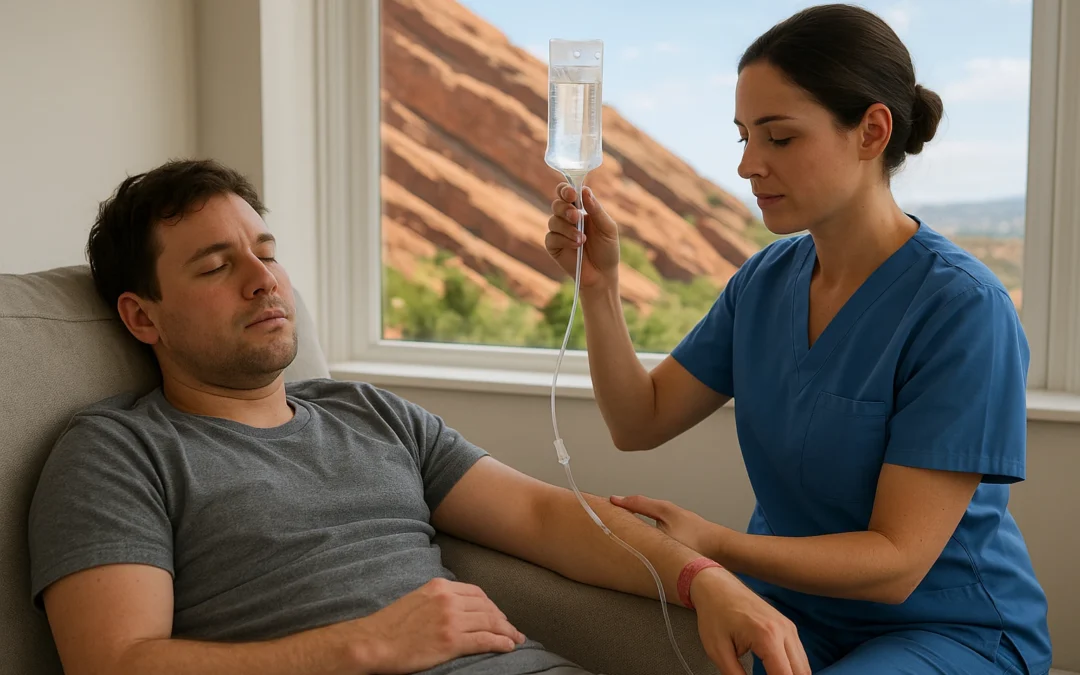
3. The Morning AfterWhen you wake up feeling the compounding effects of altitude, stairs, and celebratory drinks, the thought of leaving your bed to go to a clinic can feel impossible. This is the optimal time to search for mobile iv therapy near me. Having critical-care nurses bring a custom recovery drip directly to your hotel room or house means you don’t have to spend any more energy fighting the altitude.
Frequently Asked Questions (FAQ)
Why do my calves and thighs hurt so much after a concert?The steep incline of the 380+ stairs at Red Rocks combined with hours of standing and dancing causes a massive build-up of lactic acid. The downhill trek at the end of the night also creates eccentric muscle strain, leading to severe next-day soreness.
Can an IV really speed up altitude adjustment?Yes. An iv for altitude sickness immediately replenishes the intravascular fluid volume lost through hyperventilation in thin air. Added B-vitamins and magnesium help your cells process energy more efficiently despite the lower oxygen levels.
Is it safe to get an IV after drinking alcohol?Absolutely. In fact, hospitals routinely use intravenous fluids and vitamins to treat severe dehydration and alcohol toxicity. Ensuring your treatment is administered by highly trained critical care nurses guarantees the safest and most effective recovery protocol.
Final Thoughts: Treat Your Body Like It Ran a Race
Attending a bucket-list concert in the Rocky Mountains is a breathtaking experience in more ways than one. Feeling exhausted, sore, and dehydrated the next day isn’t a sign of weakness—it is a totally normal physiological response to a brutal environment.
Understanding the science behind the “altitude hangover” allows you to stop treating it with ineffective sea-level solutions. By utilizing targeted hydration and cellular support, you can spend your post-concert morning reliving the music, rather than recovering from it.