

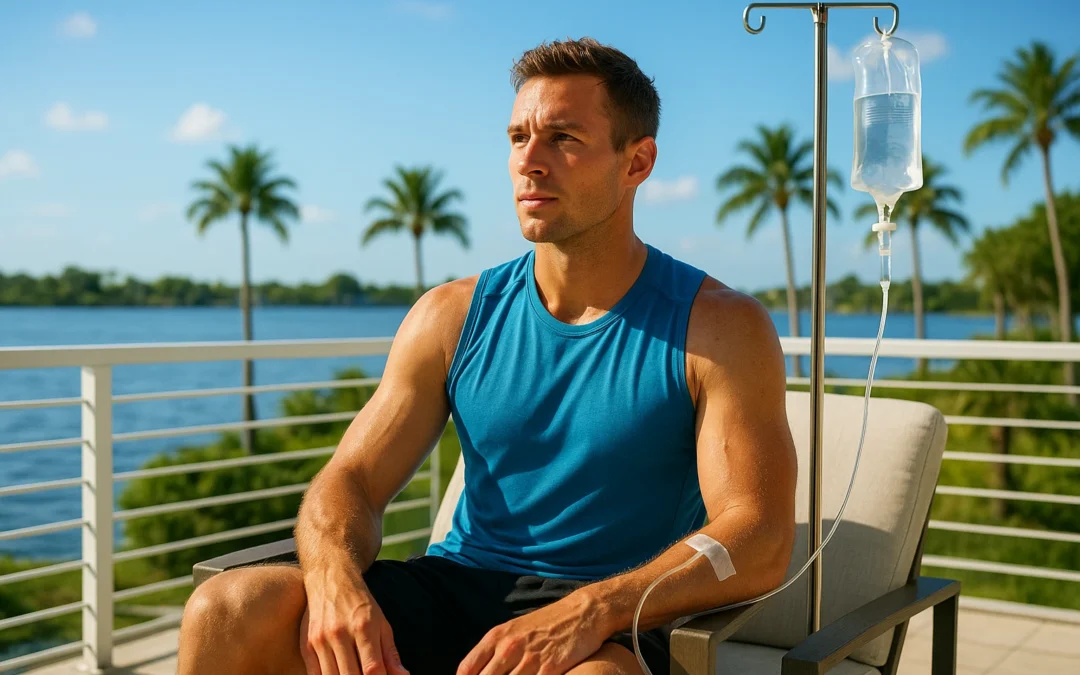
Picture this: You’re five miles into a long run down Bayshore Boulevard in mid-July. The thermometer reads 88°F, but the stifling humidity pushes the heat index well over 100°F. Your shirt is soaked, your heart rate is climbing faster than usual, and that expensive sports drink in your hand feels like it’s just sloshing around in your stomach.
If you train in Tampa Bay—whether you’re prepping for the Gasparilla Distance Classic, grinding through a local CrossFit championship, or training for St. Anthony’s Triathlon—you are intimately familiar with the “Tampa endurance crisis.” In our climate, high humidity prevents sweat from evaporating efficiently. This causes your core temperature to spike and your blood’s plasma volume to plummet.
When you push your body to these limits, standard rehydration simply isn’t fast enough. This is exactly why a growing number of fitness enthusiasts are exploring the science behind athletic recovery iv therapy to bridge the gap between exhaustion and peak performance.
But let’s step away from the flashy spa menus and transactional “hangover bus” marketing. If you want to optimize your body, you need to understand exactly what happens at a cellular level when you undergo intravenous recovery.
The Biological Bottleneck: Why Drinking Water Isn’t Always Fast Enough
To understand why IV therapy is gaining traction, we first have to look at the human gut.
When you drink fluids during or after an intense, heat-heavy workout, those fluids hit a biological bottleneck known as the “gastric rate limit.” When your body is under severe physical stress, it diverts blood flow away from your digestive tract and pushes it toward your skin and working muscles. Because of this, the water and electrolytes you swallow can take two to four hours to absorb—and even then, you’re only getting about a 50% to 60% absorption rate.
Intravenous (IV) therapy completely bypasses the gastrointestinal tract. A standard 500mL clinical drip delivers isotonic fluids directly into your venous system. This offers 100% bioavailability, meaning your red blood cells rehydrate instantly, and your cardiac stroke volume—the amount of blood your heart pumps with each beat—is rapidly restored.
The Biochemistry of Recovery: Rebuilding on a Cellular Level
Hydration is only half the battle. When you tear down muscle fibers during a grueling workout, your body requires specific biochemical building blocks to repair tissue and clear out lactic acid.
There’s a lot of misinformation online about unregulated “anabolic IVs” pushed by bodybuilding forums. Clinically sound, legal athletic recovery relies on something far more effective and safe: targeted amino acids. Formulas like the Peak Perform IV utilize high-quality amino acids—such as L-Glutamine, L-Arginine, and L-Lysine—which naturally stimulate your body’s tissue repair pathways without crossing into dangerous or banned territories.
Combating Tampa’s Hidden Endurance Killer: Pollen
Tampa athletes face a unique environmental challenge: intense oak and grass pollen seasons. When you run or bike through Flatwoods Park during peak allergy season, your body experiences an elevated histamine response, which triggers systemic respiratory inflammation.
This environmental oxidative stress, combined with the stress of your workout, slows down your recovery. Medical-grade athletic IVs tackle this by incorporating high-dose Vitamin C (a natural antihistamine) and Glutathione (a master antioxidant). Together, they neutralize the heavy free radicals generated by intense training and allergen exposure.
While many people turn to the internet to find a myers cocktail iv near me for general wellness, a dedicated performance drip takes this foundational concept and amplifies it specifically for muscular and respiratory recovery.
Navigating Competitive Rules: The WADA & USADA Compliance Guide
If you are a competitive athlete, safety and compliance are paramount. Many mobile IV providers avoid talking about anti-doping regulations, but understanding them is crucial to protecting your athletic eligibility.
The World Anti-Doping Agency (WADA) and the U.S. Anti-Doping Agency (USADA) have strict rules regarding intravenous infusions. For sanctioned, competitive athletes in competition, intravenous infusions are limited to 100mL per 12-hour period, unless a Therapeutic Use Exemption (TUE) is obtained or it is administered during a hospital admission.
- For the Sanctioned Pro: You must strictly adhere to the 100mL limit during competition windows. Mobile IV therapy can still be highly effective during off-season training blocks or if a TUE is in place.
- For the Recreational Athlete: If you are an everyday fitness enthusiast running the Tampa Bay St. Pete Marathon for personal records, utilizing standard 500mL or 1000mL bags is completely safe, legal, and highly recommended for rapid recovery.
It doesn’t matter if you’re battling the high humidity of Florida or pushing through thin air as a high-altitude boulder athlete—the physiology of cellular recovery and the rules governing competitive sports remain the same. Knowing how to safely integrate a sports recovery iv into your regimen keeps you both healthy and compliant.
Timing Your Infusion for Maximum Impact
To get the most out of mobile IV therapy, timing is everything.
The Pre-Event Loading Phase (24–48 Hours Prior):Getting an IV a day or two before a major event ensures your cells are maximally hydrated and your micronutrient stores are topped off. This helps delay the onset of fatigue and prevents the dreaded mid-race muscle cramp.
The Post-Workout Recovery Phase (2–12 Hours After):This is the critical window for lactic acid clearance and muscle protein synthesis. Receiving an amino-acid-rich drip within this timeframe rapidly flushes metabolic waste and kickstarts the repair process, drastically reducing delayed onset muscle soreness (DOMS).
The Financial Side: Insurance and Tax-Free Health Accounts
A common hurdle for athletes exploring clinical hydration is understanding the costs. Because athletic performance drips are considered elective wellness treatments, major commercial insurance providers (like Aetna Tampa) do not cover them.
However, many athletes ask: can you use hsa for iv therapy?
The short answer is yes. Because premium providers like Intravene exclusively utilize active critical-care registered nurses (ICU and ER veterans) working under a licensed medical director, these services often qualify as eligible medical expenses. You can typically use your tax-free Health Savings Account (HSA) or Flexible Spending Account (FSA) debit cards to cover your pre-race or post-workout infusions.
Frequently Asked Questions (FAQ)
How does IV hydration compare to oral intake during intense heat?
During heavy exertion, your digestive system slows down, meaning water and sports drinks can take hours to absorb. IV hydration bypasses the stomach entirely, delivering fluids and electrolytes directly into your bloodstream for 100% immediate absorption.
What is the difference between a Myers’ Cocktail and an amino-acid performance drip?
A Myers’ Cocktail is an excellent baseline drip containing B-vitamins, Vitamin C, Calcium, and Magnesium, designed for general fatigue and immune support. A performance drip (like the Peak Perform IV) builds on this foundation by adding targeted amino acids specifically formulated to repair muscle tissue, clear lactic acid, and boost athletic recovery.
Are mobile IV drips safe for post-workout muscle repair?
Absolutely, provided they are administered by highly qualified medical professionals. IV therapy is incredibly safe when guided by clinical protocols. It is vital to choose a provider that employs critical care nurses (ICU/ER trained) who understand osmolarity, vein health, and proper infusion rates.
Do I need to get blood work done before getting an IV?
While not strictly necessary for standard recovery and hydration drips, many elite athletes do utilize routine blood panels (through local labs like Labcorp) to identify specific nutrient deficiencies. This allows medical providers to customize your IV protocol for precise, personalized recovery.
Elevating Your Tampa Training Routine
The difference between a good training block and a great one often comes down to how well you recover. Pushing your body through the unique environmental challenges of the Tampa Bay area requires a recovery strategy that is rooted in real science and administered by true medical professionals.
As you prepare for your next big race or heavy training week, consider how bypassing the biological bottleneck of oral hydration might help you hit your next personal best. By focusing on cellular-level recovery, you aren’t just bouncing back from your last workout—you’re actively building the foundation for your next victory.