

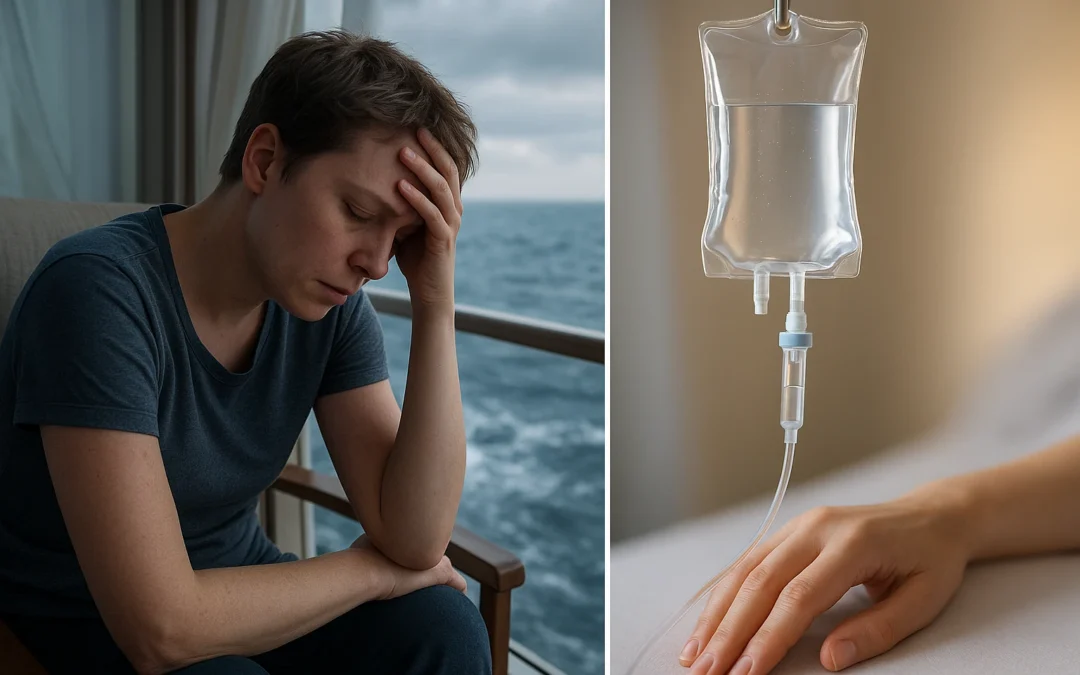
Picture this: You’ve been looking forward to your Caribbean cruise for months. You’ve booked your shore excursions, packed your formal wear, and even slapped a preventative motion sickness patch behind your ear just to be safe. But by night two, the ship hits unexpectedly rough waters. Suddenly, you aren’t just feeling a little dizzy—you are experiencing severe, debilitating seasickness.
At this stage, well-meaning advice like “eat green apples” or “stare at the horizon” feels almost insulting. When seasickness escalates from mild discomfort to an acute, intractable crisis, standard prevention methods fail. You don’t just need a remedy; you need a medical intervention to rescue your hard-earned vacation.
Let’s dive into the science of why severe motion sickness is so hard to shake, the advanced IV therapies used to break the nausea cycle, and the insider logistics of getting back on your feet quickly.
The Science of Failure: Why Pills and Patches Stop Working
To understand why you need an IV, you first need to understand a physiological phenomenon called gastric stasis.
When you experience severe motion sickness, your body enters a profound state of stress. The mixed signals between your inner ear (which feels the rocking of the boat) and your eyes (which see the stationary cabin) cause the brain’s “vomiting center” to panic. In response, your body shuts down non-essential functions, including digestion.
Your stomach goes into lockdown mode. If you try to swallow an anti-nausea pill at this point, it simply sits in your inactive stomach acid. It cannot be digested, and therefore, it cannot enter your bloodstream to help you. Swallowing an oral medication during gastric stasis is like dropping a letter into a sealed, locked mailbox. This is exactly why an intravenous route—which bypasses the gastrointestinal tract entirely—becomes the only effective solution.
The Medical Dilemma: The Ship’s Infirmary and the “Quarantine Fear”
When passengers reach their breaking point, the logical next step is usually a visit to the ship’s medical center. However, experienced cruisers often hesitate due to what is quietly known in the travel community as the “Quarantine Fear.”
Modern cruise lines are hyper-vigilant about highly contagious illnesses like Norovirus. If you present to the ship’s doctor with severe vomiting, the medical staff cannot immediately verify whether you are suffering from acute motion sickness or a viral infection. Standard health protocols frequently mandate that anyone presenting with gastrointestinal distress be placed under an automatic 24-to-48-hour cabin quarantine.
Furthermore, onboard medical centers operate outside standard domestic health insurance networks. Navigating the cruise ship iv fluids cost can result in serious sticker shock when you review your final folio at the end of the trip.
The IV Toolkit: Bypassing the Stomach for Immediate Relief
Intravenous therapy delivers hydration and medication directly into the bloodstream, achieving 100% bioavailability instantly. Here is a look at the specific targeted formulations used to combat a seasickness crisis.
Advanced Hydration: Isotonic Restoration
Severe vomiting rapidly depletes your body of essential fluids and electrolytes, leading to crushing headaches, extreme fatigue, and muscle cramps. Standard IV treatments start with an isotonic saline or Lactated Ringer’s solution, which perfectly mirrors the body’s natural fluid balance to rehydrate you at the cellular level almost immediately.
The “Big Three” Anti-Emetic Medications
Not all nausea is created equal, and neither are the medications used to treat it. Advanced IV drips utilize specific drugs that target different neurotransmitters in the brain:
- Zofran (Ondansetron): Often the first-line defense. It works by blocking serotonin, a natural chemical in the body that triggers nausea. It is incredibly effective, acts fast, and doesn’t cause severe drowsiness.
- Phenergan (Promethazine): An antihistamine that directly blocks signals from the inner ear—the primary culprit of motion sickness. While highly effective, it causes significant drowsiness. If your goal is simply to sleep through the rough seas, this is highly beneficial.
- Haldol (Haloperidol): The “Last Resort.” Originally developed as a psychiatric medication, very small IV doses of Haldol act as powerful dopamine blockers. It is used as a rescue medication for intractable vomiting when Zofran and Phenergan fail. Crucial Context: Haldol carries potential cardiac risks and requires careful administration and heart monitoring. This is exactly why premium mobile iv therapy should only be administered by highly trained critical care nurses with ICU or ER experience, rather than standard clinic staff.
Port-Side Logistics: How to Rescue Your Vacation
If you want to avoid the risks and expenses of the ship’s infirmary, you have alternative logistical options.
While some luxury cruise ships are beginning to offer “wellness IVs” in their onboard spas, these are usually basic vitamin drips, lacking the medical-grade anti-emetics required for a true seasickness crisis.
The smartest travel hack for modern cruisers is utilizing mobile port-side IV services. If you are struggling through a rough itinerary, you can schedule a mobile medical team to meet you at your hotel before departure or directly at your port of call (such as Miami, Fort Lauderdale, or Seattle). Whether you are sailing on a massive mega-ship or looking for targeted iv fluids ncl ships, scheduling an IV right at the gangway can save your trip without risking a red card for quarantine.
Beyond the Ship: Treating “Land Sickness” and Cruise Fatigue
Your body’s battle with motion doesn’t always end when you step back onto dry land. Many travelers suffer from Mal de Debarquement (disembarkation syndrome)—a persistent, dizzying feeling of rocking and swaying that can last for days after the cruise ends.
Coupled with the exhaustion of travel, late-night buffet dining, and general dehydration, post-cruise fatigue is very real. To combat this “land sickness,” many travelers turn to a comprehensive myers cocktail. Packed with a synergistic blend of B-complex vitamins, Vitamin C, Calcium, and Magnesium, this specialized IV restores cellular health, flushes out travel-related toxins, and clears the brain fog so you can return to your normal life refreshed.
Frequently Asked Questions (FAQ)
Can I just “sleep off” severe seasickness?
Usually, no. Once you reach the stage of intractable vomiting, your body enters a cycle of dehydration and gastric stasis that is incredibly difficult to break without medical intervention.
Why do I need a critical care nurse for an IV?
While many wellness centers offer basic hydration, administering potent, targeted anti-emetics requires deep clinical expertise. Critical care nurses possess the intensive training required to monitor your vitals, recognize contraindications, and ensure hospital-level safety protocols are followed in your home, hotel, or cabin.
Is it better to get an IV before or after my cruise?
Both offer unique benefits! Hydrating before your trip primes your body, potentially lessening the severity of motion sickness if you encounter rough waters. For those looking to be proactive, partnering with intravene for a pre-departure drip establishes a strong baseline of wellness, while a post-cruise drip ensures a rapid recovery once you are home.
Your Next Steps Toward Travel Wellness
Understanding how your body reacts to severe motion sickness—and knowing the medical options available to you—transforms you from a passive passenger into an empowered traveler. You no longer have to fear losing days of your vacation to the confines of your cabin.
By familiarizing yourself with advanced IV therapies and port-side logistics, you can plan your next voyage with the ultimate peace of mind. To explore how targeted hydration can elevate your travel experience from departure to disembarkation, take the time to consult with critical-care medical professionals who specialize in mobile wellness. Safe travels, and smooth sailing!