

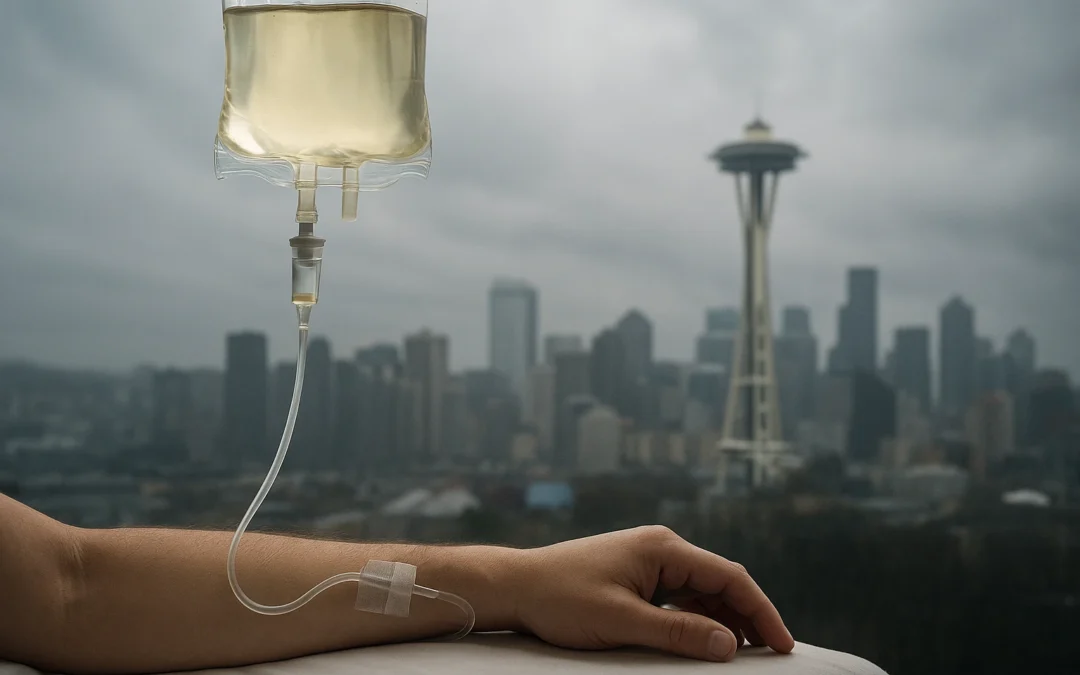
If you live in the Pacific Northwest, you know the exact moment the seasons shift. The glorious, sun-drenched Seattle summer abruptly gives way to what locals affectionately (and sometimes begrudgingly) call “The Big Dark.” Almost overnight, the skies turn gray, the persistent drizzle returns, and the temperature drops.
But it’s not just your mood that takes a hit during this transition—your immune system goes through a massive stress test.
Suddenly, everyone in your office is coughing, your kids are bringing home new bugs from school, and that familiar tickle in the back of your throat makes an unwelcome return. As we reach for extra vitamin C and zinc gummies, a growing number of Seattleites are turning to a more direct approach: the immune boost iv.
But how does intravenous vitamin therapy actually work? Is it a wellness fad, or is there real science behind delivering nutrients directly into your bloodstream? Let’s explore the biological mechanics of seasonal immunity, how Seattle’s unique climate impacts your health, and why bypassing your digestive system might be the key to staying resilient this winter.
The Seattle Seasonal Reality: Why “The Big Dark” Drains Your Defenses
To understand how to protect your immune system, we first need to understand what it’s up against. Seattle’s autumn and winter create a “triple-threat” burden on your body’s natural defenses:
1. Photoperiod Deprivation (The Sunshine Shortage)Between November and February, the solar radiation in Seattle drops so low that your skin produces virtually zero Vitamin D3. Vitamin D isn’t just for bone health; it’s a crucial modulator for your innate mucosal immunity. When levels plummet, your immune cells become less efficient at identifying and neutralizing viral threats.
2. Mucosal Barrier BreakdownYour respiratory system’s first line of defense is its mucous membranes. However, when you combine the damp, cold outdoor air with the dry, artificial heat inside Seattle homes and tech offices, it creates a harsh environment. The ambient humidity drops, drying out your respiratory mucosal membranes. This microscopic cracking reduces the effectiveness of your “mucociliary clearance”—your body’s ability to sweep away rhinovirus and influenza particles before they can take hold.
3. Circadian Stress and BurnoutExtended darkness disrupts your body’s natural melatonin and cortisol cycles. Add in the high-stress, fast-paced lifestyle of Seattle’s booming tech and business sectors, and you have a recipe for chronic fatigue. This systemic stress actually dampens lymphocyte (white blood cell) proliferation and natural killer (NK) cell activity.
The Absorption Paradox: Why Drinking Vitamin C Sometimes Isn’t Enough
When you feel a cold coming on, your first instinct is likely to drink a massive glass of orange juice or take a high-dose Vitamin C pill. While well-intentioned, this approach runs into a biological bottleneck known as the “Absorption Paradox.”
When you take vitamin C orally, it has to pass through your gastrointestinal (GI) tract. To get into your bloodstream, the vitamin molecules must use specific intestinal gateways called SVCT1 transporters.
Here is the catch: at low doses (around 200 mg), your body absorbs about 70–80% of the vitamin. But when you take high doses (like 1,000 mg or more to fight a cold), these SVCT1 transporters become completely saturated. The absorption rate plummets to less than 50%. The unabsorbed vitamin C is left sitting in your digestive tract, which draws in water and frequently causes osmotic diarrhea (digestive distress)—the exact opposite of what your body needs when it’s trying to heal.
Intravenous (IV) therapy bypasses the digestive system entirely. By delivering water-soluble vitamins directly into the bloodstream, you avoid the GI bottleneck. This achieves a 10- to 100-fold higher peak plasma concentration of the nutrients, flooding your cells with the building blocks they need to mount an immune response, all without upsetting your stomach.
Deconstructing the Ultimate Immune Boost Formula
A medical-grade immunity drip is not just a random cocktail of vitamins; it is a synergistic formula designed to target specific cellular mechanisms. Here is what is happening on a microscopic level when these core nutrients enter your system:
Vitamin C (Ascorbic Acid)
In high plasma concentrations, Vitamin C acts as a powerful protector for your leukocytes (white blood cells). When your immune cells attack a virus, they release toxic compounds to destroy the invader, but this can cause oxidative damage to the immune cells themselves. High-dose Vitamin C neutralizes this threat, protecting your immune cells from auto-oxidation and enhancing your body’s natural interferon signaling (the “alarm bells” of the immune system).
Zinc
Think of Zinc as a microscopic wrench thrown into the gears of a virus’s replication machinery. Zinc works by inhibiting viral RNA polymerase—the enzyme that viruses use to copy themselves and spread throughout your body. It also stabilizes cell membranes, making it harder for pathogens to enter.
Glutathione
Often referred to as the “master intracellular antioxidant,” Glutathione is naturally produced in your liver but gets rapidly depleted during an illness. When your body fights a severe inflammatory response, Glutathione neutralizes reactive oxygen species (ROS), reducing cellular damage and clearing out the metabolic “trash” left behind by an active immune defense.
B-Complex Vitamins (B1–B12)
Fighting off an illness takes a massive amount of metabolic energy. B vitamins are essential mitochondrial cofactors. They support ATP (energy) production within your cells, which is vital during metabolic immune activation. This is why a targeted drip can help lift the heavy, debilitating fatigue that accompanies seasonal bugs.
Magnesium
Magnesium is a multi-tasker. It regulates the ATP-dependent enzymatic reactions initiated by the B vitamins, while simultaneously calming the neuromuscular tension and body aches associated with illness fatigue.
(Note: While immune health is the priority during winter, the dry indoor heat also wreaks havoc on skin and hair. Many people opt for a biotin iv infusion as a targeted wellness addition to combat winter dryness.)
When to Consider an Immunity IV Drip (And What to Expect)
It is crucial to approach IV therapy with scientific transparency. An IV drip is not a cure for the flu, nor does it replace evidence-based medical preventatives like flu vaccines. Instead, it is a highly effective supportive adjunct designed for rapid nutrient repletion and cellular hydration.
So, when is the optimal time to utilize this tool?
- Pre-Season Priming (October/November): Preloading your system with antioxidants and hydration before the worst of “The Big Dark” sets in. This is also ideal for travelers looking for cruise immunity before boarding a packed ship.
- Early Symptom Onset: The golden window is the first 24 to 48 hours of feeling that familiar tickle, scratchy throat, or sudden fatigue.
- Post-Illness Recovery: When the acute infection is gone but the lingering, heavy fatigue won’t lift.
- Travel and Events: Navigating packed airports or recovering from a major celebration (whether that’s fighting off jet lag with a travel fatigue iv drip or rehydrating with an iv for boat party).
Prioritizing Safety: Is IV Therapy Right for You?
Because IV therapy delivers nutrients directly to the bloodstream and bypasses the body’s natural filtration bottlenecks, it must be administered with the highest clinical standards.
Your kidneys rapidly excrete unabsorbed excess water-soluble vitamins once cellular transporters are saturated. Therefore, an influx of fluids and high-dose vitamins requires healthy renal and cardiac function.
Before typing “mobile iv therapy near me” into a search engine, ensure the provider uses highly trained medical professionals—specifically critical care or ICU/ER-trained nurses who understand contraindications.
A responsible provider will screen you for:
- G6PD Deficiency: A genetic enzyme deficiency where high-dose Vitamin C can cause red blood cell breakdown.
- Renal Insufficiency: A history of kidney stones or kidney disease, as the kidneys must process the IV fluids.
- Cardiac Conditions: Conditions like Congestive Heart Failure (CHF), where the body cannot safely handle rapid fluid volume increases.
Frequently Asked Questions
How does IV therapy compare to a flu shot?They serve entirely different biological functions. A flu vaccine exposes your adaptive immune system to an inactivated virus so your body can build specific antibodies against it. IV therapy supports your innate immune system by providing the hydration and nutrients your cells need to function optimally. IV therapy is a complement to traditional healthcare, not a replacement.
Are there side effects?When administered by a qualified critical care nurse after a thorough health screening, side effects are rare. The most common experiences are a slight cooling sensation in the arm during the drip, or tasting the vitamins (especially B vitamins) in the back of your throat. Because the fluids are bypassing your gut, you avoid the gastrointestinal issues common with high-dose oral supplements.
How long does a treatment take?Most mobile IV treatments take between 45 to 60 minutes. Because the nurses come directly to your home, office, or hotel, you can receive treatment while continuing to work, read, or rest on your own couch.
Moving Forward into Winter
Navigating Seattle’s damp, dark winters doesn’t have to mean resigning yourself to seasonal fatigue and constant sniffles. By understanding the science of your own immune system—and the distinct advantages of bypassing gastrointestinal bottlenecks—you can take proactive steps to protect your health.
Whether you are aiming to stay sharp for a big tech launch, preparing for winter travel, or simply want to feel your best during “The Big Dark,” understanding your cellular needs is the first step. By combining foundational habits—like adequate sleep and proper indoor humidification—with advanced wellness tools, you can build a resilient defense system that lasts all season long.