

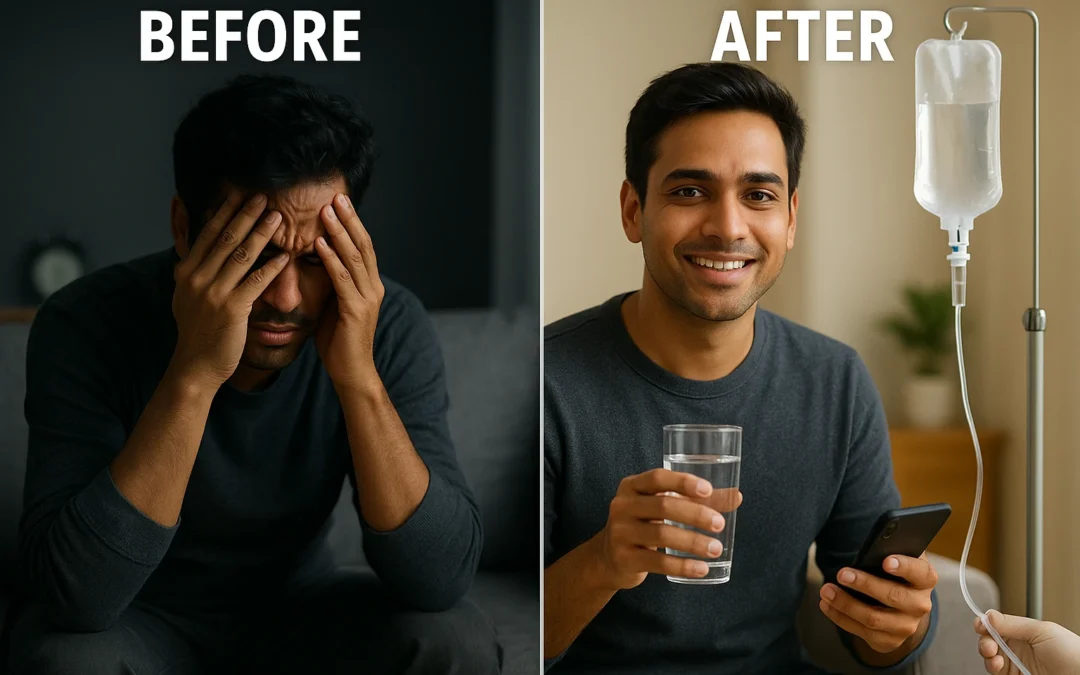
You wake up, and immediately, you know it’s going to be a rough day. The room is spinning, your head is pounding with every heartbeat, and even the thought of drinking a glass of water makes your stomach turn.
In moments of acute physical distress like this, you don’t want vague promises or complex medical jargon—you want immediate certainty. You’re likely asking one urgent question: “If I book an IV treatment right now, exactly how long will it take for me to stop feeling like this?”
When you’re caught in the grip of a severe hangover, minutes can feel like hours. The internet is full of conflicting information, with some clinics promising 15-minute “miracle cures” and skeptics claiming IVs are nothing more than overpriced water.
Let’s cut through the noise and look at the actual physiological science of recovery time. Here is exactly what happens inside your body, minute by minute, when you bypass your stomach and deliver hydration directly to your bloodstream.
The Biology of Delay: Why Drinking Water Takes Hours
To understand why IV therapy works so fast, you first have to understand why drinking water fails you when you’re hungover.
When you consume alcohol, two critical things happen to your body. First, alcohol suppresses vasopressin (your body’s antidiuretic hormone), causing your kidneys to flush out fluids rapidly, leading to severe dehydration. Second, it aggressively inflames your stomach lining—a condition known as gastritis.
This inflammation creates a “gastric stasis bottleneck.” The stomach practically paralyzes itself, triggering pyloric spasms and mucosal swelling. When you try to chug a sports drink or an electrolyte packet, those fluids just sit in your irritated stomach. Even if you manage to keep them down without vomiting, your compromised gastrointestinal tract can take anywhere from 45 to 120 minutes just to absorb them.
When your stomach is in revolt and oral rehydration is physically impossible, an IV bypasses the gastrointestinal resistance entirely. This 100% bioavailability is why people waking up in agony often search for a recovery iv near me rather than reaching for another glass of tap water.
The Stopwatch: Minute-by-Minute Recovery Timeline
So, what exactly happens when you opt for intravenous relief? Recovery isn’t an on-off switch; it’s a biological cascade. Here is the clinical timeline of what you can expect when a critical care nurse administers your treatment.
Minute 0–10: Clinical Setup and Assessment
Before any fluids flow, a licensed mobile nurse will assess your vitals—checking your heart rate, blood pressure, and oxygen saturation. This step is crucial. Hangovers mask significant physiological stress, and a highly trained ER or ICU-level nurse ensures the treatment is perfectly safe for your current state, establishing gentle and sanitary venous access.
Minute 5–15: The Nausea Dissolves
The first wave of relief is usually pharmacological. If your IV includes an anti-emetic like Ondansetron (Zofran), this medication crosses the blood-brain barrier rapidly. It works by blocking 5-HT3 serotonin receptors in your gut and the chemoreceptor trigger zone in your brain. Typically, before the fluid bag is even 20% empty, the nausea dissipates.
Minute 15–30: Vascular Volume Rebound
As balanced isotonic crystalloids (like Normal Saline or Lactated Ringer’s) flow into your veins, they rapidly expand your intravascular volume.
- The dizziness fades: Orthostatic hypotension (that dizzy feeling when you stand up) resolves as your blood pressure stabilizes.
- The heart calms: Alcohol-induced heart palpitations slow down.
- The headache lifts: Cerebral blood flow normalizes. If your nurse administers an anti-inflammatory like Ketorolac (Toradol), it shuts down the inflammatory prostaglandins causing that intense throbbing in your head.
Minute 30–45: Cellular Osmotic Rebalancing
Now that your bloodstream is full, water and nutrients begin shifting into your dehydrated cells. During this phase, neuro-nutrients—often found in mixtures similar to a traditional banana bag iv—replenish depleted cofactors. B-complex vitamins (like thiamine, B6, and B12) and magnesium stabilize cellular energy and calm hyper-excitable neurotransmitters.
Minute 60: The 75–80% Threshold
As the infusion completes and the catheter is removed, you will likely reach the 75–80% recovery threshold. You transition from bedridden to functional. You are fully rehydrated, mobile, able to retain food, and free from the acute grip of nausea and headache.
The “Two-Phase” Reality: Cure vs. Symptom Management
We believe in radical medical transparency. Can an IV instantly “cure” a hangover and drop your blood alcohol level to zero? No.
Hangover recovery operates in two distinct phases:
- Dehydration and Electrolyte Collapse: This causes the headache, nausea, and dizziness. IV therapy corrects this completely in under 45 minutes.
- Acetaldehyde and Mitochondrial Toxicity: As your liver breaks down alcohol, it produces acetaldehyde, a toxic byproduct. Your liver still requires metabolic time (usually 2 to 24 hours) to process this, which is why you may still feel slightly fatigued or need a good night’s sleep to reach 100%.
While IV fluids give you your day back by eliminating the worst symptoms, your liver is still doing the heavy lifting in the background. (This is also why many wellness enthusiasts explore advanced cellular support and look into nad iv therapy cost for long-term mitochondrial health, though that’s a conversation for after you’ve recovered from the immediate hangover!).
DIY Drip Dangers and Clinical Safety
With the rise of wellness trends, some people wonder if they can save money by buying saline bags online and doing a “DIY” IV drip at home.
Clinically speaking, this is incredibly dangerous.
Intravenous therapy involves direct access to your circulatory system. Without professional oversight, DIY kits carry extreme risks, including:
- Air Embolisms: Fatal air bubbles entering the bloodstream.
- Septic Phlebitis: Severe vein infections due to non-sterile environments.
- Hypervolemia: Fluid overload that can stress the heart and lungs.
Safety is why true mobile iv therapy relies exclusively on licensed, critical care-trained registered nurses (those with ER or ICU experience). Whether you are recovering from a standard night out, scheduling a hangover iv therapy texas style for a local event, or pre-booking a bachelor party iv to keep your group safe, hospital-level expertise ensures the treatment is both highly effective and completely secure.
Practical Decision Guide: When to Call for Backup
How do you know if you should wait it out or call a mobile nurse? Use this simple triage guide:
- Rest and Oral Hydration: You have a mild headache, your stomach is settled, and you can comfortably sip and keep down water or electrolyte drinks.
- Mobile IV Therapy: You are experiencing severe nausea, vomiting, a pounding headache, or orthostatic dizziness (dizzy when standing). You cannot keep fluids down, and you need to be functional for work, travel, or family obligations within the hour.
- Emergency Department (ER): You or a friend are showing signs of acute alcohol poisoning—unresponsiveness, breathing less than 8 times per minute, persistent hypothermia, or seizures. (An IV is not a substitute for emergency medical care in the case of alcohol poisoning).
Frequently Asked Questions
How long does the entire appointment take?From the moment the mobile nurse knocks on your door to the time they leave, the process generally takes about 45 to 60 minutes. The active dripping phase usually lasts 30 to 45 minutes, depending on your vein health and hydration levels.
Does a hangover IV help with “hangxiety”?Yes and no. The IV won’t instantly rewrite your brain chemistry, but by rehydrating the brain, flushing out stress hormones, and adding ingredients like magnesium (which calms the nervous system), many patients report a significant reduction in post-drinking anxiety and brain fog.
Can you use hsa for iv therapy?In many cases, yes. If you are receiving IV therapy for a legitimate medical issue—such as severe dehydration—you can often use your Health Savings Account (HSA) or Flexible Spending Account (FSA). However, policies vary, so it is always recommended to check with your specific plan administrator.
Next Steps for Your Wellness Journey
Understanding the science behind hangover recovery empowers you to make smarter, faster decisions about your health. You don’t have to lose an entire day to dehydration and nausea when direct-to-bloodstream hydration offers a clinically proven bridge back to feeling like yourself.
When you’re ready to explore how personalized, professional hydration can elevate your recovery, energy, and overall wellness, look for providers who prioritize critical-care nursing standards and uncompromising safety. Your body—and your weekend—will thank you.