You’ve been chugging water all morning. You’ve drained your reusable bottle three times since waking up, yet your mouth feels like cotton, your head is throbbing, and a profound sense of fatigue is pinning you to the couch.
If you’re in Arvada right now wondering, “Why am I still thirsty after drinking a gallon of water?” you aren’t alone.
Many residents and visitors find themselves trapped in a frustrating cycle of drinking fluids without actually feeling hydrated. When you reach this point of severe dehydration, your body is sending you a clear signal: standard oral rehydration is no longer enough.
Let’s dive into exactly why Arvada’s unique environment acts as a “silent dehydrator,” why the water you’re drinking isn’t making it to your cells, and how medical-grade hydration science can help you find immediate relief.
The “Silent Dehydrator”: Why Arvada’s Altitude Changes Everything
To understand why you feel so terrible, you first have to understand your environment. At an elevation of roughly 5,340 feet, Arvada hits you with what clinical professionals call the “Double Whammy” effect: high altitude combined with low humidity.
When you breathe the arid, high-altitude air of the Front Range, your body experiences something called Insensible Water Loss. Because the air is thinner, you naturally breathe faster and deeper—even when you’re just sitting on your couch in Olde Town or taking a casual stroll through Leyden Rock. Every time you exhale, the dry air pulls moisture directly from your lungs. At the same time, the lack of humidity evaporates sweat from your skin so quickly you don’t even realize you’re sweating.
At sea level, your body might lose a moderate amount of fluid throughout the day. But in Arvada, you are quietly hemorrhaging water at a vastly accelerated rate.
The “Pinch Test” Fallacy & The Limits of Drinking Water
We’ve all heard the old advice: pinch the skin on the back of your hand, and if it stays “tented,” you’re dehydrated. Unfortunately, this “pinch test” is highly misleading.
By the time your skin loses its elasticity, you aren’t just mildly dehydrated—your body has already pulled water from your vital organs to keep your blood volume stable. You are experiencing intracellular dehydration. Your cells are completely parched, even if your stomach is full of the water you just drank.
Why Isn’t My Water Working?
When you are in acute dehydration distress, drinking water is astonishingly inefficient. Any liquid you swallow must travel through your digestive tract. Your body has to process it, metabolize it, and eventually absorb it into the bloodstream. During this digestive journey, you lose roughly 40% to 60% of the water’s hydrating efficiency.
If you are already nauseous, battling a migraine, or suffering from a severe hangover, your digestive system slows down even further. You simply cannot drink water fast enough to outpace the dehydration.
The Science of the Drip: 100% Bioavailability
This is where the science of a mobile iv fundamentally changes the game.
The biggest “Aha!” moment for many people is learning about the concept of bioavailability. When you receive an intravenous treatment, the fluid completely bypasses your digestive tract and enters your bloodstream directly. This provides 100% bioavailability.
To put that into perspective, receiving 1,000ml of IV fluid goes straight to your thirsty cells in a matter of minutes. To get that same cellular uptake through drinking, you would have to comfortably consume and digest nearly two gallons of water—a physical impossibility when your stomach is upset or your head is pounding.
Because the delivery is instant, the relief is rapid. This rapid cellular absorption is exactly why specialized therapy serves as such a powerful iv migraine treatment arvada co locals turn to when altitude and dehydration trigger debilitating headaches.
The Dehydration Spectrum: Are You in the Danger Zone?
How do you know when you’ve crossed the line from “I need a glass of water” to “I need clinical intervention”? Review this symptom spectrum:
- Mild Dehydration: Dry mouth, slight thirst, darker yellow urine. (Action: Drink water and electrolytes).
- Moderate Dehydration: Fatigue, mild headache, muscle cramps after hiking the Ralston Creek Trail, feeling “brain fog.” (Action: Oral rehydration may work, but IV therapy will cut recovery time from hours to minutes).
- Clinical Emergency (Severe): Nausea, inability to keep fluids down, rapid heart rate, confusion, dizziness when standing, severe throbbing headache. (Action: Immediate vascular hydration required).
If you are experiencing severe symptoms, trying to force down more water can actually trigger vomiting, which only accelerates your fluid loss.
The Safety Standard: Why Vascular Access Requires ICU Expertise
As IV therapy becomes more popular, a concerning trend has emerged: treating medical procedures like casual spa treatments. But placing an IV into a vein (vascular access) is a medical procedure.
When you are acutely dehydrated, your veins often constrict and “hide,” making IV placement highly difficult. This is exactly why the intravene standard of care dictates that only Critical Care Nurses—those with deep experience in Intensive Care Units (ICU) and Emergency Departments (ED)—perform these treatments.
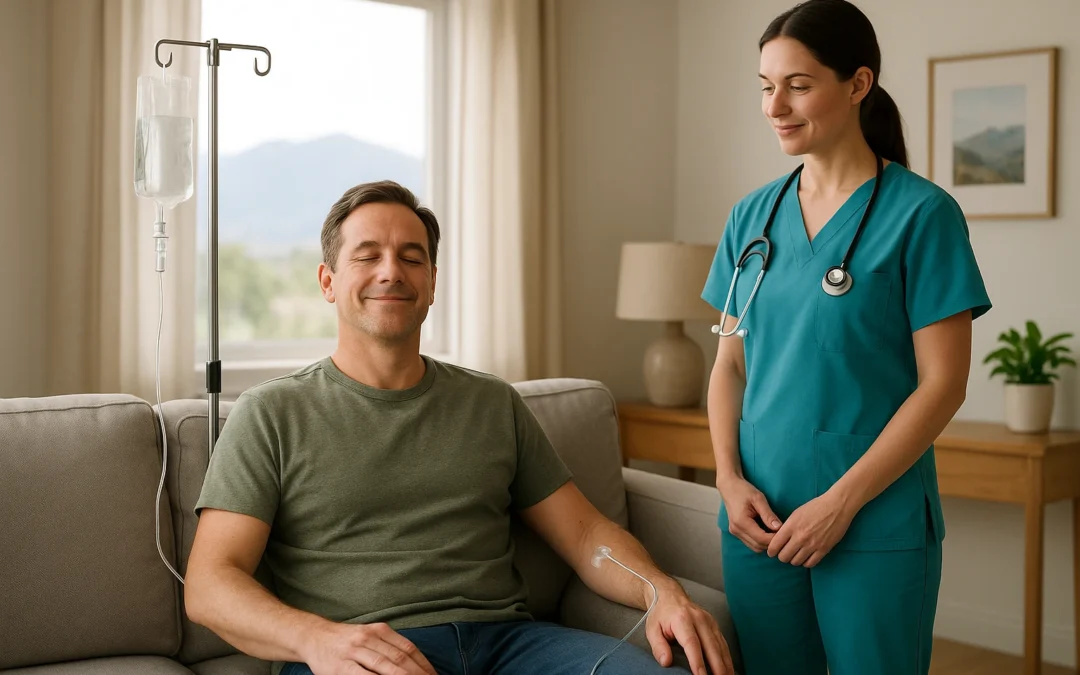
Much like the rigorous safety criticals kent protocols established across broader healthcare environments to ensure zero margin for error, your at-home IV therapy should be administered by someone who manages complex, life-saving vascular access every day. It’s not just about getting a needle in an arm; it’s about clinical assessment, monitoring your heart rate and blood pressure, and ensuring your body is safely responding to the fluids.
The Arvada Rapid Response Protocol
When you’re suffering from acute dehydration, you don’t have hours to sit in an urgent care waiting room under fluorescent lights. You need relief exactly where you are.
A high-quality mobile medical service operates on a rapid response framework:
- Triage & Dispatch: You request an appointment from your couch or bed.
- Rapid Arrival: An ICU-trained nurse arrives at your home in West Arvada, Olde Town, or Candelas (often within 45 to 60 minutes).
- Clinical Assessment: The nurse checks your vitals and tailors the fluid (such as a Myers’ Cocktail or a specialized altitude blend) to your specific symptoms.
- Immediate Relief: As the fluids and essential vitamins enter your bloodstream, most patients report feeling their headache lift and their energy return before the 45-minute drip is even finished.
Frequently Asked Questions (FAQ)
Does getting an IV hurt?
When administered by a highly skilled ICU or ER nurse, an IV insertion feels like a quick, tiny pinch. Because critical care nurses place thousands of IVs in the most difficult clinical scenarios, their technique is incredibly gentle and precise.
How fast does mobile IV therapy work?
Because the fluids and vitamins bypass your digestive system, they enter your bloodstream instantly. Most people begin to feel noticeable relief from brain fog, fatigue, and headaches within 15 to 20 minutes of the treatment starting.
Is this just for hangovers?
Not at all. While highly effective for hangover relief, emergency hydration is frequently utilized by athletes recovering from intense training, individuals fighting off the flu or food poisoning, hikers suffering from altitude sickness, and professionals dealing with severe travel fatigue.
Can’t I just go to the Emergency Room?
You can, but ER visits for dehydration often involve hours of waiting, high co-pays, and exposure to other illnesses. Mobile IV therapy brings the same sterile saline and clinical expertise directly to your living room for a fraction of the hassle and cost.
Ready to Reclaim Your Day?
Living at elevation shouldn’t mean living in a constant state of fatigue, headaches, and brain fog. Understanding how Arvada’s unique climate affects your cellular hydration is the first step in taking control of your health.
When drinking water isn’t cutting it and you need rapid, safe, and medically sound relief, don’t wait for your symptoms to escalate. Experience the profound difference of 100% bioavailability delivered by the most qualified medical professionals in the industry.