

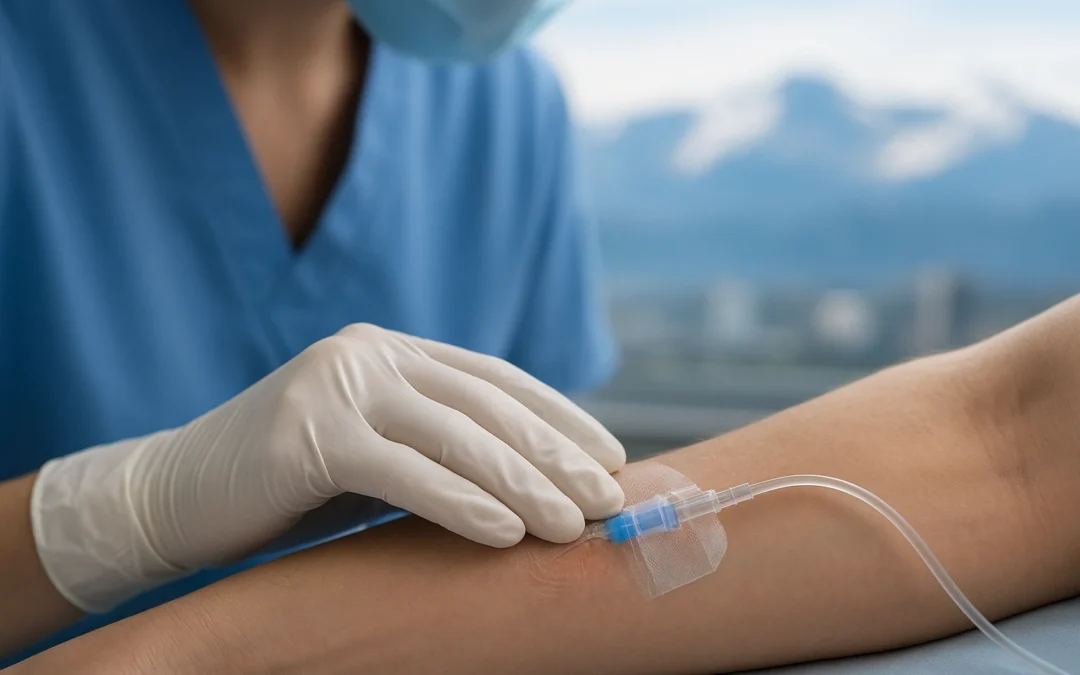
Imagine this: You’ve just arrived in Denver, or perhaps you’re recovering from an adventurous weekend in the Rockies. You’re feeling the harsh effects of the 5,280-foot elevation, the notoriously dry air, and a nagging sense of dehydration. You decide to search for a wellness iv near me to help you bounce back quickly. It sounds like the perfect, simple solution—just a quick pouch of vitamins and water, right?
But here is a medical reality that many wellness blogs gloss over: An IV is not just a hydration straw. It is an invasive vascular procedure.
As the popularity of mobile iv therapy surges, so do quiet anxieties. People frequently wonder, “Is at-home IV therapy safe?” or “How do I know if an IV was put in wrong?” These are incredibly smart, valid questions.
Let’s pull back the curtain on the physiological realities of intravenous hydration. By understanding how your veins work, how Denver’s unique altitude impacts your body, and why the person holding the needle matters, you can transform from a cautious consumer into an empowered, safety-conscious patient.
The Invisible Complexity of the “Simple” IV
When you get an IV, fluids and nutrients bypass your digestive system and enter directly into your bloodstream. This requires piercing three microscopic layers of a vein: the tunica intima (inner), tunica media (middle), and tunica adventitia (outer).
Most people assume that once the catheter is in the vein, the job is done. But IV placement isn’t a binary “success or failure” event. It is a dynamic process. Even if an IV is placed perfectly, complications can develop dynamically during the infusion due to microscopic vein spasms, positional shifts, or how your body reacts to the fluid.
This is exactly why high-quality care requires continuous clinical observation rather than a “set-and-forget” approach.
Decoding the “Cool vs. Warm” Confusion: What to Watch For
If you read academic journals from the Infusion Nurses Society (INS), you’ll drown in technical jargon. But understanding early warning signs actually comes down to a highly accessible, sensory framework. If you are ever receiving an IV, knowing the difference between “normal” and “concerning” is your first line of defense.
Infiltration vs. Normal Chills
A common panic moment occurs when patients feel cold fluid entering their arm. Room-temperature saline entering warm blood will naturally feel chilly. But how do you know if it’s normal?
- Normal: The vein feels slightly cool to the touch, but the skin looks normal, and the fluid flows effortlessly.
- Infiltration: This happens when the catheter slips out of the vein, and fluid leaks into the surrounding tissue. The area will feel distinctly cool, look pale (blanched), and feel swollen, soft, or taut like a water balloon.
Phlebitis: The Warm Warning Sign
While infiltration is about fluid leakage, phlebitis is about vascular inflammation.
- What it feels like: The tissue feels abnormally warm to the touch, looks red, is painful, and you might feel a hard “cord” along the vein path.
- Why it happens: It can be mechanical (the catheter rubbing against the vein wall) or chemical (the body reacting to concentrated vitamins or minerals).
Extravasation: The Critical Red Flag
Many casual wellness clinics ignore this term entirely. Extravasation is an infiltration, but with specific, highly concentrated fluids (known as vesicants) like high-dose vitamin C, potassium, or calcium.
- What it feels like: Infiltration symptoms accompanied by intense burning, stinging, or blistering. If left unmonitored by trained professionals, this can lead to severe tissue damage.
The Denver Altitude Paradox: When Geography Complicates Hydration
Getting an IV in Miami is not the same as getting iv therapy colorado. Denver’s exact elevation (5,280 feet) and arid climate create a unique physiological puzzle known as the altitude-dehydration paradox.
Because of hypobaric hypoxia (lower oxygen levels) and dry mountain air, your breathing rate increases. This leads to “insensible fluid loss”—you exhale your body’s moisture much faster than at sea level without even realizing it.
The Diagnostic Crossroad
When you are dehydrated at high altitude, your peripheral veins constrict and become fragile, making them prone to rolling or collapsing. But here is the most fascinating (and critical) challenge for medical providers in Denver:
Symptoms of Altitude Sickness directly mimic symptoms of Fluid Overload.
- Headache and Fatigue: Is this Acute Mountain Sickness (AMS), or just profound dehydration?
- Shortness of Breath and Chest Tightness: Is this simply altitude-induced hyperventilation, or is the body struggling to process a sudden influx of IV fluids (fluid overload)?
Rapidly pumping fluid into an unacclimated person whose body is already stressed by altitude can push fluid into the lungs if their heart and kidneys aren’t monitored. This is why generic “fast hydration” can be dangerous without a deeply trained eye watching over you.
Why the “Clinical Eye” of an ICU Nurse Changes Everything
To safely navigate these complications, you need a provider who doesn’t just know how to start an IV, but knows how to manage a human body in real-time. We can look at this through the Provider Qualification Pyramid:
- Paramedics/EMTs: Incredible at emergency vascular access and rapid transport under crisis protocols. Their goal is stabilization for the hospital.
- General RNs (Floor/Clinic): Highly skilled in routine medication administration and standard patient care across broad populations.
- Critical Care RNs (ICU/ER): Master vascular access specialists. They have placed thousands of lines, manage vasoactive drugs, and possess a “clinical eye” trained to spot subtle micro-perfusion shifts—like a patient’s breathing changing by just two breaths per minute.
The “First 5 Minutes” Standard
An ICU-trained nurse will never hook up a drip like a banana bag iv and simply leave the room or bury their face in a phone. The first five minutes of an infusion are a critical window for detecting early anaphylactic reactions or vein spasms. Critical care nurses are meticulously trained in cardiopulmonary auscultation (listening to the heart and lungs) and micro-rate titration (adjusting fluid speeds drop-by-drop based on how your specific vein is tolerating it).
They recognize resistance when flushing a line. They notice a faint blanching along a vein tract before it swells. They prevent complications before they start.
The Consumer IV Safety Checklist
Before you let anyone place a needle in your arm outside of a hospital, take control of your health by asking these three questions:
- “What is the clinical background of the person administering my IV?” (Look specifically for ICU or ER experience).
- “How do you monitor for fluid overload or allergic reactions during the infusion?” (If they say “reactions never happen,” politely decline their services).
- “Are emergency medications (like epinephrine) on hand right now?” (Standard protocol for any safe mobile infusion).
Frequently Asked Questions (FAQ)
What is the difference between a blown vein and a rolling vein?
A “rolling vein” is an anatomical quirk where the vein shifts away from the needle during insertion (very common when you are dehydrated at high altitude). A “blown vein” (infiltration) occurs when the needle goes completely through the vein, allowing blood and IV fluid to leak into the surrounding tissue, causing a bruise and swelling.
Is it normal for my arm to ache during an IV?
Mild coolness is normal, but aching, burning, or a sharp pain is not. If you feel pain, it could be an early sign of phlebitis or extravasation. Always speak up immediately so your nurse can adjust the flow rate or reposition the catheter.
can you use hsa for iv therapy?
Yes, in many cases, IV therapy is eligible for Health Savings Account (HSA) and Flexible Spending Account (FSA) reimbursement, especially when prescribed or recommended by a medical professional to treat specific conditions like severe dehydration, migraines, or nutrient deficiencies. It’s always best to check with your specific plan administrator.
How does high altitude impact my IV treatment?
At higher elevations like Denver, your body loses water faster and your veins constrict to conserve core heat and blood pressure. A highly trained nurse will assess your lung sounds and breathing rate to ensure your body can handle the fluid volume without causing fluid overload, a risk that increases at higher altitudes.
***
Your health is your most valuable asset, and true wellness is built on a foundation of safety. By understanding the hidden complexities of IV therapy, you can confidently make decisions that support your recovery and performance. When you know what to look for—and who to trust to look out for you—you ensure that every drop contributes to your vitality.